Guava
A guava is a small tropical tree or shrub belonging to the Myrtaceae family and the genus Psidium. Native to tropical America, these plants are now…
What is Guava?
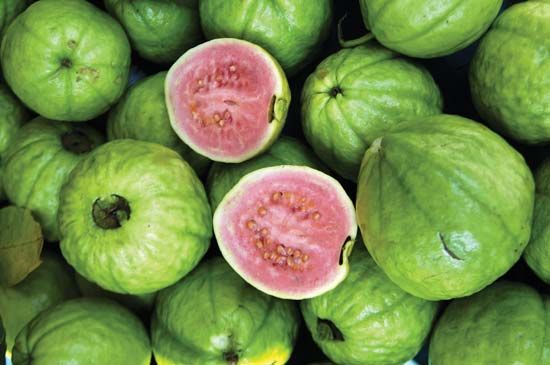
A guava is a small tropical tree or shrub belonging to the Myrtaceae family and the genus Psidium1. Native to tropical America, these plants are now cultivated in tropical and subtropical regions worldwide for their edible, round-to-pear-shaped fruits.1
The common guava (Psidium guajava) typically features yellow skin with white, yellow, or pink flesh that is rich in vitamins A, B, and C. While the pulp is sweet, it often carries a distinct, musky odor. Another notable species is the cattley or strawberry guava, which is more frost-resistant and known for its strawberry-like flavor.21
Guavas are versatile in culinary applications, commonly processed into jams, jellies, and preserves, or served raw as a dessert. It is important to note that the feijoa, often called the pineapple guava, is an entirely unrelated species.21
What are the nutritional benefits of eating guava?
Fresh guavas are highly regarded for their nutritional profile, as they are rich in essential vitamins that support overall health. Specifically, they provide a significant source of:
- Vitamin A: Important for maintaining healthy vision, immune function, and skin health.
- Vitamin B: A group of vitamins that play a vital role in cell metabolism and energy production.
- Vitamin C: A powerful antioxidant that supports the immune system and aids in the repair of tissues throughout the body.12
Beyond these nutrients, guavas are versatile in the diet, often consumed raw or prepared in various culinary forms. While they are a healthy addition to one’s intake, it is worth noting that the fruit is also known for its distinct, sweet, and sometimes musky aroma.12
How does the strawberry guava differ from the common guava?
The common guava (Psidium guajava) and the strawberry guava (Psidium cattleianum), also known as the cattley guava, differ primarily in their physical characteristics, flavor profiles, and environmental hardiness.
Key Differences
- Frost Resistance: The strawberry guava is considerably more frost-resistant than the common guava, making it a popular choice for gardens in regions like southern California, whereas the common guava is not frost-resistant.2
- Fruit Characteristics:
- Common Guava: Features round to pear-shaped fruits up to 7.6 cm in diameter with yellow skin and white, yellow, or pink flesh. Its pulp is sweet but often has a distinct, musky, or pungent odor.23
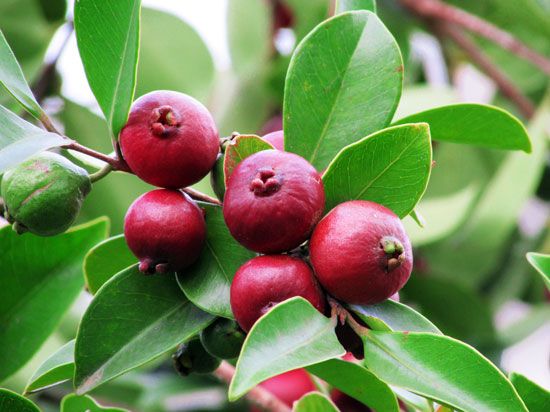
- Strawberry Guava: Produces smaller, round fruits up to 5 cm in diameter. It exists in two forms—one with bright yellow skin and another with purplish-red skin—and its soft pulp is noted for a strawberry-like flavor.23
- Commercial Importance: While the common guava is widely cultivated for commercial use in jams, jellies, and pastries, the strawberry guava is not considered commercially important.2
In what types of climates do guava trees thrive?
Guava trees (Psidium guajava) are native to the tropics of the New World and thrive in tropical and subtropical regions worldwide.21
Because the common guava is not frost-resistant, it requires warm environments to flourish, such as those found in southern Florida. In some of these favorable tropical climates, the plant grows so abundantly in a half-wild state that it can become a pest.2
In contrast, the cattley, or strawberry, guava (Psidium cattleianum) is significantly more frost-resistant than the common variety. This hardiness allows it to be successfully cultivated in subtropical regions, including gardens throughout southern California.2
Sources
- Did you know? — Merriam-Webster
- Guava — Encyclopædia Britannica
- strawberry guava — Merriam-Webster
Published on · 3 min read