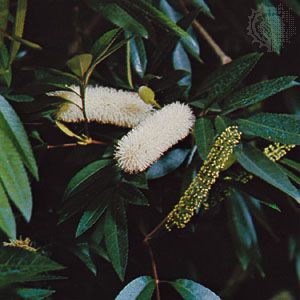
Connaraceae
The Connaraceae is a family of dicotyledonous flowering plants within the order Oxalidales, consisting of approximately 25 genera of trees, shrubs, and…
What are the defining characteristics of the Connaraceae plant family?
The Connaraceae is a family of dicotyledonous flowering plants within the order Oxalidales, consisting of approximately 25 genera of trees, shrubs, and twining climbers found in tropical regions. While older classifications sometimes associated them with the Leguminosae, they are distinguished by the absence of stipules.12
Key characteristics include:
- Floral Structure: Most species possess bisexual flowers featuring five sepals and petals. They typically contain 5 or 10 stamens and 1, 4, or 5 separate, one-chambered carpels positioned above the other floral parts.1
- Reproduction: Each carpel contains two ovules, but typically only one carpel matures into a fruit, and only one ovule develops into a seed, which often features a fleshy appendage known as an aril.1
- Fruit: The fruit is a follicle, a dry, podlike structure that splits along a single seam.1
- Growth Habits: Some species exhibit cauliflory, where flowers and fruits grow directly from the trunk or larger branches.1
While few species have major economic importance, some are used in folk medicine or as sources of wood, though many are toxic.1
Are there any medicinal or traditional uses associated with Connaraceae plants?
While many species within the Connaraceae family are known to be poisonous—and are sometimes utilized in toxic baits to control wild dogs and coyotes—several plants possess properties that have led to their use in traditional folk medicine.2
Specific medicinal applications include:
- Treatment of Dysentery: The leaves of Agelaea villosa, found in West Africa, are traditionally used as a remedy for dysentery.23
- Inducing Vomiting: In Madagascar, the leaves of Agelaea emetica are employed for their emetic properties to induce vomiting.23
- Treatment of Gonorrhea: Also in Madagascar, the leaves of Agelaea lamarckii have been used as a traditional treatment for gonorrhea.2
Beyond medicinal uses, some species serve other practical purposes; for example, the bark of Rourea glabra is used in tanning processes, where it can produce a dark blue or purple color in animal skins.23
What is the evolutionary history of the Connaraceae family?
The evolutionary history of the Connaraceae family is primarily understood through its classification within the order Oxalidales. While older botanical systems historically associated the family with the Leguminosae due to superficial similarities in growth habits, modern phylogenetic analysis places them firmly within the Oxalidales, distinguished notably by their lack of stipules.21
The family is composed of approximately 25 genera, with Connarus serving as the type genus. The name itself is derived from the New Latin Connarus, which traces back to the Greek konnaros, a term historically used to describe a type of prickly evergreen.14
Beyond these taxonomic relationships, the fossil record and specific evolutionary milestones for the Connaraceae are not extensively detailed in current botanical databases. The family remains a specialized group of tropical trees, shrubs, and twining climbers that have adapted to diverse environments across the tropics, with some species exhibiting specialized traits like cauliflory to facilitate reproduction in dense forest habitats.2
Are there any unique adaptations or features that distinguish Connaraceae from other plant families?
The Connaraceae family is distinguished by several unique morphological and reproductive features that set it apart from other plant families:
- Floral Structure: Most species possess bisexual flowers featuring five sepals and petals, with either 5 or 10 stamens. A defining characteristic is the presence of 1, 4, or usually 5 separate, one-chambered carpels positioned above the attachment point of other floral parts.2
- Fruit Development: While each carpel contains two ovules, the family exhibits a unique reproductive strategy where only one carpel typically matures into a fruit, and only one ovule develops into a seed. This seed often features a fleshy appendage known as an aril.2
- Fruit Type: The fruit is a follicle, a dry, podlike structure that characteristically splits open along a single seam.2
- Absence of Stipules: Unlike the Leguminosae, which they were historically confused with due to similar growth habits, Connaraceae plants lack stipules.1
- Specialized Growth: Some genera, such as Jollydora, exhibit cauliflory, a rare adaptation where flowers and fruits grow directly from the trunk or larger branches rather than from new growth.2
Sources
- Connaraceae — Merriam-Webster
- Connaraceae — Encyclopædia Britannica
- Oxalidales — Encyclopædia Britannica
- Connarus — Merriam-Webster
Published on · 3 min read