Cunoniaceae
Cunoniaceae is a family of leathery-leaved plants within the order Oxalidales. It consists of 26 genera of trees and shrubs, which are primarily native to…
What is Cunoniaceae?
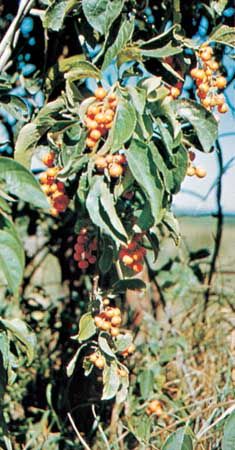
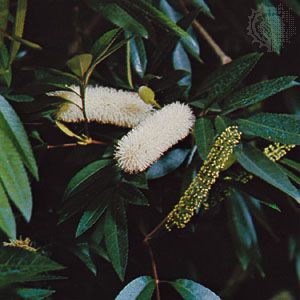
Cunoniaceae is a family of leathery-leaved plants within the order Oxalidales. It consists of 26 genera of trees and shrubs, which are primarily native to tropical regions of the Southern Hemisphere.1
While some older classifications have associated these plants with the family Saxifragaceae or the order Rosales, they are botanically distinguished by their small flowers, which grow in dense clusters, and their opposite or whorled (verticillate) leaves. Several species are valued as ornamentals, such as the New Zealand native Geissois racemosa, known for its crimson flowers, and the southern African African red alder (Cunonia capensis), which features clusters of small white flowers.21
What are the main characteristics of the order Oxalidales?
The order Oxalidales, commonly known as the wood sorrel order, is a diverse group of dicotyledonous flowering plants comprising 6 families, 58 genera, and approximately 1,810 species. These plants range from annual and perennial herbs to lianas, shrubs, and trees, inhabiting both temperate and tropical regions.3
Key Characteristics
- Classification: Under the Angiosperm Phylogeny Group (APG) system, Oxalidales is placed within the Rosid I group of core eudicots and is closely related to the orders Celastrales and Malpighiales.3
- Foliage: Compound leaves are a common feature among members of this order.3
- Floral Structure: The majority of species possess flowers with five or six sepals and petals, twice as many anthers, and five carpels that may be either fused or separate.3
- Seed Dispersal: Many species produce seeds with an attached aril, a structure frequently associated with animal-mediated dispersal.3
The order includes notable families such as Oxalidaceae (wood sorrel), Cunoniaceae, Connaraceae, Elaeocarpaceae, Brunelliaceae, and Cephalotaceae.3
How do tropical plants adapt to their environments?
Tropical plants have evolved diverse strategies to survive the intense competition for resources and the constant pressure of herbivory in their environments.
Competition for Light and Nutrients
Because only about 1 percent of sunlight reaches the forest floor, many plants have adapted to reach the canopy or thrive in low-light conditions. Some species, such as lianas, use hook-like devices to climb toward the canopy, while epiphytes grow on other plants to access sunlight without needing soil contact. Stranglers begin life as epiphytes before sending roots to the ground to eventually overtake their host. To secure nutrients in often nutrient-poor soils, many trees form symbiotic mycorrhizal associations with fungi, which efficiently absorb phosphorus and other minerals.67
Defenses Against Herbivory
To counter constant consumption by insects and mammals, plants employ various defenses:
- Chemical: Production of alkaloids, terpenes, or sticky latex to deter herbivores.8
- Structural: Development of toughened leaves, spines, thorns, or crystalline substances like oxalic acids, or crystalline substances like oxalic acids.6
- Mutualism: Forming defensive partnerships, such as providing housing for ants that protect the plant from caterpillars.8
What are some other plant families found in the Southern Hemisphere?
Many plant families have significant representation or are endemic to the Southern Hemisphere. Below are several examples categorized by their distribution:
Families with Strong Southern Hemisphere Presence
- Myrtaceae: This family is particularly abundant in Australia and tropical America. Genera such as Eucalyptus and Corymbia are iconic Australian specialties that form vast forests across the continent.11
- Aizoaceae: Known as the fig marigold or ice plant family, its primary center of distribution is in the desert and temperate latitudes of southern Africa and Australia.12
- Lythraceae: The loosestrife family is especially diverse in South America and Africa, occurring in warmer regions of both the Old and New Worlds.11
- Peridiscaceae: This family of small trees and shrubs is distributed across South America and west Africa.13
Families with Notable Southern Endemism
- Penaeaceae: This family is restricted to Africa, with genera like Olinia found in eastern and southern Africa and on the island of St. Helena.11
- Aphanopetalaceae: A small family consisting of two species, both of which are native to Australia.13
- Tetracarpaeaceae: Represented by a single evergreen shrub species, Tetracarpaea tasmannica, which is native to Tasmania.13
- Kewaceae: A family of eight species found in southern Africa and Madagascar.12
Sources
- Cunoniaceae — Encyclopædia Britannica
- Cunoniaceae — Merriam-Webster
- Oxalidaceae — Merriam-Webster
- Oxalidales — Encyclopædia Britannica
- angiosperm - Annotated classification — Encyclopædia Britannica
- Eating the rainforest — Encyclopædia Britannica
- Tropical rainforest - General structure of the rainforest — Encyclopædia Britannica
- epiphyte — Encyclopædia Britannica
- Agricultural technology - Essential plant nutrients — Encyclopædia Britannica
- nutrition - Nutrition in plants — Encyclopædia Britannica
- Myrtales - Family distributions and abundance — Encyclopædia Britannica
- Saxifragales - Major families — Encyclopædia Britannica
- Caryophyllales - Distribution and abundance — Encyclopædia Britannica
Published on · 3 min read