Convolvulaceae
The Convolvulaceae family, commonly known as the morning glory family, is widespread across both tropical and temperate regions of the world. While these…
What is the geographical distribution of Convolvulaceae plants around the world?
The Convolvulaceae family, commonly known as the morning glory family, is widespread across both tropical and temperate regions of the world. While these plants are found globally, they exhibit their greatest generic richness within the tropics.12
The geographical distribution and growth habits of the family vary by region:
- Tropical and Warm-Temperate Regions: These areas serve as the primary habitat for the family. In regions outside of North America and Europe, the family includes a diverse array of herbs, shrubs, and small trees, many of which have evolved specific adaptations for dry or desert environments, such as thorns and dense plant surfaces.2
- North America and Europe: In these regions, the most familiar members of the family are typically twining vines.2
- Cosmopolitan Distribution: The parasitic genus Cuscuta (dodder) is considered nearly cosmopolitan. Its range was significantly expanded beyond its native areas through human-assisted introduction alongside the seeds of other plants.12
What are the main characteristics of plants in the Convolvulaceae family?
The Convolvulaceae family, commonly known as the morning glory family, consists of approximately 59 genera and 1,600 species. These plants are characterized by several distinct features:16
Growth Habits and Morphology
- Plant Structure: While most familiar members in North America and Europe are twining vines, the family also includes erect herbs, shrubs, small trees, and a few aquatic species.16
- Leaves: The leaves are typically alternate and simple or compound, often lacking stipules and sometimes possessing extrafloral nectaries.16
- Stems and Roots: Stems frequently contain latex. Roots are generally fibrous, though some species develop rhizomes or tubers.16
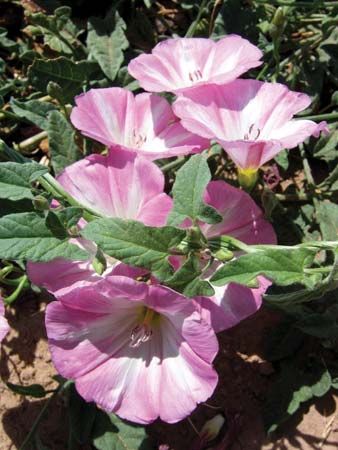
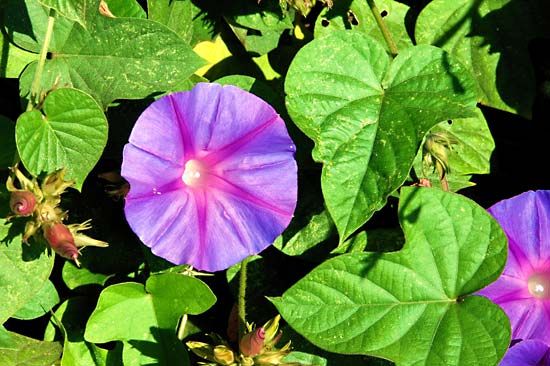
- Flowers: The most recognizable feature is the funnel-shaped corolla, with floral parts usually occurring in multiples of five.16
Reproductive and Specialized Traits
- Fruit: The fruit is typically a capsule, berry, or nut.16
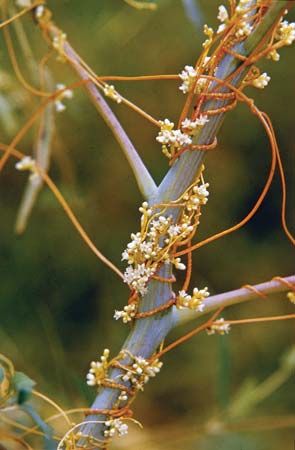
- Parasitism: The genus Cuscuta (dodder) is a notable exception to the typical plant structure; these are leafless, parasitic plants that twine around hosts and extract nourishment through specialized structures called haustoria.16
- Adaptations: In arid or desert regions, some species have evolved specialized defenses, including thorns and dense plant surfaces.6
Which important crop plants belong to the Convolvulaceae family?
The most significant crop plant within the Convolvulaceae family is the sweet potato (Ipomoea batatas). Originating in South America, it is a vital staple food in many parts of the world, including Japan, China, and the islands of the South Pacific, where it often serves as a primary dietary item. The plant is valued for its swollen, edible roots, and in some regions, other parts of the plant are utilized as fodder for livestock.51
While the sweet potato is the primary food crop, other members of the family are significant for different reasons:
- Ornamentals: Many species within the genera Ipomoea (morning glory), Convolvulus, and Merremia (wood rose) are widely cultivated for their colorful, funnel-shaped flowers.51
- Medicinal and Industrial Uses: Some species of Ipomoea yield resins, while certain Convolvulus species provide rosewood oil. Additionally, the dried tubers of the Mexican I. purga are used to produce jalap, a strong purgative drug.5
- Agricultural Challenges: Conversely, some members, such as bindweeds and the parasitic dodder (Cuscuta), are considered agricultural weeds or pests that cause economic losses in crops and orchards.51
Are there any medicinal uses for plants in the Convolvulaceae family?
Yes, several plants in the Convolvulaceae family have historical and traditional medicinal applications:
- Jalap: The dried tuberous roots of the Mexican plant Ipomoea purga (also known as Exogonium purga) are the source of a strong purgative drug known as jalap. This substance contains resinous glycosides and has been used medicinally for centuries.572
- Ceremonial and Curative Use: The seeds of certain species, such as Ipomoea violacea and Turbina corymbosa, contain ergoline alkaloids structurally similar to LSD. Among Mexico’s Zapotec peoples, these seeds have been traditionally utilized for both ceremonial and curative purposes.5182
It is important to note that while these plants have historical medicinal uses, some contain potent compounds that can be dangerous or hallucinogenic. The use of such substances should always be approached with caution and professional medical guidance.
Sources
- Convolvulaceae — Encyclopædia Britannica
- morning glory — Encyclopædia Britannica
- morning glory — Merriam-Webster
- Convolvulaceae — Merriam-Webster
- Solanales - Convolvulaceae — Encyclopædia Britannica
- Ipomoea — Encyclopædia Britannica
- jalap — Merriam-Webster
- alkaloid — Encyclopædia Britannica
Published on · 3 min read