Dichondra
Dichondra refers to a genus of low-growing, creeping perennial herbs belonging to the morning glory family (Convolvulaceae). These plants are primarily found…
What is Dichondra?
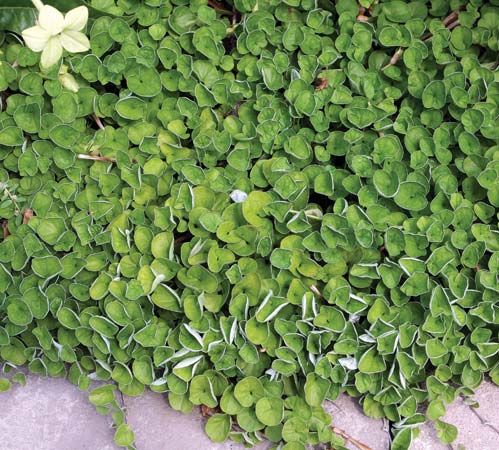
Dichondra refers to a genus of low-growing, creeping perennial herbs belonging to the morning glory family (Convolvulaceae). These plants are primarily found in tropical regions and are frequently utilized in warm climates as a decorative ground cover or as a substitute for traditional lawn grasses.12
Key characteristics of the plant include:
- Growth Habit: They typically reach heights of 2.5 to 8 cm (1 to 3 inches) and spread across the ground using runners.1
- Appearance: Species such as D. carolinensis and D. repens are known for their small, round, bright-green leaves that are indented at the point where they attach to their stalks.1
- Etymology: The name is derived from the Greek words dis (meaning “double” or “twin”) and chondros (meaning “grain” or “seed”), referencing the two seed capsules produced by each flower.2
What other plants belong to the morning glory family?
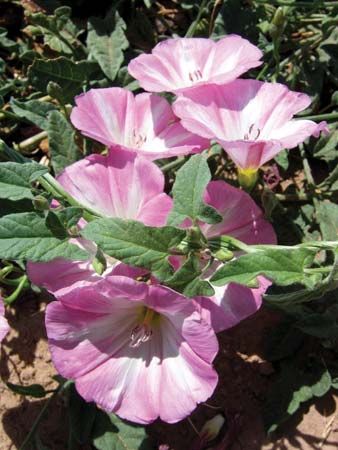
The Convolvulaceae family, commonly known as the morning glory family, comprises approximately 59 genera and 1,600 species of flowering plants. While many members are recognized for their funnel-shaped flowers, the family includes a diverse range of growth habits, including twining vines, erect herbs, shrubs, and even some trees.34
Notable plants within this family include:
- Ipomoea: The largest genus in the family, containing about 500 species, including various morning glories, the sweet potato, and the moonflower3.54
- Convolvulus: A genus of about 100 species that includes many bindweeds, which are often considered agricultural weeds.34
- Evolvulus: Another large genus comprising about 100 species.34
- Cuscuta: A genus of about 145 species of leafless, parasitic plants commonly known as [dodders].34
- Merremia: Known for species such as the wood rose.4
How do creeping plants spread using runners?
Creeping plants spread through a form of asexual reproduction known as vegetative reproduction. A primary mechanism for this is the use of stolons, which are specialized, slender horizontal stems commonly referred to as runners.89
These runners grow horizontally along the surface of the soil, serving as a natural agent for the plant to increase its reach and colonize new areas. The process occurs as follows:109
- Growth: The plant extends its stems horizontally across the ground.89
- Node Development: At specific points along these stems, known as nodes, the plant develops the capacity to produce new structures.89
- Rooting and Propagation: When these nodes make proper contact with moist soil, they develop adventitious roots and vertical, aerial branches.1189
- New Plantlets: These rooted nodes eventually form new, independent plantlets, allowing the parent plant to spread rapidly.11109
Common examples of plants that utilize this method include the strawberry, bugleweed, and strawberry geranium.10
What are the benefits of using ground cover instead of traditional grass?
Using ground covers instead of traditional turf offers several aesthetic and practical advantages, particularly in environments where grass struggles to thrive.
The primary benefits include:
- Environmental Adaptability: Ground covers are often used as grass substitutes in regions where traditional lawn grasses perform poorly, providing a reliable alternative for difficult landscapes.12
- Aesthetic Variety: Unlike the uniform green of a standard lawn, ground-cover plants introduce a diverse palette of deep greens, bronzes, and other colors. This allows for pleasing visual contrasts and unique garden designs.12
- Design Flexibility: They can be used to link garden plantings together or combined with existing grassy areas to create more complex and textured landscape arrangements.12
It is important to note that while ground covers offer these benefits, they are generally less durable than lawns and do not withstand heavy foot traffic or recreational activities as effectively as traditional turf.12
Sources
- Dichondra — Encyclopædia Britannica
- dichondra — Merriam-Webster
- Convolvulaceae — Encyclopædia Britannica
- morning glory — Encyclopædia Britannica
- Convolvulaceae — Merriam-Webster
- Solanales - Convolvulaceae — Encyclopædia Britannica
- Sweet potato — Encyclopædia Britannica
- vegetative reproduction — Encyclopædia Britannica
- stolon — Encyclopædia Britannica
- horticulture - Vegetative structures — Encyclopædia Britannica
- angiosperm - Shoot system modifications — Encyclopædia Britannica
- gardening - Lawns and ground covers — Encyclopædia Britannica
Published on · 3 min read