Cooper Creek
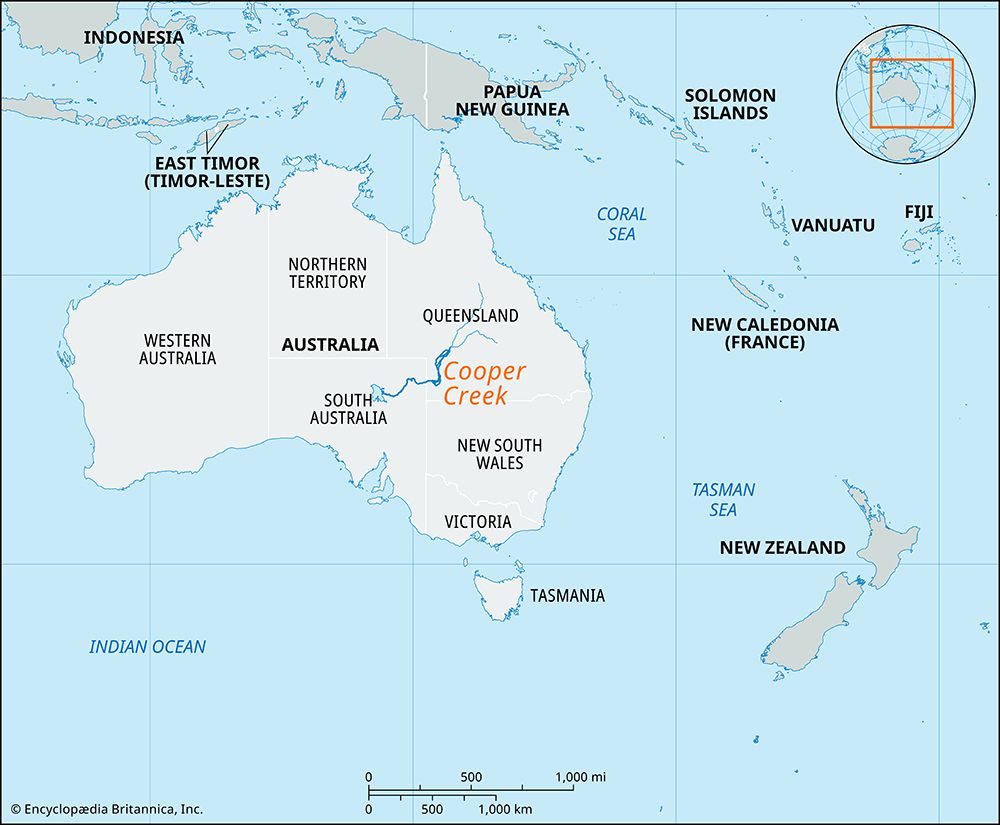
Cooper Creek is an intermittent stream located in east-central Australia within the Channel Country.
What is the geographical location and course of Cooper Creek in Australia?
Cooper Creek is an intermittent stream located in east-central Australia within the Channel Country.
The river system begins as the Barcoo on the northern slopes of the Warrego Range in Queensland. It flows northwest to Blackall, then turns southwest past Isisford. After being joined by its principal tributary, the Thomson River, the waterway is officially known as Cooper Creek. The system spans a total length of 880 miles (1,420 km) and crosses the border into South Australia.
The creek serves as a vital component of an internal drainage system, though it only carries water to Lake Eyre during periods of wet-year flooding. While the basin provides essential cattle pasturage, the region relies heavily on the Great Artesian Basin for domestic and stock water, as irrigation projects have raised significant environmental concerns regarding wetlands preservation.1
How does the intermittent nature of Cooper Creek affect the surrounding ecosystem?
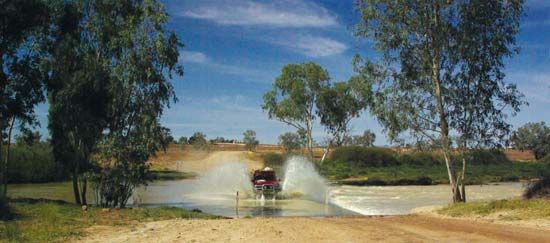
The intermittent nature of Cooper Creek is a defining feature of the Channel Country ecosystem, creating a cycle of boom and bust that dictates the region’s biological productivity.
- Flood-Driven Productivity: The creek only carries water to Lake Eyre during significant wet-year floods. These rare inundation events transform the arid landscape, providing the necessary moisture to support wetlands and stimulate plant growth.1
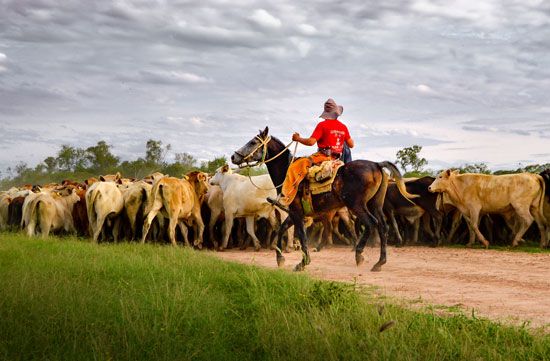
- Agricultural Impact: As floodwaters subside, the vast floodplains provide essential cattle pasturage. This reliance on natural flooding makes the ecosystem highly sensitive to human intervention.1
- Environmental Sensitivity: The introduction of irrigated cotton farming in the 1990s sparked controversy due to concerns that water extraction could damage these fragile wetlands and disrupt the natural flow required for the ecosystem to thrive.1
- Water Management: Because the surface water is unreliable, the region depends on the Great Artesian Basin for consistent domestic and stock water needs.1
We could dive deeper into the specific flora and fauna that have adapted to these extreme cycles of drought and flooding.
What is the significance of Cooper Creek in Australia’s inland water system?
Cooper Creek is a vital component of the Channel Country in east-central Australia, serving as a major internal drainage system that spans 880 miles (1,420 km).13
Its significance lies in its role as a life-giving force for the arid interior. While it only delivers water to Lake Eyre during rare, significant wet-year floods, the resulting inundation of its vast floodplains is essential for the region’s cattle industry, as it triggers the growth of nutritious grasses. Because surface water is unreliable, the region also relies heavily on the Great Artesian Basin for consistent domestic and stock water.13
The creek’s ecological importance has led to significant ethical debates regarding land use. Efforts to introduce irrigated cotton farming in the 1990s faced intense opposition due to the potential for water depletion and the destruction of fragile wetlands, highlighting the moral imperative to prioritize environmental preservation over industrial expansion in such sensitive ecosystems.1
What role did Cooper Creek play in the ill-fated Burke and Wills expedition?
Cooper Creek, historically referred to as the Barcoo River, served as a critical, albeit tragic, staging point for the 1860–61 expedition led by Robert O’Hara Burke and William John Wills.
During the journey, Burke chose to establish a base camp at the creek. Impatient to reach the northern coast, he split his party, leaving the main group behind while he, Wills, Charles Gray, and John King pushed forward. Upon their return to the Cooper Creek camp, the men discovered that the rear party—having waited over four months—had departed only hours earlier that same day.
Although the rear party had left supplies at a marked location, Burke and King made the fatal decision to attempt a trek toward Adelaide rather than following the established route. Burke died of exhaustion shortly thereafter, and Wills perished at the camp. King was the sole survivor, eventually rescued by a search party. The site remains a somber landmark in the history of Australian exploration.4
Sources
- Cooper Creek — Encyclopædia Britannica
- Lake Eyre — Encyclopædia Britannica
- Channel Country — Encyclopædia Britannica
- Robert O’Hara Burke — Encyclopædia Britannica
Published on · 3 min read