Coosa River
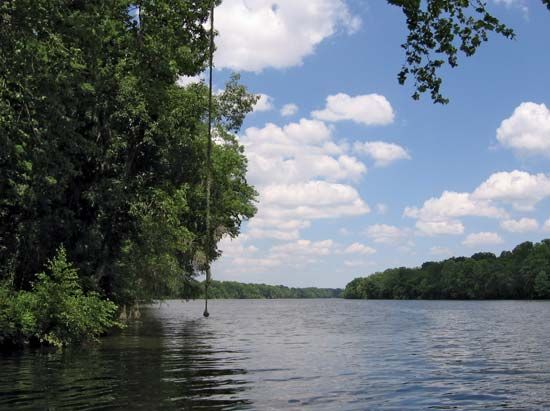
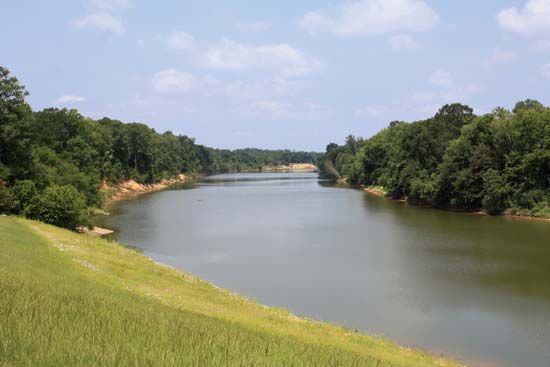
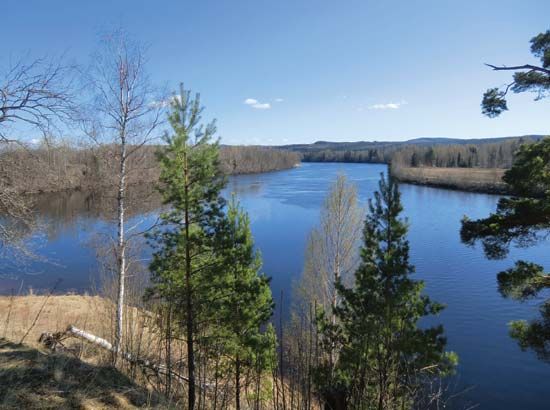
The Coosa River is a 286-mile-long (460 km) river located in the southeastern United States, flowing through northwestern Georgia and eastern Alabama.
What is Coosa River?
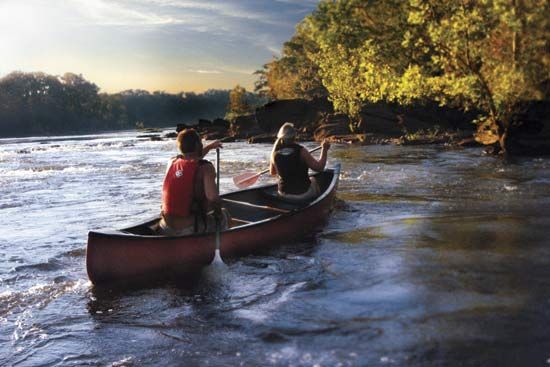
The Coosa River is a 286-mile-long (460 km) river located in the southeastern United States, flowing through northwestern Georgia and eastern Alabama.12
It is formed at Rome, Georgia, by the confluence of the Etowah and Oostanaula rivers. From there, it flows southwest through the Appalachian Ridge and Valley region, passing cities such as Gadsden, Alabama. Near Wetumpka, Alabama, the river joins the Tallapoosa River to form the Alabama River.13
The river’s name is derived from an Indigenous tribe. While the river features locks and power dams that facilitate barge navigation as far as Rome, these dams also serve as a source of hydroelectric power.1
How do dams on the Coosa River affect the local environment?
Dams on the Coosa River, which include structures built to facilitate barge navigation and generate hydroelectric power, significantly alter the local environment. While these dams provide renewable energy, they are part of a broader class of infrastructure that often faces criticism for disrupting natural ecosystems.145
General environmental concerns associated with such dams include:
- Disruption of Aquatic Life: Dams act as physical barriers that block or impede the movement of migrating and spawning fish, which can lead to the destruction of fish populations.5
- Habitat Alteration: The creation of reservoirs can inundate land, leading to the loss of flora and fauna and the transformation of picturesque landscapes.5
- Human Displacement: Large-scale dam projects often require the relocation of people from reservoir areas, sometimes impacting the cultural homelands of Indigenous peoples.5
- Land Use Conflicts: The impoundment of water can flood upstream areas, rendering land unusable for agriculture or livestock, which has historically led to legal and social opposition.5
What is the significance of the Alabama River system?
The Alabama River system is a vital economic and geographic artery for the state of Alabama. Formed by the confluence of the Coosa and Tallapoosa rivers, the Alabama River provides 305 miles of navigable waterway, facilitating significant commercial traffic and economic development.6
The system’s significance is defined by several key factors:
- Economic Hubs: Major cities, including Montgomery and Mobile, grew into prominent centers largely due to their strategic locations along this traffic artery.6
- Connectivity: The river joins the Tombigbee to form the Mobile and Tensaw rivers, which empty into Mobile Bay and the Gulf of Mexico, linking inland commerce to international shipping.67
- Integrated Waterways: The broader Alabama river network provides approximately 1,300 miles of navigable water, further enhanced by the Tennessee-Tombigbee Waterway, which connects major river systems to support regional trade.8
Which Indigenous tribes historically lived along the Coosa River?
The Coosa River, which flows through Georgia and Alabama, derives its name from an Indigenous tribe that historically inhabited the region.9
This area was part of the vast territory occupied by the Muscogee (also known as the Creek), a Muskogean-speaking people who dominated much of present-day Georgia and Alabama. The Muscogee were organized into a confederacy that included various groups, such as the Hitchiti, Alabama, and Koasati. These tribes were often categorized by English settlers into “Upper” and “Lower” divisions based on their geographic location within the territory.1
Following the Creek War in the early 19th century, these Indigenous populations were forcibly removed from their ancestral lands to Indian Territory (modern-day Oklahoma) in the 1830s.1
Sources
- Coosa River — Encyclopædia Britannica
- Coosa — Merriam-Webster
- Tallapoosa River — Encyclopædia Britannica
- dam - Rise of environmental and economic concerns — Encyclopædia Britannica
- Did you know? — Merriam-Webster
- Alabama River — Encyclopædia Britannica
- Mobile River — Encyclopædia Britannica
- Alabama - Transportation — Encyclopædia Britannica
- Muscogee — Encyclopædia Britannica
- Creek Confederacy — Merriam-Webster
- Indigenous peoples of the American Southeast: Top Questions — Encyclopædia Britannica
Published on · 2 min read