Dadès River
The Dadès River is a river located in southern Morocco. It originates in the Atlas Mountains and flows south for approximately 220 miles (350 km) through…
What is Dadès River?
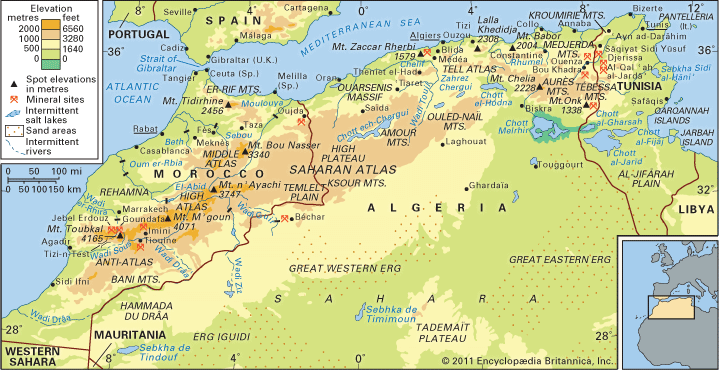
The Dadès River is a river located in southern Morocco. It originates in the Atlas Mountains and flows south for approximately 220 miles (350 km) through rugged, scenic gorges before reaching the Sahara.1
Upon reaching the desert, the river merges with the Imini to form the Drâa River, which is recognized as Morocco’s longest river. Due to its dramatic landscape and deep gorges, the Dadès River is a well-known destination for tourists visiting the region.12
What are the Atlas Mountains like?
The Atlas Mountains are a vast system of ranges stretching over 1,200 miles (2,000 km) across Morocco, Algeria, and Tunisia. They serve as a geologic barrier between the Mediterranean basin and the Sahara.34
Physiography and Climate
The system is divided into two primary sections:
- The Tell Atlas (North): These ranges receive significant rainfall, supporting lush forests of cork oak, cedar, and pine.567
- The Saharan Atlas (South): Influenced by the desert, these areas are drier and more sparsely vegetated.56
The mountains feature dramatic elevation changes, with Mount Toubkal reaching 13,665 feet (4,165 meters) as the highest peak. Temperatures drop significantly with altitude, and many high summits remain snowcapped well into the summer.3567
Ecology and Human Impact
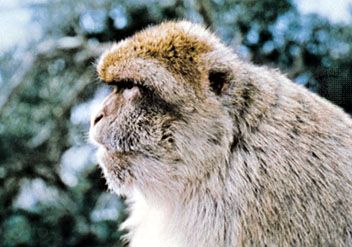
While the mountains provide a foundation for the livelihoods of many North African peoples, much of the land has been cleared for agriculture. Wildlife is limited, though Barbary macaques can be found at higher elevations. The region is also rich in minerals, including copper, iron, and lead.347
How do rivers in Morocco support agriculture?
Morocco’s rivers are vital to its agricultural success, serving as the primary source for irrigation in a country where drought remains a significant challenge to food production.28
Since the 1930s, the country has systematically dammed its extensive stream network to manage water for irrigation, flood control, and hydroelectricity. These efforts are part of a broader national strategy to expand irrigated land, with goals to eventually cover more than 2.5 million acres.28
Key agricultural impacts include:
- Fertile Basins: Rivers like the Sous River create highly productive alluvial basins. Protected by the Anti-Atlas mountains, these regions support the cultivation of fruits, cotton, vegetables, sugar, and olives, many of which are exported.9
- Resource Management: The Sebou River and its tributaries are particularly critical, accounting for nearly half of the nation’s surface water resources.2
- Crop Diversity: Reliable water access allows for the cultivation of diverse crops, including wheat, barley, corn, and commercial products like sugarcane and sugar beets.8
What is the Drâa River known for?
The Drâa River is primarily known for being the longest river in Morocco, stretching approximately 700 miles (1,100 km) from its source in the High Atlas mountains to the Atlantic Ocean. Atlas](https://www.britannica.com/place/High-Atlas) mountains to the Atlantic Ocean.11
Key characteristics of the river include:
- Intermittent Flow: It is classified as an intermittent stream, or wadi. Aside from its headstreams and upper course, the river is usually dry.211
- Geographic Path: It rises at the confluence of the Dadès and Imini rivers, flows southeast toward Tagounit, and then turns southwest, forming a portion of the border between Morocco and [Algeria].2
- Oases: The river supports important riverine oases, most notably Ouarzazate and Zagora.2
- Regional Significance: Along with other streams, it contributes to the drainage networks that influence the surface water and groundwater regimes of the Sahara.12
Sources
- Dadès River — Encyclopædia Britannica
- Morocco - Drainage — Encyclopædia Britannica
- Exploring 7 of Earth’s Great Mountain Ranges - Atlas Mountains — Encyclopædia Britannica
- Atlas Mountains - Physiography — Encyclopædia Britannica
- Atlas Mountains — Encyclopædia Britannica
- Atlas Mountains - Climate of the Atlas Mountains — Encyclopædia Britannica
- High Atlas — Encyclopædia Britannica
- Sous River — Encyclopædia Britannica
- Morocco - Agriculture, forestry, and fishing — Encyclopædia Britannica
- Algeria - Drainage of Algeria — Encyclopædia Britannica
- Drâa River — Encyclopædia Britannica
- Sahara - Drainage of the Sahara — Encyclopædia Britannica
Published on · 3 min read