Copepod
Copepods, which are small crustaceans, play a significant role in the transmission of certain parasites. Specifically, microscopic freshwater copepods known…
What role do copepods play in the spread of certain parasites or diseases?
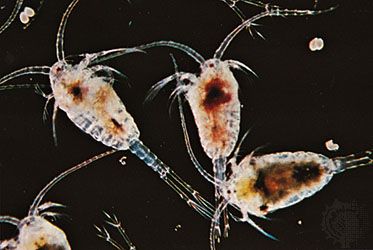
Copepods, which are small crustaceans, play a significant role in the transmission of certain parasites. Specifically, microscopic freshwater copepods known as water fleas (genus Cyclops) serve as intermediate hosts for the guinea worm (Dracunculus medinensis).1
Humans become infected with guinea worm disease by drinking water contaminated with these infected water fleas, which harbor the worm’s larvae. Once ingested, the human digestive system kills the copepods, releasing the larvae to migrate into the body’s tissues, where they mature and eventually emerge through the skin.2
Because these crustaceans are essential to the parasite’s life cycle, prevention strategies focus heavily on managing water sources. This includes filtering drinking water to remove infected copepods and treating water supplies with pesticides to eliminate them. While most copepods are free-living and ecologically vital as a food source for fish, some species are parasitic themselves, directly affecting other aquatic organisms.21
How are copepods used in scientific research or as bioindicators?
Sorry, the Britannica knowledge base does not contain information regarding the specific use of copepods in scientific research or as bioindicators.
What are the main characteristics that define copepods as crustaceans?
Copepods are members of the subclass Copepoda within the phylum Arthropoda, sharing several fundamental characteristics with other crustaceans. Like all crustaceans, they possess a segmented body and jointed appendages that serve various functions, including sensory perception, feeding, and locomotion.134
Key defining features and distinctions include:
- Developmental Stages: Copepods typically pass through a nauplius larval stage, which is a hallmark of many crustacean life cycles. This larva is characterized by a simple, unsegmented body, three pairs of appendages (antennules, antennae, and mandibles), and a single, simple “naupliar” eye.5
- Appendage Specialization: Their appendages are derived from the ancestral multibranched limb. In copepods, the first pair of trunk limbs is specialized as maxillipeds for food collection, followed by four pairs of swimming legs.4
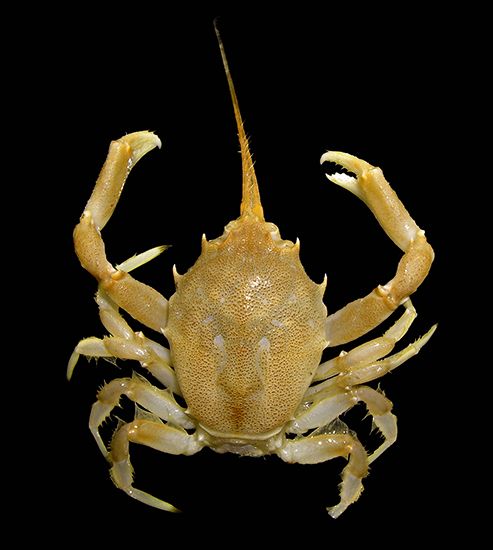
- Anatomical Differences: While they share the basic arthropod body plan, copepods differ from many other crustaceans in that they lack compound eyes and a carapace—the shieldlike plate that typically covers the dorsal surface of the head and thorax in groups like decapods.1
- Reproduction: Most species reproduce sexually, often exhibiting sexual dimorphism where males may be significantly smaller than females. Some species also utilize parthenogenesis.15
How do copepods reproduce, and what is their life cycle like?
Copepods exhibit diverse reproductive strategies and a distinct developmental life cycle typical of many crustaceans.
Reproduction
Most copepods have separate sexes and reproduce sexually, though some species utilize parthenogenesis, where eggs develop without fertilization. During mating, males often use modified appendages to clasp the female and transfer sperm via a spermatophore, which is placed near the female’s genital opening.156
Following fertilization, females employ different strategies for their eggs:
- Free-spawning: Some species, such as Calanus, release their eggs directly into the water.5
- Brooding: Many others carry their eggs in one or two thin-walled sacs attached to the front of the abdomen. Parasitic forms may produce multiple egg sacs or long, coiled strings of eggs.57
Life Cycle
The life cycle begins with the hatching of a nauplius larva, a simple, unsegmented form with three pairs of appendages and a single, simple eye.5
- Naupliar Stages: The nauplius undergoes five molts as it grows.5
- Copepodid Stages: After the fifth molt, the larva metamorphoses into a copepodid, which resembles the adult but lacks a full set of limbs.5
- Maturation: The copepodid undergoes another five molts, gradually developing its full complement of limbs. Once the adult form is reached, the copepod ceases to molt.5
Sources
- copepod — Encyclopædia Britannica
- Guinea worm disease — Encyclopædia Britannica
- decapod — Encyclopædia Britannica
- crustacean - Appendages — Encyclopædia Britannica
- crustacean - Reproduction and life cycles — Encyclopædia Britannica
- Animal reproductive system - Arthropods — Encyclopædia Britannica
- Reproductive behaviour - Crustaceans — Encyclopædia Britannica
Published on · 3 min read