Fish Louse
The term "fish louse" refers to various parasitic crustaceans that attach to marine and freshwater fish. While the term is broad, these parasites generally…
What are some common species of fish lice and how do they differ from each other?
The term “fish louse” refers to various parasitic crustaceans that attach to marine and freshwater fish. While the term is broad, these parasites generally fall into two main groups:12
- Branchiura (Genus Argulus): These are the most common fish lice, with approximately 120 known species. They are characterized by a flattened, oval-shaped body, a broad carapace, compound eyes, and a pair of large suckers used to attach to the host’s skin. They feed on blood or mucus using specialized piercing mouthparts and are capable of swimming freely in the water. A well-known example is the carp louse, which can be highly destructive to goldfish.13
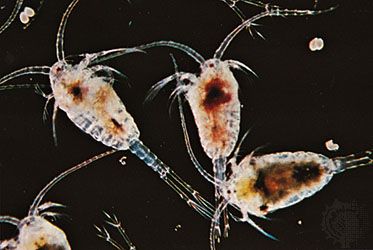
- Copepods (e.g., Lernaea): Unlike the mobile Branchiura, these are often referred to as “true” fish lice. They frequently exhibit physical degeneration in their adult state due to their parasitic lifestyle and are commonly found on the skin, gills, or within the mouths of their hosts.2
How do fish lice attach to their host fish and what parts of the fish do they typically infest?
Fish lice, which include various crustacean parasites, utilize specialized physical adaptations to secure themselves to their hosts. The method of attachment and the specific site of infestation depend on the type of parasite:
- Branchiura (Genus Argulus): These parasites attach to the skin of the host using a pair of strong, large suckers. Once secured, they feed on the fish’s blood or mucus using modified, disklike piercing and sucking mouthparts.1
- Copepods and Other Crustacean Lice: These parasites are commonly found on the skin, gills, or within the mouth cavity of the fish. Some species, such as those in the family Cymothoidae, have evolved powerful thoracic claws that allow them to attach securely to the host. In certain cases, these parasites may even infest the area under the bony covering of the gills or, in some South American freshwater species, reside within the host’s abdominal cavity.42
While Branchiura are known for their ability to swim freely and move between hosts, other parasitic forms often exhibit physical degeneration in their adult state as they adapt to their permanent or semi-permanent life on the host.14
Can fish lice affect humans or other animals besides fish?
Fish lice, which include members of the crustacean subclass Branchiura and various copepod, amphipod, and isopod parasites, are specialized to infest marine and freshwater fish. According to the available information, these parasites are exclusively associated with fish hosts, living on their skin, gills, or within their mouth and abdominal cavities.
There is no evidence in the provided data to suggest that these specific aquatic parasites infest humans or other animals. Their biological adaptations—such as the powerful thoracic claws found in the family Cymothoidae or the specialized suckers of the fish louse—are specifically evolved for securing themselves to fish hosts. While some of these parasites are resilient enough to occasionally appear in processed food products, they do not pose a parasitic threat to humans or terrestrial animals.
We could dive deeper into the specific environmental conditions that allow these parasites to thrive or explore the different ways they impact fish populations in the wild.
How do fish lice reproduce and what is their life cycle like?
The reproductive strategies and life cycles of fish lice vary significantly depending on their classification within the crustacean subphylum.
Branchiura (Fish Lice)
Members of the subclass Branchiura, such as those in the genus Argulus, exhibit a distinct reproductive behavior compared to many other parasitic crustaceans. Unlike relatives that carry their eggs attached to their bodies, these fish lice deposit their eggs directly onto substrates in the environment.1
Copepods
Most copepods reproduce sexually, though some species are capable of parthenogenesis, a process where eggs develop into new individuals without fertilization by a male. While many copepods are free-living, the parasitic forms have evolved to exploit fish hosts for nutrition, often sucking the tissues of the host to support their development.4
General Characteristics
Crustacean lice, which include Branchiura, Copepoda, and various isopod parasites, are highly adapted to their parasitic lifestyles. While the specific life stages—such as larval development and metamorphosis—can be complex, these parasites generally rely on their ability to secure themselves to a host to complete their life history.6
Sources
- fish louse — Encyclopædia Britannica
- fish louse — Merriam-Webster
- argulus — Merriam-Webster
- copepod — Encyclopædia Britannica
- louse - Ecology — Encyclopædia Britannica
- crustacean louse — Encyclopædia Britannica
- cephalochordate - Reproduction and life cycle — Encyclopædia Britannica
Published on · 3 min read