Coral Sea
The Coral Sea region, which includes the Coral Sea Islands and the adjacent Great Barrier Reef, faces significant environmental challenges primarily driven…
What are the main environmental concerns and conservation efforts in the Coral Sea region?
The Coral Sea region, which includes the Coral Sea Islands and the adjacent Great Barrier Reef, faces significant environmental challenges primarily driven by climate change and human activity.
Environmental Concerns
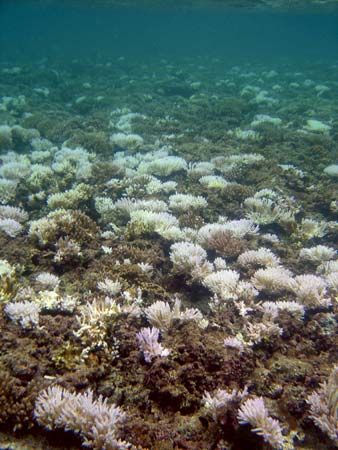
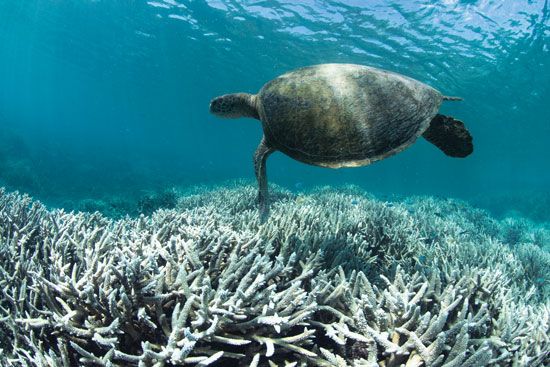
- Coral Bleaching: Rising seawater temperatures and solar irradiance cause coral bleaching, where corals expel their symbiotic zooxanthellae. This has led to substantial losses in coral coverage across the region.123
- Pollution and Chemistry: Ocean acidification and pollution—including runoff and chemicals from personal care products—threaten reef health.23
- Invasive Species: The crown-of-thorns starfish is a major predator that has significantly damaged coral populations.1
- Physical Damage: Commercial fishing practices, particularly bottom trawling, cause extensive physical destruction to the seafloor and reef structures.14
Conservation Efforts
- Protected Areas: Much of the Coral Sea Islands territory is designated as national nature reserves. The Great Barrier Reef Marine Park provides oversight for the majority of that reef complex, which is also a UNESCO World Heritage site.51
- Regulation: Authorities have implemented increased controls on activities like petroleum drilling and commercial fishing to mitigate environmental impact.1
What is the geographical location and extent of the Coral Sea?
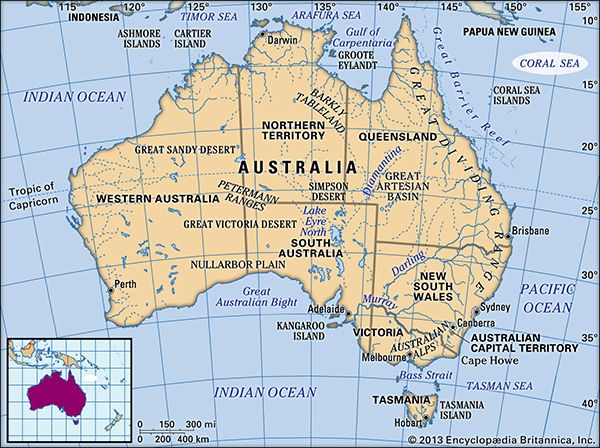
The Coral Sea is a major body of water located in the southwestern Pacific Ocean. Its geographical boundaries are defined as follows:
- West: Australia and New Guinea
- North: The Solomon Islands
- East: New Caledonia and Vanuatu (formerly the New Hebrides)
The sea spans approximately 1,400 miles (2,250 km) from north to south and 1,500 miles (2,400 km) from east to west, covering a total area of about 1,849,800 square miles (4,791,000 square km). It merges with the Tasman Sea to the south and the Solomon Sea to the north, while connecting to the Arafura Sea in the west via the Torres Strait. The region is famously home to the Great Barrier Reef, which stretches 1,200 miles along the Australian coast.7
What types of coral species can be found in the Coral Sea?
The Coral Sea, particularly within the Great Barrier Reef system, is dominated by a diverse array of coral species that provide the structural framework for its vast reef ecosystems.
Primary Coral Types
- Stony Corals (Scleractinia): These are the primary reef-builders in the tropical Indo-Pacific, including the Coral Sea. They secrete skeletons of calcium carbonate and exist in both colonial and solitary forms. Common varieties found in such regions include:91011
- Brain coral
- Mushroom coral
- Star coral
- Staghorn coral11
- Soft Corals (Alcyonaria): Unlike stony corals, these possess internal skeletons made of calcareous spicules. They contribute to reef construction by filling spaces between hard coral skeletons with their skeletal debris.1011
- Blue Coral (Heliopora coerulea): This species is known to occur on reefs of stony coral within the Pacific Ocean.11
- Horny Corals (Gorgonacea): Often found in shallow tropical waters, these include branching or ribbonlike forms such as sea fans.11
These corals thrive in the region’s clear, sunlit, and well-circulating waters, maintaining a symbiotic relationship with photosynthetic zooxanthellae that support their growth and reef-building activities.912
What economic activities, such as fishing and tourism, are important in the Coral Sea region?
Economic activities in the Coral Sea region are primarily centered on commercial fishing and tourism, both of which are significant but also subject to environmental management and controversy.617
Key Economic Activities
- Commercial Fishing: This industry operates throughout the region, including within the Coral Sea Islands territory and the Great Barrier Reef. However, fishing practices—such as the use of dragnets or explosives—have been identified as threats to the reef’s structural integrity and biodiversity, leading to concerns regarding overharvesting and habitat destruction.113
- Tourism: The region, particularly the Great Barrier Reef, is a major global tourist destination. While it provides substantial economic value, the high volume of tourist craft and human interaction with the reef can disturb local community dynamics and damage fragile coral structures.113
- Resource Extraction: The region contains petroleum deposits, notably in the Gulf of Papua. Due to the ecological sensitivity of the area, there is significant concern regarding the environmental impact of drilling, resulting in increased regulatory controls.17
Sources
- Great Barrier Reef — Encyclopædia Britannica
- Coral bleaching — Encyclopædia Britannica
- Coral Triangle — Encyclopædia Britannica
- conservation - In the oceans — Encyclopædia Britannica
- coral reef - Coral bleaching — Encyclopædia Britannica
- Coral Sea Islands — Encyclopædia Britannica
- Coral Sea — Encyclopædia Britannica
- Coral Sea — Merriam-Webster
- coral reef - Corals and other reef-building organisms — Encyclopædia Britannica
- Coral Bleaching: A Threat to Our Reefs — Encyclopædia Britannica
- cnidarian - Distribution and abundance — Encyclopædia Britannica
- coral — Encyclopædia Britannica
- coral reef - Other threats — Encyclopædia Britannica
Published on · 3 min read