Creamcups
Creamcups (Platystemon californicus) is an annual plant belonging to the poppy family (Papaveraceae). Native to western North America, this hairy herb…
What is creamcups?
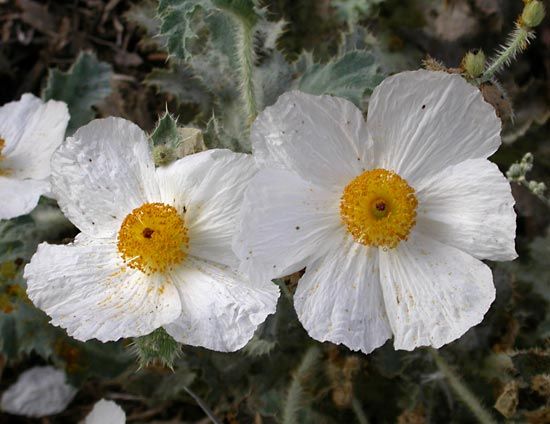
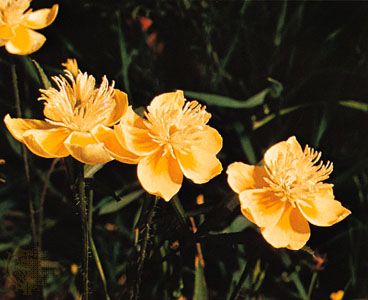
Creamcups (Platystemon californicus) is an annual plant belonging to the poppy family (Papaveraceae). Native to western North America, this hairy herb typically grows in open areas alongside grasses and blooms between March and May.12
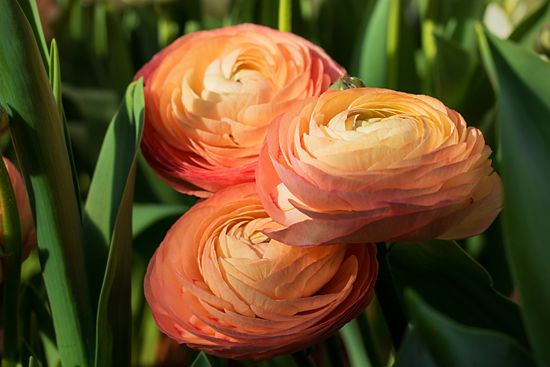
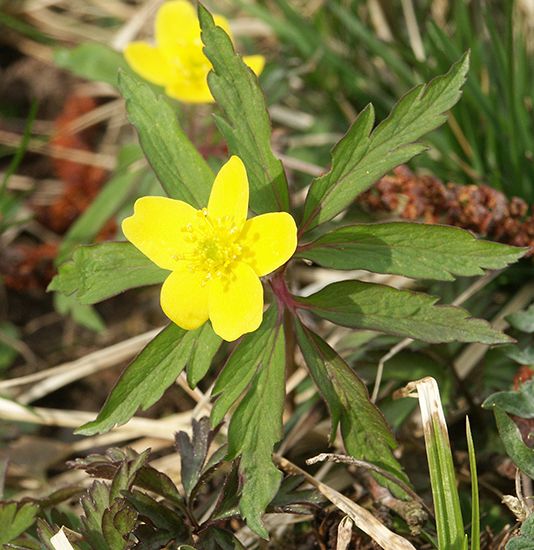
The plant reaches approximately 30 cm (1 foot) in height and produces pale yellow or cream-colored flowers on long stems. Each flower features six petals surrounding a distinctive central cluster of thick stamens. Botanically, the plant is notable for having 6–25 partially fused carpels, a trait that suggests an evolutionary link to the buttercups of the Ranunculaceae family.1
What other plants belong to the poppy family?
The Papaveraceae family, commonly known as the poppy family, comprises 48 genera and approximately 2,220 species of flowering plants. While many are herbaceous, the family also includes some woody shrubs and small tropical trees.34
Beyond the well-known poppy (Papaver), other notable members include:
- Ornamental and Garden Plants:
- California poppy (Eschscholzia californica)
- Bleeding heart (Lamprocapnos spectabilis and Dicentra species)
- Matilija poppy (Romneya coulteri)
- Mexican tulip poppy (Hunnemannia fumariifolia)
- Tree poppy (Dendromecon rigida)
- Snow poppy (Eomecon chionantha)
- Plume poppies (genus Macleaya)
- Other Notable Genera and Species:
- Bloodroot (Sanguinaria canadensis)
- Celandine (genus Stylophorum and Chelidonium majus)
- Corydalis
- Dutchman’s breeches (Dicentra cucullaria)
- Fumitory (genus Fumaria)
- Horned poppy (genus Glaucium)
- Prickly poppy (genus Argemone)
These plants are primarily found in the Northern Hemisphere and are often recognized by their often-dissected leaves, milky or colored sap, and characteristic capsule fruits.354
How do annual plants differ from perennials?
The primary difference between annual and perennial plants lies in the duration of their life cycles.
- Annuals: These plants complete their entire life history—germinating from seed, maturing, flowering, and producing new seeds—within a single growing season. Once they have produced seeds, the plant dies, and the seed is the only part that survives to the next season. Common examples include corn, wheat, marigolds, and zinniasmarigold), and zinnias.678
- Perennials: These plants persist for several years, regrowing and reblooming year after year. While the aboveground portions of herbaceous perennials may die back in autumn, the plant survives through specialized structures like bulbs, rhizomes, or tubers. All trees and shrubs are perennials, as are many herbaceous plants such as chrysanthemums, poppies, and asparagus.698
What is the role of stamens in plant reproduction?
The stamen serves as the male reproductive part of a flower, functioning primarily to produce and release pollen for pollination.1011
A typical stamen consists of two main components:
- Filament: A long, slender stalk that supports the anther.1011
- Anther: A two-lobed structure at the tip of the filament containing four pollen sacs (microsporangia). These sacs produce pollen, which is released—often through a rupture or small pores—to be transferred to the stigma of a pistil.1011
Collectively, all the stamens in a flower are referred to as the androecium. In many species, the base of the stamen features nectaries, which secrete nectar to attract birds and insects that assist in the pollination process. While stamens are essential for reproduction, some flowers produce sterile versions known as staminodes, which may serve other functions like attracting pollinators.10
Sources
- creamcups — Encyclopædia Britannica
- creamcups — Merriam-Webster
- list of plants in the family Papaveraceae — Encyclopædia Britannica
- poppy — Encyclopædia Britannica
- Papaveraceae — Encyclopædia Britannica
- Is That Plant 'Perennial' or 'Annual'? — Merriam-Webster
- Perennial — Encyclopædia Britannica
- Annual — Encyclopædia Britannica
- Plant - Classification of angiosperms — Encyclopædia Britannica
- Stamen — Encyclopædia Britannica
- Anther — Encyclopædia Britannica
- Plant reproductive system - Angiosperms — Encyclopædia Britannica
Published on · 2 min read