Cottonwood
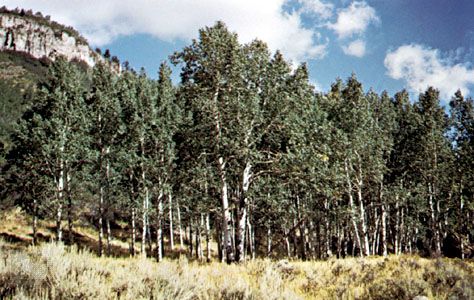
Cottonwood refers to several species of fast-growing trees in the genus Populus (family Salicaceae), native to North America. These trees are characterized…
What is cottonwood?
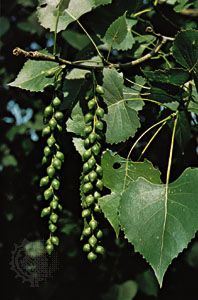
Cottonwood refers to several species of fast-growing trees in the genus Populus (family Salicaceae), native to North America. These trees are characterized by their triangular, toothed leaves and seeds covered in cottony hairs, which give the tree its name.12
Common varieties include:
- Eastern cottonwood (P. deltoides): A prominent species in the eastern and central United States, often grown for its rapid growth and lush foliage.12
- Fremont cottonwood (P. fremontii): Known as the “Alamo,” it is the tallest of the group and is found in southwestern North America.1
- Great Plains cottonwood (P. sargentii): Distinguished by its thick, coarse-toothed leaves.1
The wood from many of these species and their hybrids is utilized for various purposes, including the production of matches and matchboxes. These trees are also closely related to poplar and aspen species.1
How do cottonwood seeds travel in the wind?
Cottonwood seeds are dispersed by the wind through a process known as anemochory, specifically utilizing a mechanism involving “woolly” structures. The seeds are covered in fine, cottonlike hairs—derived from the seed coat or pericarp—which allow them to be easily caught and carried by air currents.345
These light, fibrous hairs act as a buoyancy aid, enabling the seeds to travel significant distances from the parent tree. Under typical conditions, these seeds can be transported over long distances, and during storm events, the dispersal range for related species like the poplar can reach up to 30 km (20 miles). In some instances, these cottony hairs may also serve a secondary purpose by assisting in water dispersal if the seeds land in or near aquatic environments.345
What makes cottonwood trees grow so quickly?
Cottonwood trees, which belong to the genus Populus, are widely recognized for their rapid growth rates. While the provided search results confirm that these trees are characterized as “rapid-growing,” they do not explicitly detail the specific biological or physiological mechanisms—such as photosynthetic efficiency, nutrient uptake, or hormonal regulation—that drive this accelerated development.16
It is important to note that while these trees grow quickly, they are also relatively short-lived compared to many other tree species. Their ability to thrive in diverse environments, including those prone to flooding and erosion, is a well-documented trait of the genus, though the exact metabolic factors behind their speed of growth remain outside the scope of the available data.6
How are cottonwood trees different from aspen trees?
While both cottonwood and aspen trees belong to the genus Populus and the willow family (Salicaceae), they exhibit distinct physical and ecological differences.76
Key Differences
- Bark and Buds: Aspens are characterized by smooth, gray-to-green bark and nonsticky buds. In contrast, cottonwoods possess darker, deeply furrowed (fissured) bark and sticky buds.76
- Environmental Tolerance: Cottonwoods are exceptionally tolerant of flooding and erosion, making them well-suited to specific riparian habitats. Aspens are known for growing at higher elevations and further north than other Populus species.67
- Growth Habits: Aspens often spread through root suckers or rhizomes, frequently forming large clonal colonies. Cottonwoods are generally recognized as fast-growing trees that do not typically form these same types of extensive clonal networks.761
- Leaf Characteristics: While both have leaves that tremble in the breeze due to flat petioles, cottonwoods typically have thick, glossy, triangular leaves, whereas aspens have leaves that vary by species but are often noted for their fluttering motion and distinct shapes, such as the more pointed tips of the quaking aspen.761
Sources
- cottonwood — Encyclopædia Britannica
- cottonwood — Merriam-Webster
- Seed - Dispersal by wind — Encyclopædia Britannica
- Fruit - Wind dispersal — Encyclopædia Britannica
- Seed dispersal - Anemochory: wind dispersal — Encyclopædia Britannica
- poplar — Encyclopædia Britannica
- aspen — Encyclopædia Britannica
Published on · 3 min read