Courser
It appears there may be a slight confusion regarding the term "Courser." Based on the available information, "Courser" refers to a specific noun, while…
What is Courser?
It appears there may be a slight confusion regarding the term “Courser.” Based on the available information, “Courser” refers to a specific noun, while “Coursera” is the name of an educational platform.
Courser As a noun, a courser can refer to:
- A dog used for coursing (hunting game by sight rather than scent).1
- A huntsman.1
- Any of various Old World birds in the subfamily Cursoriinae, known for their speed in running.1
Coursera If you intended to ask about the company, Coursera is a prominent provider of MOOCs (massive open online courses). It was developed by Daphne Koller and Andrew Ng of Stanford University as a not-for-profit initiative to offer online courses to the public, eventually becoming one of the leading platforms for global online education.2
What is a MOOC and how does it work?
A MOOC (massive open online course) is a course delivered over the Internet designed to accommodate a massive number of students, often reaching tens of thousands.32
How MOOCs Work
MOOCs typically utilize a specific pedagogical approach to manage large-scale participation:
- Instructional Format: Courses generally feature short, pre-recorded video lectures. Students demonstrate their understanding of key concepts by completing interactive quizzes, often incorporating gamification to enhance engagement.23
- Assessment: Because grading thousands of assignments is challenging, many courses rely on automated computer marking. For subjects where automation is difficult, such as the arts and humanities, providers often use peer-learning and grading strategies, where students evaluate each other’s work.32
- Structure and Access: Some MOOCs allow students to work at their own pace, while others follow a weekly schedule with strict deadlines to encourage completion.3
- Platforms: Major providers like Coursera, edX, and Udacity partner with universities to offer these courses. While many began as not-for-profit initiatives, there is an increasing trend toward charging fees for accreditation and examinations.32
What are some other examples of online learning platforms?
Beyond the major MOOC providers like Coursera, edX, and Udacity, there are several other platforms and models that facilitate online learning and distance education:
- Khan Academy: A well-known platform that provides a wide range of free, high-quality educational resources and instructional videos across various subjects, often used to supplement traditional learning.4
- Open Universities: These institutions, such as the Indira Gandhi National Open University and the China Central Radio and TV University, utilize distance learning methods on a massive scale to provide education to hundreds of thousands of students globally.2
- Private For-Profit Universities: Institutions like the University of Phoenix have long been pioneers in distance learning, utilizing their own proprietary platforms to deliver coursework to students who may be unable to attend traditional physical campuses.2
- Videoconferencing Services: Tools such as Zoom have become essential for distance learning, enabling real-time, synchronous communication between instructors and students, which fundamentally changed the student-teacher relationship during the global pandemic.2
What are the physical characteristics of the bird known as a courser?
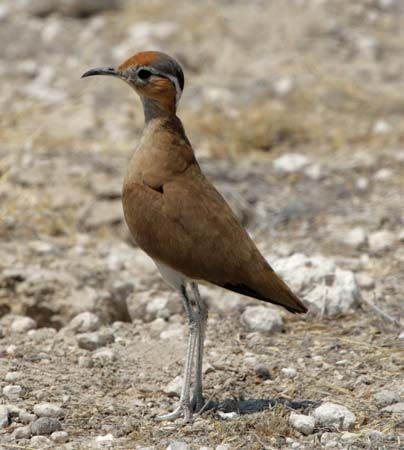
Coursers are a group of 9 or 10 species of Old World shorebirds within the family Glareolidae. While they are capable of strong flight, they possess short wings and are primarily adapted for life in semidesert environments, where they are known for chasing insects on foot.6
Physical characteristics vary by species:
- Cream-coloured courser: This species is characterized by its pale-brown plumage, white underparts, bold eye stripes, and distinctive black wing tips.6
- Indian courser: This bird is brown and features a strong, prominent face pattern.6
- Bronze-winged courser: As the largest of the sub-Saharan species, it reaches a length of approximately 30 cm (12 inches) and is primarily nocturnal, inhabiting woodlands.6
Sources
- courser — Merriam-Webster
- MOOC — Encyclopædia Britannica
- MOOC — Merriam-Webster
- Distance learning - Academic issues and future directions — Encyclopædia Britannica
- Distance learning — Encyclopædia Britannica
- Courser — Encyclopædia Britannica
- Glareola — Merriam-Webster
Published on · 3 min read