Daphne
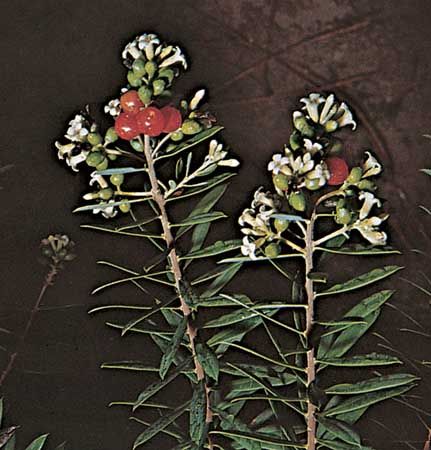
Daphne is a genus of approximately 50 species of flowering shrubs native to Eurasia, primarily valued today for their ornamental qualities rather than…
What are the traditional and modern uses of Daphne plants?
Daphne is a genus of approximately 50 species of flowering shrubs native to Eurasia, primarily valued today for their ornamental qualities rather than medicinal or practical utility.12
Modern Uses
In contemporary horticulture, Daphne plants are widely cultivated for their aesthetic appeal in gardens and greenhouses. They are prized for their diverse forms and fragrant flower clusters. Popular uses include:1
- Landscaping: Low-growing evergreen species, such as the garland flower (D. cneorum), are frequently used as ground cover or in rock gardens.1
- Ornamental Gardening: Species like the spurge-laurel (D. laureola) are often grown in borders, while varieties of winter daphne (D. odora) are popular greenhouse subjects due to their highly fragrant blossoms.1
Toxicity and Traditional Context
It is important to note that Daphne plants are significantly toxic. The entire plant, including the berries, is poisonous. Ingestion can cause severe symptoms, including a burning sensation in the mouth, ulceration of the oral mucosa, vomiting, diarrhea, stupor, weakness, convulsions, and potentially death. Because of these dangerous properties, they are not used for consumption or traditional medicine.13
How many species are there in the Daphne genus, and which are the most common?
The Daphne genus consists of approximately 50 species of flowering shrubs belonging to the mezereum family (Thymelaeaceae).1
Several species are commonly cultivated for their ornamental value in gardens and greenhouses:
- Spurge-laurel (D. laureola): An evergreen shrub characterized by thick, glossy leaves and small greenish flowers.1
- Mezereon (D. mezereum): A larger, deciduous shrub reaching up to 1.5 meters (5 feet) that produces spicy-fragrant pink flowers.1
- Garland flower (D. cneorum): A hardy, trailing evergreen often used as ground cover, known for its sweet-scented pink flowers.1
- Winter daphne (D. odora): A popular greenhouse plant featuring highly fragrant, crowded clusters of white to purplish flowers.1
- Other greenhouse varieties: D. indica, which produces red blossoms, and D. japonica, which features white or pinkish-purple flowers.1
Where are Daphne plants typically found in nature?
Daphne plants are native to Eurasia, where they grow as flowering shrubs within the mezereum family (Thymelaeaceae). While they are naturally found across this vast region, they are widely cultivated globally for their ornamental form and fragrant flower clusters.13
What is the etymology of the name ‘Daphne’ and its connection to Greek mythology?
The name Daphne originates from the Greek word daphnē, which translates to “laurel.” In Greek mythology, Daphne is a nymph and the daughter of a river god who lived a pastoral life.43
According to the myth, Daphne was known for rejecting all suitors. When the god Apollo pursued her, she prayed to her father or to the Earth for rescue. Her plea was answered when she was transformed into a laurel tree. Following this event, Apollo adopted the laurel as his sacred tree, and its leaves were famously used to create garlands for poets and to signify triumphs in Rome.43
Sources
- Daphne — Encyclopædia Britannica
- poison - Plant poisons (phytotoxins) — Encyclopædia Britannica
- daphne — Merriam-Webster
- Daphne — Encyclopædia Britannica
Published on · 2 min read