Cracticidae
Cracticidae is a family of songbirds belonging to the order Passeriformes. Native to Australia and the Australasian region, this family includes the…
What is Cracticidae?
Cracticidae is a family of songbirds belonging to the order Passeriformes. Native to Australia and the Australasian region, this family includes the bell-magpie, currawong, and butcherbird groups.12
These birds are sometimes referred to as “songshrikes” due to their impressive vocal abilities and behavior that resembles that of the shrike1. Members of the genus Cracticus, such as the gray butcherbird, are known for being stocky birds with heavy, hook-tipped bills. They are noted for their territorial nature and their habit of impaling prey on thorns or wedging it into crevices to store or tear it. Historically, these birds were sometimes classified within the family Laniidae.23
Why are these birds sometimes called songshrikes?
Members of the Cracticidae family are referred to as “songshrikes” due to two primary characteristics: their impressive vocal powers and their behavior, which mirrors that of the shrike (family Laniidae).1
Like true shrikes, certain members of the Cracticidae family—specifically those in the butcherbird genus (Cracticus)—are known for their predatory habits. They possess heavy, hook-tipped bills that allow them to kill prey, which they then impale on thorns or wedge into crevices to store or tear apart. While true shrikes are often characterized by harsh calls, the Cracticidae are noted for their melodic vocalizations, including the beautiful duets performed by territorial pairs.134
What makes the butcherbird’s hunting behavior unique?
The hunting behavior of the butcherbird is defined by its specialized method of processing and storing prey. These birds are characterized by their heavy, hook-tipped bills, which are evolutionarily adapted for tearing apart large, relatively soft prey, such as small vertebrates and large insects.34
The “butcher” moniker arises from the bird’s unique habit of impaling its catch on thorns or wedging it into narrow spaces, such as cracks in wood or forked twigs. This behavior serves two primary purposes: it acts as a “meat hook” to hold the prey steady while the bird tears it into manageable pieces, and it functions as a storage system for later consumption. While this predatory strategy is shared with the unrelated shrike family (Laniidae), the butcherbird remains a distinct member of the Cracticidae family, known for its stocky build and complex, melodic duets.35
How do Australian songbirds differ from those in other parts of the world?
Australian songbirds are distinguished by a unique evolutionary history that sets them apart from their counterparts in other parts of the world. Research, particularly the pioneering work of ornithologists Charles Sibley and Jon Edward Ahlquist, has revealed that Australia was the site of a major, distinct radiation of songbirds.
Key differences and characteristics of the Australian avifauna include:
- Endemic Radiations: Many groups once thought to be related to similar-looking species in Eurasia—such as Australasian robins and logrunners—have been identified through DNA studies as part of an endemic Australian radiation rather than close relatives of those northern groups.6
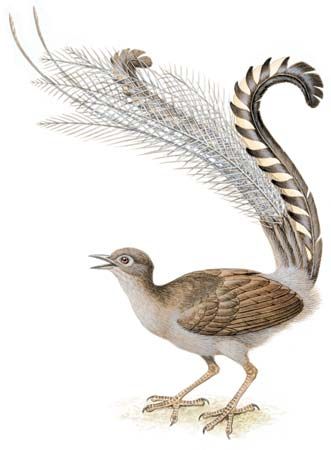
- Unique Families: The region is home to specialized families that are not found elsewhere, such as the lyrebirds and scrub-birds, which are famous for their complex vocal mimicry and unique anatomical features.6
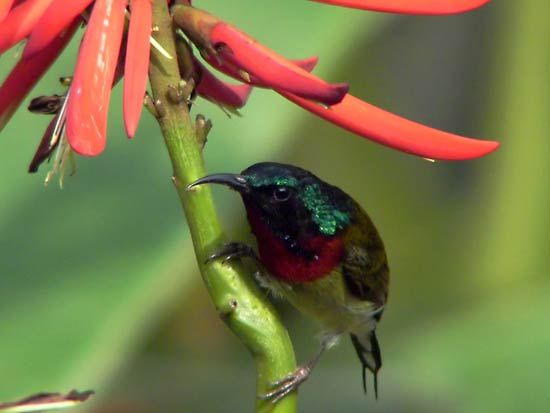
- Convergent Evolution: Because of the distinct evolutionary path of Australian birds, many have evolved to fill ecological niches similar to those occupied by unrelated birds elsewhere. For example, the honeyeaters have developed specialized brush-tipped tongues for nectar feeding, a trait that evolved independently of the sunbirds found in other regions.6
- Vocal Complexity: While many songbirds globally possess a complex syrinx, Australian species like the lyrebird demonstrate a superlative range of vocal intensity and mimicry that is highly distinct within the order Passeriformes.76
Sources
- Cracticidae — Encyclopædia Britannica
- Cracticidae — Merriam-Webster
- Butcherbird — Encyclopædia Britannica
- Shrike — Encyclopædia Britannica
- Passeriform - Bill — Encyclopædia Britannica
- Passeriform - Sound production — Encyclopædia Britannica
- Passeriform - Evolution and paleontology — Encyclopædia Britannica
- Bird: Top Questions — Encyclopædia Britannica
- Songbird — Encyclopædia Britannica
- Passeriform - Annotated classification — Encyclopædia Britannica
- Passeriform - Distinguishing taxonomic features — Encyclopædia Britannica
- casuariiform - Evolution and paleontology — Encyclopædia Britannica
Published on · 3 min read