Lyrebird
The lyrebird (genus Menura) refers to two species of ground-dwelling birds native to the forests of southeastern Australia. They are members of the order…
What is Lyrebird?
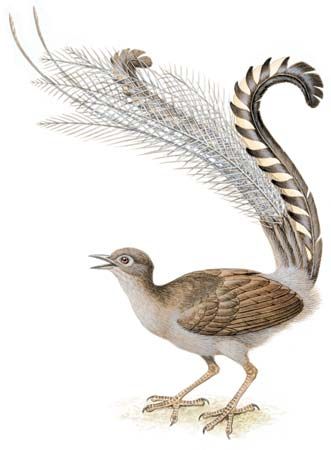
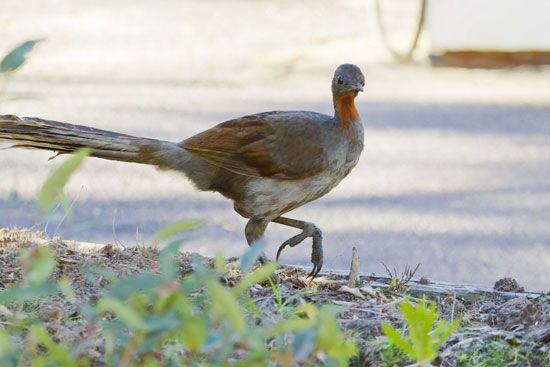
The lyrebird (genus Menura) refers to two species of ground-dwelling birds native to the forests of southeastern Australia. They are members of the order Passeriformes and are named for the distinctive, lyre-shaped tail that males display during courtship/tail-zoology) that males display during courtship.1
The superb lyrebird is particularly notable for its elaborate tail, which includes ornate feathers resembling the strings and arms of a lyre1. With a total length of about one meter, the male is the longest of all passerine birds. Beyond their appearance, lyrebirds are renowned for their complex songs, which feature melodious notes interspersed with the perfect mimicry of other animals and even mechanical sounds. While the male performs these displays, the female is solely responsible for building the nest and incubating the single egg. A second species, Albert’s lyrebird, is less showy and inhabits deep rainforests.1
What other animals are known for their mimicry?
Many animals exhibit mimicry, a biological phenomenon where one organism evolves to resemble another or adopts sounds to gain an evolutionary advantage. While the term is often associated with vocal imitation in birds, it also encompasses visual and behavioral strategies across the animal kingdom.23
Vocal Mimicry
Beyond the lyrebird, several birds are renowned for their ability to replicate sounds:
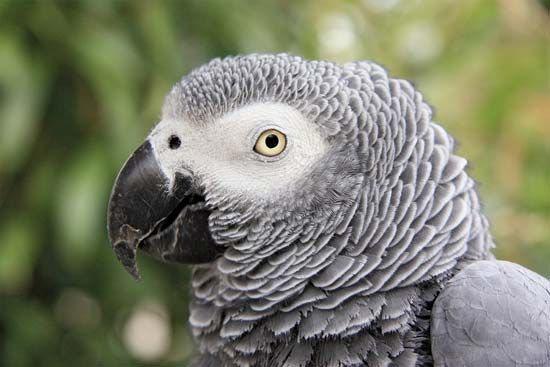
- Parrots: The African gray parrot is perhaps the most famous, capable of accurately replicating human speech and associating sounds with specific meanings. Other skilled mimics include Amazon parrots, macaws, and budgerigars.4
- Hill Mynahs: These birds are celebrated for their vigorous vocal faculties and ability to mimic various sounds.4
- Mimic Thrushes: As their name suggests, this group (family Mimidae) is known for complex songs that often incorporate the calls of other species.5
- Parasitic Weaverbirds: Whydahs learn the songs of their host species, a unique vocal adaptation that ensures they attract appropriate mates.6
Aggressive and Defensive Mimicry
Mimicry is also a survival strategy used to deceive prey or predators:
- Aggressive Mimicry: Predators may resemble their prey or a harmless third party to lure victims. For example, anglerfishes use a fleshy “bait” to lure other fish within reach. Similarly, some male water mites vibrate the water surface to mimic the movements of their insect prey to attract mates.23
- Brood Parasitism: Cuckoos and certain weaverbirds lay eggs that mimic the appearance of their host’s eggs, and some nestlings even duplicate the begging calls and mouth patterns of the host’s own young to ensure they are fed.26
- Müllerian Mimicry: Unrelated, noxious species—such as various butterflies, wasps, and beetles—often share the same warning coloration, which reinforces the signal to predators that they are inedible.7
We could dive deeper into the evolutionary pressures that drive these fascinating survival strategies.
How do lyrebirds use their songs to attract mates?
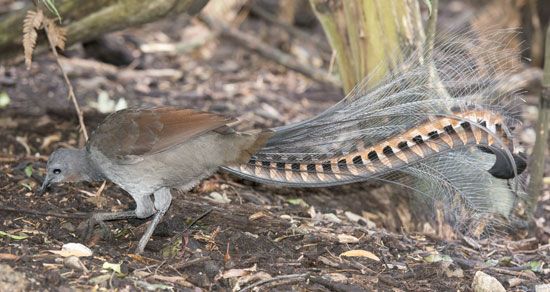
Lyrebirds use their songs as a central component of their elaborate courtship displays to attract mates. During the breeding season, the male constructs small clearings in the forest, which serve as stages for his performance.1
In these clearings, the male brings his ornate tail forward to form a canopy over his head, displaying his lyre-shaped feathers while prancing in rhythm. While maintaining this position, he sings far-carrying, melodious notes. A key feature of this vocal performance is the male’s ability to incorporate perfect mimicry of other creatures and even mechanical sounds into his song. By combining these complex vocalizations with visual displays, the male lyrebird effectively enchants the female, serving as a vital preliminary to mating.146
What are some other unique birds found in Australia?
Australia is home to a diverse array of unique bird species, many of which are iconic symbols of the continent’s distinct ecosystems.
- Emu (Dromaius novaehollandiae): As the second-largest living bird, this flightless native is a prominent Australian symbol. It is known for its speed, reaching nearly 50 km (30 miles) per hour, and its unique trachea, which produces a loud booming sound during the breeding season.10
- Cassowary: A giant, flightless bird found in northern Queensland, the cassowary is recognized for its colorful keratin helmet, or casque, and a powerful, daggerlike claw on its middle toe.1112
- Kookaburra: A member of the kingfisher family, the kookaburra is famous for its call, which sounds like fiendish laughter. These woodland birds are known to hunt small vertebrates, including venomous snakes.13
- Cockatoos: Australia hosts a variety of these crested parrots, such as the social sulfur-crested cockatoo, the gregarious galah, and the large, solitary palm cockatoo, which uses sticks to drum on tree trunks.14
- Black Swan (Cygnus atratus): This bird is a notable emblem of Western Australia.15
Sources
- Lyrebird — Encyclopædia Britannica
- mimicry - Aggressive mimicry — Encyclopædia Britannica
- mimicry - Müllerian mimicry — Encyclopædia Britannica
- Passeriform - Sound production — Encyclopædia Britannica
- Animal communication - Evolution of signals — Encyclopædia Britannica
- mimicry - Parasitic weaverbirds — Encyclopædia Britannica
- Which parrots are most likely to talk? — Encyclopædia Britannica
- sound reception - Large mammals — Encyclopædia Britannica
- Sex - Courtship — Encyclopædia Britannica
- emu — Encyclopædia Britannica
- Kookaburra — Encyclopædia Britannica
- cockatoo — Encyclopædia Britannica
- 8 Birds That Can’t Fly — Encyclopædia Britannica
- South Australia - Plant and animal life — Encyclopædia Britannica
- Emblems of Australia — Encyclopædia Britannica
- casuariiform - Evolution and paleontology — Encyclopædia Britannica
- psittaciform - Evolution — Encyclopædia Britannica
Published on · 4 min read