Crane
There are 15 species of cranes, which are tall wading birds belonging to the family Gruidae. These birds are found worldwide, with the notable exception of…
How many species of cranes exist, and where are they found around the world?
There are 15 species of cranes, which are tall wading birds belonging to the family Gruidae. These birds are found worldwide, with the notable exception of South America1.1
Their distribution across the globe includes:
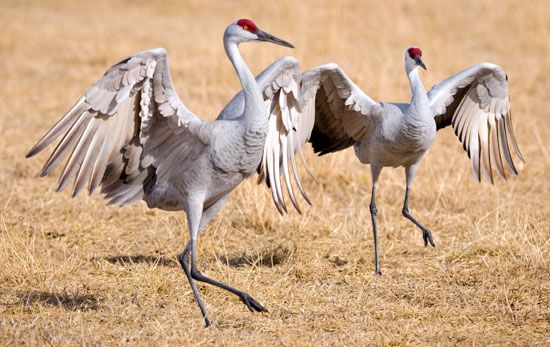
- North America: Home to species such as the sandhill crane and the whooping crane.12
- Europe and Asia: The common crane breeds across these regions, wintering in parts of Africa, India, and China. The demoiselle crane is also found in southeastern Europe and Central Asia.1
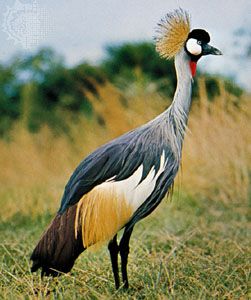
- Africa: Various species inhabit the continent, including the crowned crane and the wattled crane.1
- Australia and New Guinea: The Australian crane, also known as the brolga, is native to these areas.1
Unfortunately, many of these populations are currently endangered due to factors such as hunting and the destruction of their natural habitat.1
What is the typical diet of crane birds, and how does it vary across different species?
Cranes are omnivorous birds that primarily consume animal matter, though their diets are supplemented by various plant materials. They utilize their powerful bills to forage, often digging into the ground to reach roots and bulbs or probing debris for food.31
While their diet is generally mixed, it varies significantly based on the species and their specific environment:
- Animal Prey: Cranes are opportunistic hunters that eat a wide range of small animals, including rats, mice, moles, lemmings, lizards, snakes, frogs, tadpoles, snails, and various insects.3
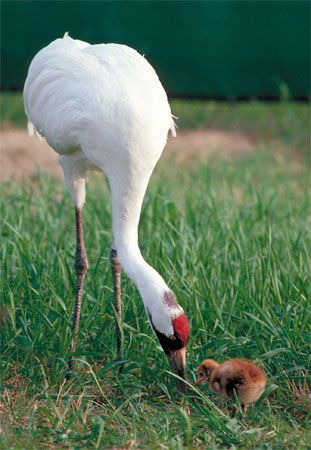
- Specialized Diets: Some species exhibit specific dietary preferences based on their location. For instance, the whooping crane relies heavily on crustaceans while on its wintering grounds in Texas.3
- Plant Consumption: The sandhill crane incorporates berries and grass into its diet on the northern tundra and gleans plant material from agricultural fields during winter. Similarly, Asiatic species like the hooded crane and white-naped crane forage for grain in rice paddies, and some populations are supplemented with corn by local farmers.3
Overall, cranes maintain a flexible diet that allows them to thrive across diverse habitats, from marshes to agricultural plains.31
What are the distinctive physical characteristics of crane birds?
Cranes are tall, graceful wading birds belonging to the family Gruidae, characterized by several distinctive physical features that distinguish them from similar birds like herons.1
Key Physical Characteristics
- Body Structure: Cranes are large, terrestrial birds ranging from approximately 79 to 150 cm (31 to 59 inches) in length. They possess long, slender bills and long, stiltlike legs adapted for walking in marshes and on plains.415
- Head and Neck: They typically have a long neck that is stretched out in front during flight. In adults, the head is often partly naked, sometimes featuring bare red skin used for displays.145
- Plumage: Their plumage is generally compact and predominantly gray or brown. Some species, such as the crowned crane, feature a unique crest of stiff golden feathers. Young cranes are born with brownish, downy feathers that are gradually replaced by adult coloration over several years.156
- Wings and Feet: Cranes have rounded, long wings with very long inner secondary feathers that extend beyond the tail, creating the impression of a long-tailed bird. Their feet have a small, elevated hind toe.514
- Unique Anatomy: A notable feature is the trachea (windpipe), which lengthens and coils like a French horn as the bird matures. This structure is buried in the hollow keel of the breastbone and helps produce powerful, resonant calls that can carry for over a mile.15
What are some interesting breeding behaviors and rituals observed in crane species?
Cranes are renowned for their complex social behaviors, particularly their lifelong pair bonding and elaborate courtship rituals. These behaviors are essential for maintaining their partnerships and are characterized by several distinct activities:
- The Dance: Often called “dances,” these displays involve two birds facing each other, bowing, and leaping into the air. The ceremony typically begins with the birds circling each other with a formal, stiff-legged gait. They may perform “head bobbing,” where the head is held horizontally with the neck curved in a U-shape and pumped up and down. As the intensity increases, the birds leap into the air, often tossing sticks, leaves, or grass—actions likely linked to their nest-building instincts.7
- The Duet: Another significant display is the “duet.” Pairs circle each other with the same formal steps used in dancing, but instead of leaping, they droop their wings, throw their heads back, and call in unison.7
- Nesting: Cranes typically build nests by piling vegetation in open, shallow water or on drier ground within marshes and fields. They are known to reuse the same nest site year after year. Both sexes participate in incubation and the care of their young, which are typically born with brownish down and are capable of running shortly after hatching.81
While dancing is most frequent during the breeding season, it can occur year-round as a way to release energy or communicate within a flock.7
Sources
- Crane — Encyclopædia Britannica
- Whooping crane — Encyclopædia Britannica
- Gruiform - Food habits — Encyclopædia Britannica
- Gruiform - Annotated classification — Encyclopædia Britannica
- Gruiform - Form and function — Encyclopædia Britannica
- Gruiform - Molt — Encyclopædia Britannica
- Gruiform - Courtship — Encyclopædia Britannica
- Gruiform - Nesting — Encyclopædia Britannica
Published on · 4 min read