Cymbidium
Cymbidium is a genus comprising 50–70 species of tropical and subtropical orchids. Primarily distributed across Asia, with some species native to Australia…
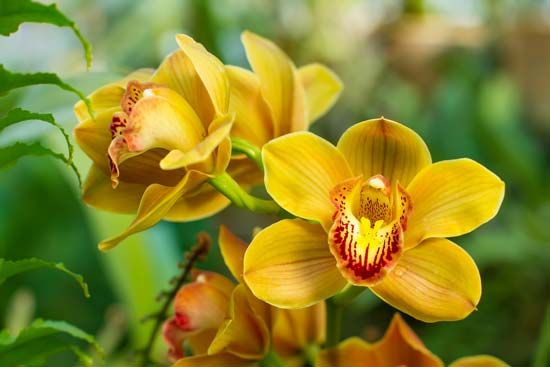
What is Cymbidium?
Cymbidium is a genus comprising 50–70 species of tropical and subtropical orchids. Primarily distributed across Asia, with some species native to Australia, these evergreen plants can grow in soil or epiphytically on other plants1.
They are widely cultivated as ornamentals and florists’ plants, featuring thousands of horticultural hybrids. Their showy flowers are known for their longevity and range in color from white and yellow to green, maroon, and bronze. Morphologically, they typically possess short pseudobulbs, leathery leaves, and waxy petals and sepals of similar size. The prominent labellum, or lip, often provides a contrasting color, and some species are noted for their fragrance. Due to their durability, the cut flowers are frequently used in corsages.1
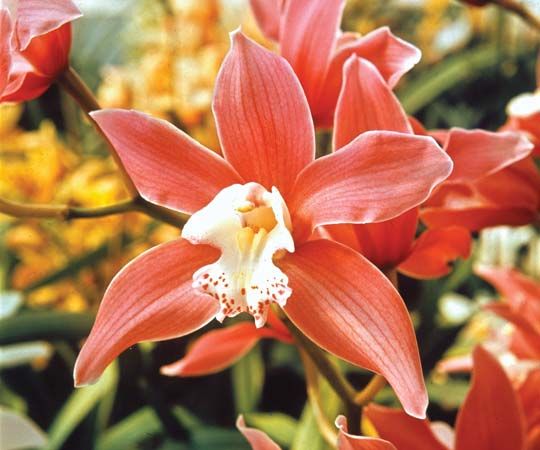
What is the difference between terrestrial and epiphytic orchids?
The primary difference between terrestrial and epiphytic orchids lies in their growth habitat and ecological distribution.
- Terrestrial Orchids: These plants grow in the soil. They are the predominant form of orchids found in temperate zones, often inhabiting environments such as bogs, grasslands, and hardwood forests.34
- Epiphytic Orchids: These orchids grow on other plants rather than in the ground. They are most common in tropical regions, particularly in cloud-forest associations on mountainsides, where they utilize trees or even cacti as a substrate.354
Morphologically, both groups may develop thickened stem bases, but pseudobulbs consisting of a single internode are restricted primarily to epiphytic groups. While terrestrial species are often deciduous and may require specific symbiotic fungi to flourish, many epiphytes have evolved to thrive in diverse environments, ranging from high-altitude forests to coastal mangrove roots.365
How do pseudobulbs help orchids survive in their environment?
Pseudobulbs are specialized, thickened stem structures that play a critical role in the survival of many orchids, particularly those that grow as epiphytes. By acting as storage organs, these bulblike stems allow the plants to endure fluctuating environmental conditions, such as periods of drought or limited access to water, which are common in the habitats where these orchids thrive.37
While pseudobulbs vary significantly in shape and size, they generally function as reservoirs for water and nutrients. This adaptation is especially vital for epiphytic species, which do not have access to the consistent moisture found in soil. Morphologically, these structures range from complex forms consisting of several internodes to more specialized, single-internode structures. In many species, such as those in the genus Bulbophyllum, these thickened stems work in tandem with other adaptations—such as succulent leaves—to maintain the plant’s hydration and overall health in warm, often unpredictable climates.37
What are some other popular types of orchids grown by gardeners?
Beyond the common varieties, there are many popular orchid genera cultivated by gardeners for their showy flowers and unique growth habits. Some of the most widely grown include:
- Cattleya: Often called the corsage orchid, these are native to tropical America and are prized for their large, brightly colored flowers. They are typically epiphytic and feature prominent pseudobulbs.8
- Cymbidium: These orchids are popular as both potted plants and cut flowers because their blooms can persist for several months. They can grow in soil or epiphytically and are known for their waxy, long-lasting flowers.1
- Dendrobium: A diverse genus of about 1,500 species, these epiphytic orchids range from small, delicate flowers to large, showy varieties. They are popular in the floral industry and include unique types like the cucumber orchid.9
- Oncidium: Frequently referred to as dancing ladies or bee orchids, these tropical orchids are known for their sprays of yellow or brown flowers.10
- Moth orchid: Belonging to the genus Phalaenopsis, these are among the most popular houseplants due to their ease of care and beautiful, long-lasting white, purple, or pink blooms.2
The Orchidaceae family is vast, containing approximately 26,000 species, including other notable groups like Bulbophyllum, Vanda, and even the source of vanilla, the genus Vanilla.11
Sources
- cymbidium — Encyclopædia Britannica
- list of plants in the family Orchidaceae — Encyclopædia Britannica
- orchid - Growth forms — Encyclopædia Britannica
- spider orchid — Encyclopædia Britannica
- orchid - Ecology — Encyclopædia Britannica
- orchid: Top Questions — Encyclopædia Britannica
- Bulbophyllum — Encyclopædia Britannica
- cattleya — Encyclopædia Britannica
- Dendrobium — Encyclopædia Britannica
- Oncidium — Encyclopædia Britannica
- moth orchid — Encyclopædia Britannica
Published on · 3 min read