Dove Tree
The dove tree (Davidia involucrata) is a small, pyramidal tree native to southwestern China, belonging to the Nyssaceae family. It is widely admired for its…
What is dove tree?
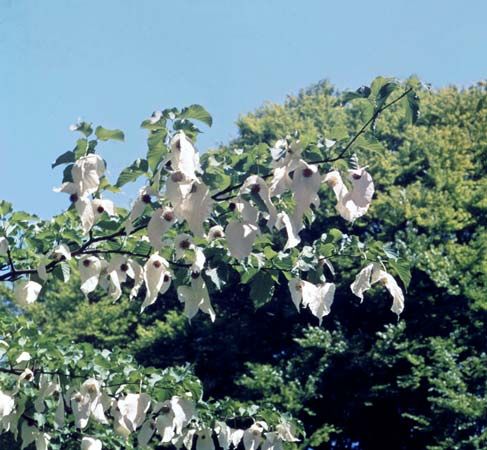
The dove tree (Davidia involucrata) is a small, pyramidal tree native to southwestern China, belonging to the Nyssaceae family. It is widely admired for its striking appearance when in bloom, characterized by showy, creamy-white bracts—modified leaves—that surround the small flower heads.12
These two unequal bracts, which can reach up to 16 cm in length, give the tree its common name due to their resemblance to the wings of a dove. The tree features large, bright-green, alternate leaves and is a popular ornamental species in many regions outside of its native habitat.12
What are bracts and how do they differ from petals?
A bract is a modified, typically small, leaflike structure positioned beneath a flower or an inflorescence. While petals are specialized floral organs that form part of the flower itself, bracts are distinct structures that serve different roles, such as protection or attracting pollinators.34
The primary differences include:
- Function: Petals are primarily involved in attracting pollinators to the reproductive parts of the flower. Bracts often provide protection for developing buds or, when brightly colored, assist in attracting pollinators.4
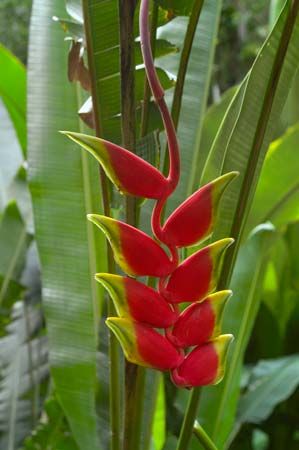
- Appearance: Bracts are often mistaken for petals because they can be showy and colorful, as seen in poinsettias, dogwood blossoms, and heliconia. However, they are structurally modified leaves rather than true floral petals.35
- Positioning: Bracts are located on the stem or axis below the flower or inflorescence, whereas petals are attached to the receptacle within the flower structure itself.34
Why is the dove tree native to southwestern China?
The dove tree (Davidia involucrata) is native to southwestern China because the region provides the specific ecological conditions necessary for its growth. While the provided search results confirm the tree’s native status in this area, they do not explicitly state the evolutionary or historical reasons why it originated there.1
However, southwestern China, particularly provinces like Yunnan, is characterized by immense biological diversity. The region features a unique convergence of tropical, subtropical, temperate, and alpine growing zones, which supports a vast array of endemic plant species. This topological and climatic variety, combined with the lack of insurmountable geographic barriers, has allowed China to serve as a significant center for the development and preservation of diverse flora, including many forest trees.78
What other plants are in the Nyssaceae family?
The Nyssaceae family, commonly known as the sour gum family, is primarily represented by the genus Nyssa, which includes about nine species of trees. These trees are known for their tolerance of moist or swampy environments and their deciduous nature.910
Key members of the Nyssa genus include:
- Black tupelo (Nyssa sylvatica): Also known as black gum, sour gum, or pepperidge tree, this is the most widely distributed member in North America. It is often cultivated as an ornamental for its brilliant scarlet autumn foliage.9
- Swamp black tupelo (N. sylvatica, variety biflora): A variety of the black tupelo that specifically inhabits swamps along the East Coast and in the Deep South of the United States.9
- Water tupelo (N. aquatica): Also called cotton gum or swamp gum, this species is found in the swamps of the southeastern United States and the Mississippi River valley. It is characterized by a trunk that is conspicuously enlarged at the base.9
- Ogeechee lime (N. ogeche): A rarer North American species noted for producing edible fruits and high-quality honey.9
Sources
- dove tree — Encyclopædia Britannica
- dove tree — Merriam-Webster
- Bract — Encyclopædia Britannica
- Angiosperm - The receptacle — Encyclopædia Britannica
- heliconia — Encyclopædia Britannica
- gnetophyte - Reproductive structures and function — Encyclopædia Britannica
- China - Flora — Encyclopædia Britannica
- Yunnan - Plant and animal life — Encyclopædia Britannica
- tupelo — Encyclopædia Britannica
- Nyssaceae — Merriam-Webster
- Asterales - Other families — Encyclopædia Britannica
Published on · 3 min read