Bentgrass
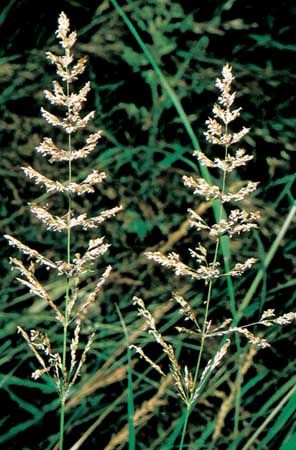
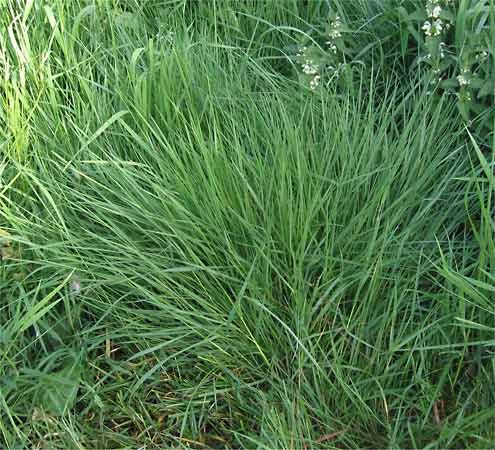
Bentgrass (genus Agrostis) is a versatile group of grasses widely utilized for both residential and professional applications due to its ability to form a…
How is bentgrass commonly used in landscaping and sports turf?
Bentgrass (genus Agrostis) is a versatile group of grasses widely utilized for both residential and professional applications due to its ability to form a dense, high-quality surface.1
In landscaping, certain species like creeping bent (Agrostis stolonifera) and Idaho bentgrass are popular choices for lawns. These grasses are valued for their ability to spread vegetatively through stolons or rhizomes, allowing them to form thick, uniform mats.12
In the realm of sports turf, bentgrass is highly regarded for its performance under close mowing. It is one of the most common species used for golf putting greens and bowling greens globally. When maintained with frequent, low-height cutting, these grasses develop a finely textured, firm, and spongy surface that is ideal for precision sports. While prized for these uses, it is important to note that some species are considered invasive when they spread beyond their intended areas.12
Are there different species or varieties of bentgrass, and how do they differ?
The genus Agrostis, commonly known as bentgrass, encompasses approximately 150–200 species of Poaceae grasses. These species vary significantly in their growth habits and primary uses:
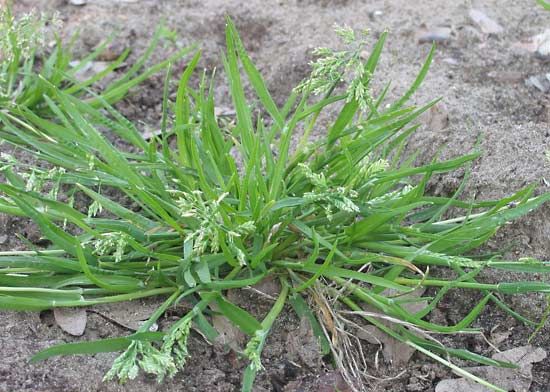
- Creeping bent (Agrostis stolonifera): A perennial grass native to Eurasia and northern Africa, it is widely used for lawns and golf putting greens. It is characterized by blue-gray leaf blades and a pointed ligule. It spreads aggressively via stolons, which can grow up to 1.2 meters per season, allowing it to form dense, spongy mats.12
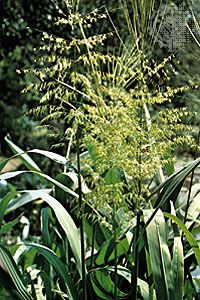
- Redtop (Agrostis gigantea): Unlike the smaller creeping bent, this species grows 1 to 1.5 meters tall. Introduced to North America for hay and pasture, it spreads through rhizomes and produces distinctive reddish flowers.1
- Idaho bentgrass (Agrostis idahoensis): This species is also utilized as a popular lawn grass and is frequently planted on sports surfaces like bowling greens.1
While many species are valued for their fine texture and ability to withstand close mowing, several are considered invasive species when they spread beyond their intended range.12
What is the scientific classification of bentgrass?
Bentgrass belongs to the genus Agrostis, which is part of the Poaceae family of grasses.13
This genus comprises approximately 150–200 species of annual and perennial grasses that are distributed throughout temperate and cool regions of the world, as well as at high altitudes in subtropical and tropical areas. The name Agrostis is derived from the Greek word agrōstis, meaning “a grass,” and has been used in botanical classification since the 16th century.14
What are the main differences between cool-season and warm-season grasses?
The primary difference between cool-season and warm-season grasses lies in their photosynthetic pathways, which dictate their optimal growing conditions and efficiency.
Photosynthetic Pathways
- Cool-season grasses (C3_3 plants): These grasses utilize the Calvin-Benson cycle, where the first stable product of carbon fixation is a three-carbon acid. They are generally more efficient in cooler climates because they lack the additional energy requirements of the C4_4 pathway. However, they are prone to photorespiration, a process that reduces photosynthetic efficiency, particularly at higher temperatures.5
- Warm-season grasses (C4_4 plants): These grasses evolved a specialized system that fixes carbon into a four-carbon acid before the Calvin-Benson cycle. This spatial separation allows them to concentrate CO2_2 and suppress oxygenation, making them highly efficient in warm, arid, or CO2_2-limited environments. They lose less water through their stomata compared to C3_3 plants, providing a distinct advantage in hot regions.5
Horticultural Examples
These physiological differences influence their use in turf management:
- Cool-season types: Include Kentucky bluegrass, creeping bentgrass, fescue, and ryegrass.6
- Warm-season types: Include Bermuda grass, zoysia grass, and St. Augustine grass.6
Sources
- Bentgrass — Encyclopædia Britannica
- creeping bent — Encyclopædia Britannica
- list of plants in the family Poaceae — Encyclopædia Britannica
- Agrostis — Merriam-Webster
- Plant - Specific variations in photosynthesis — Encyclopædia Britannica
- turf — Encyclopædia Britannica
- list of economically important members of the family Poaceae — Encyclopædia Britannica
- Grassland - Environment — Encyclopædia Britannica
Published on · 3 min read