Crape Myrtle
The term "crape myrtle" refers to a shrub or tree within the genus Lagerstroemia, which belongs to the loosestrife family (Lythraceae).
What is crape myrtle?
The term “crape myrtle” refers to a shrub or tree within the genus Lagerstroemia, which belongs to the loosestrife family (Lythraceae).12
Native to China and other parts of tropical and subtropical Asia and Africa, these plants are widely cultivated in warm regions as ornamentals for their showy, clustered flowers.132
There are two primary types often discussed:
- Common Crape Myrtle (Lagerstroemia indica): A shrub known for its diverse flower colors, which range from white and pink to red, lavender, and bluish.14
- Queen’s Crape Myrtle (Lagerstroemia speciosa): Also known as the “pride of India” or “banaba,” this is a deciduous tree native to tropical Asia. It is characterized by leathery leaves and large clusters of pink to purple flowers.3
The genus is named after the Swedish naturalist Magnus Lagerstroem. These plants are valued for their aesthetic appeal and, in the case of the queen’s crape myrtle, for their durable wood.213
What makes the bark of a crape myrtle unique?
Sorry, the Britannica knowledge base does not contain information regarding the specific characteristics of the bark of a crape myrtle.
How do crape myrtles adapt to different climates?
Crape myrtles (Lagerstroemia indica) are primarily adapted to warm regions, which is why they are widely cultivated in tropical and subtropical climates. Their ability to thrive in these environments is linked to their origin in China and other warm areas, where they have evolved to flourish in conditions that support their characteristic showy, clustered flowers.1
While these plants are well-suited to warm climates, they are generally not adapted to survive in regions with severe, prolonged freezing temperatures, as they are biologically categorized as plants of the loosestrife family that prefer warmer growing conditions.1
What are some other plants in the Lythraceae family?
The Lythraceae family, commonly known as the loosestrife family, consists of approximately 650 species of trees, shrubs, and perennial herbs. These plants are primarily found in warmer regions across the globe, with notable diversity in South America and Africa.5
Beyond the crape myrtle (Lagerstroemia), other notable plants within this family include:
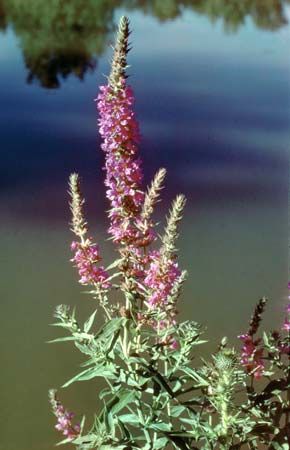
- Purple loosestrife (Lythrum salicaria): A well-known perennial herb native to Eurasia that has become an invasive species in many parts of North America.65
- Henna (Lawsonia inermis): A plant native to northeastern Africa, valued for its leaves which produce an orange-red dye used for centuries.7
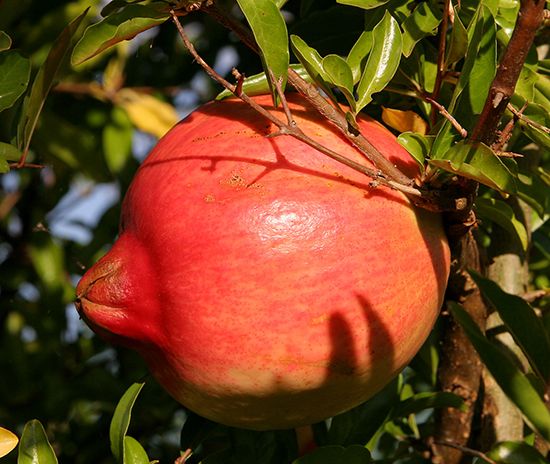
- Pomegranate (Punica granatum): Widely cultivated in warmer regions for its edible fruit and as an ornamental shrub.75
- Water chestnut (Trapa): An aquatic herb found from central and southern Europe to eastern Asia.5
- Cuphea: The largest genus in the family, containing approximately 250 species native to the American tropics.5
- Swamp loosestrife (Decodon verticillatus): Also known as water willow or wild oleander, this is a perennial herb native to swamps and ponds in eastern North America.6
Sources
- crape myrtle — Encyclopædia Britannica
- queen's crape myrtle — Merriam-Webster
- Lagerstroemia — Merriam-Webster
- crape myrtle — Merriam-Webster
- Lythraceae — Merriam-Webster
- loosestrife — Encyclopædia Britannica
- Myrtales - Economic and ecological importance — Encyclopædia Britannica
- Myrtales - Family distributions and abundance — Encyclopædia Britannica
Published on · 2 min read