Pomegranate
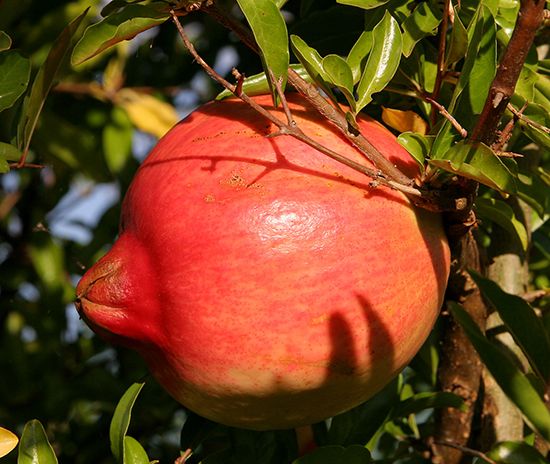
The pomegranate (Punica granatum) is a bush or small tree belonging to the Lythraceae family. It is considered indigenous to Iran and its neighboring…
What is the origin and history of the pomegranate plant?
The pomegranate (Punica granatum) is a bush or small tree belonging to the Lythraceae family. It is considered indigenous to Iran and its neighboring countries.1
Historically, the cultivation of the pomegranate spread from its native region to encircle the Mediterranean, eventually extending through the Arabian Peninsula, Afghanistan, and Indiacom/place/Afghanistan), and India. Today, it is widely cultivated in warmer climates, ranging from the United States to Chileplace/United-States) to Chile.1
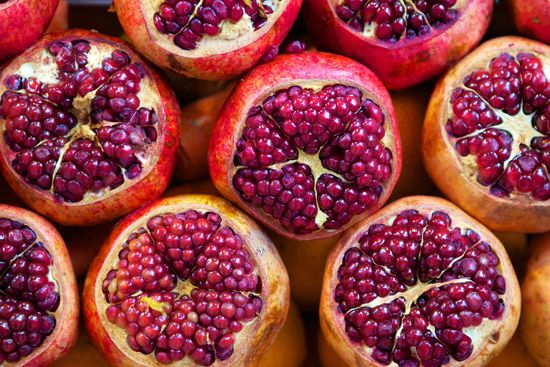
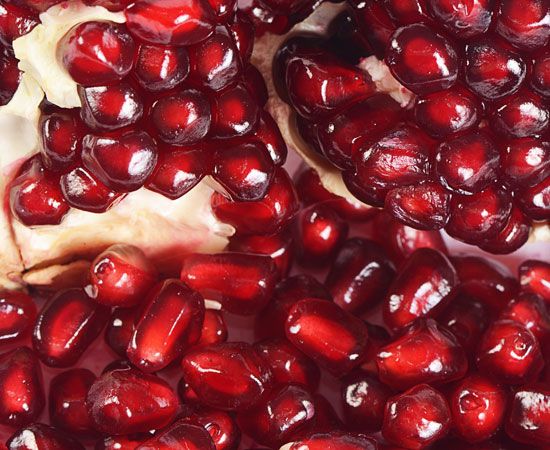
The name “pomegranate” derives from the Middle English poumgrenet and the Anglo-French pome garnette, which literally translates to “seedy fruit”. The plant was first recorded in English usage during the 14th century. It is highly valued for its fruit, which contains numerous arils rich in dietary fibre, vitamin C, and vitamin K.21
How does the pomegranate plant grow, and what are its ideal growing conditions?
The pomegranate (Punica granatum) grows as a bush or small tree that can reach heights of 5 to 7 metres (16 to 23 feet). It features bright-green, lance-shaped leaves and produces distinctive orange-red flowers at the ends of its branchlets.1
Ideal Growing Conditions
While the plant is adaptable to various climates, it requires specific conditions to produce high-quality fruit:
- Climate: It thrives best in regions where the ripening period is characterized by high temperatures and a dry atmosphere.1
- Soil: Deep, rather heavy loams are considered the most suitable soil type for cultivation.1
Propagation
Pomegranates can be grown from seeds, though commercial growers typically use vegetative methods to ensure the quality of specific varieties. This is achieved through layerings or by taking hardwood cuttings measuring 250–300 mm (10–12 inches) in length, which are then rooted directly in open ground.1
How does the pomegranate plant reproduce and propagate?
The pomegranate (Punica granatum) can reproduce through both sexual and asexual means. While the plant can be grown from seeds, this method does not guarantee that the offspring will retain the specific traits of the parent plant.1
To ensure the consistency of choice varieties, growers utilize vegetative reproduction, which allows for the perpetuation of superior plants without genetic variation. The primary methods for this include:13
- Hardwood Cuttings: This is the standard method for commercial propagation. Growers take cuttings measuring 250–300 mm (10–12 inches) in length and root them directly in open ground.1
- Layering: This technique involves encouraging a branch to develop roots while still attached to the parent plant, after which it can be separated to grow independently.13
Vegetative propagation is often preferred in horticulture because it is frequently faster than seed propagation and bypasses issues like seed dormancy or the juvenile nonflowering stage. However, because these methods create genetic clones, it is important to note that the resulting plants share the same susceptibility to diseases.3
What symbolic meanings does the pomegranate hold in ancient mythology?
In ancient Greek mythology, the pomegranate holds significant symbolic weight, primarily through its association with the goddess Persephone.
According to the Homeric Hymn to Demeter, after Persephone was abducted by Hades, the king of the underworld, her mother Demeter grew so distraught that she neglected the earth, causing a widespread famine. Although Zeus eventually commanded Hades to release Persephone, she had consumed a single pomegranate seed while in the underworld. This act bound her to Hades, necessitating that she spend one-third of each year in his realm.
This myth serves as a symbolic explanation for the cycle of the seasons. Persephone’s time in the underworld accounts for the barren appearance of the fields during the summer months, while her return to her mother signifies the revival of the earth during the planting and harvest seasons. Consequently, the pomegranate became a potent symbol of the connection between life, death, and the cyclical nature of vegetation.45
Sources
- Pomegranate — Encyclopædia Britannica
- pomegranate — Merriam-Webster
- horticulture - Vegetative propagation — Encyclopædia Britannica
- Persephone — Encyclopædia Britannica
- Persephone: Top Questions — Encyclopædia Britannica
Published on · 3 min read