Loosestrife
Purple loosestrife (Lythrum salicaria) is a highly aggressive invasive species that has significantly altered North American wetland ecosystems since its…
What are the ecological impacts of purple loosestrife as an invasive species?
Purple loosestrife (Lythrum salicaria) is a highly aggressive invasive species that has significantly altered North American wetland ecosystems since its introduction in the early 19th century.12
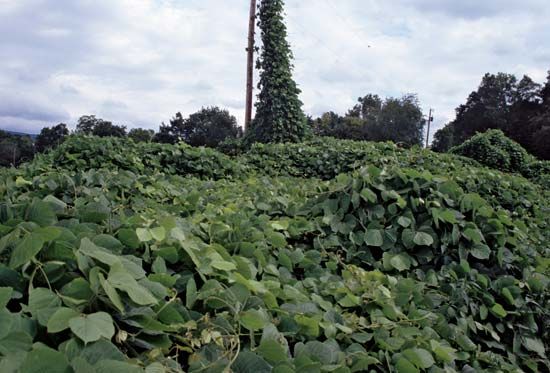
The primary ecological impact of this plant is its ability to form dense, monotypic colonies that displace native vegetation, such as grasses and sedges. By crowding out this naturally diverse plant life, purple loosestrife degrades the essential habitat and food sources that native wildlife rely upon.12
Efforts to manage its spread have included the use of herbicides and biological control methods, such as the introduction of herbivorous beetles. However, these interventions carry their own risks, as the introduction of nonnative insects to control the weed may inadvertently threaten native plant species. Because these invasive populations have overrun thousands of square kilometers, restoration remains a complex and costly challenge for conservationists.2
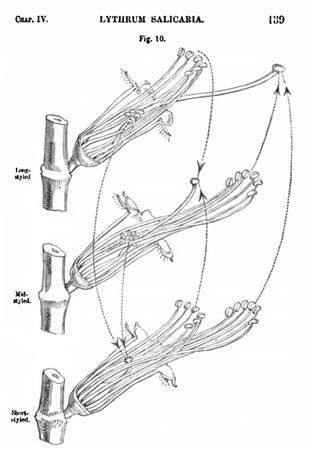
What are the distinguishing features of loosestrife flowers and leaves?
The term “loosestrife” refers to various plants across different families, most notably the genus Lythrum (Lythraceae) and Lysimachia (Primulaceae). Their features vary significantly by species:
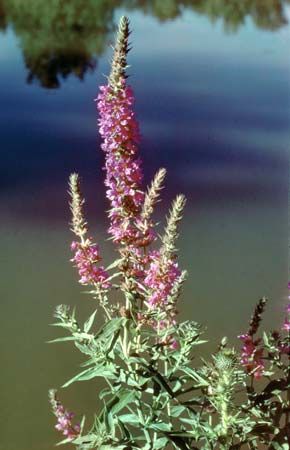
Purple Loosestrife (Lythrum salicaria)
- Leaves: Narrow, pointed, and stalkless, arranged in whorls along a branched stem.3
- Flowers: Red-purple, appearing in tall, tapering spikes.13
Yellow Loosestrife (Lysimachia vulgaris)
- Leaves: Tapering, arranged in pairs or whorls along a branched stem.3
- Flowers: Deep yellow, appearing in terminal clusters.3
Other Varieties
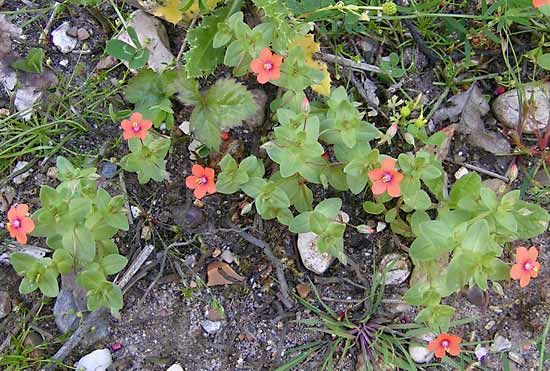
- Yellow Pimpernel (L. nemorum): Features a slender, spreading stem with solitary yellow flowers.3
- Fringed Loosestrife (Steironema ciliatum): A perennial characterized by yellow flowers.3
While purple loosestrife is widely recognized for its invasive nature in North American wetlands, other species like the swamp loosestrife (Decodon verticillatus) are native to specific regions.3
What is the origin and meaning of the name ‘loosestrife’?
The name “loosestrife” is an English translation of the Greek term lysimacheios, which was historically associated with the plant genus Lysimachia.45
The etymology of the name is rooted in a linguistic interpretation that suggests a combination of the Greek words lysis (meaning “a loosening” or “act of loosing”) and machesthai (meaning “to fight”). This interpretation implies that the plant was believed to have the power to “loose” or calm strife, perhaps by soothing animals or people.4
However, the name also holds a historical connection to the Greek physician Lysimachus (fl. 5th or 4th century BCE), for whom the genus Lysimachia was named. The term was first recorded in English usage around 1548. While the name is now commonly associated with the invasive purple loosestrife (Lythrum salicaria), it originally referred to the yellow-flowered plants of the primrose family.54
What are some native alternatives to invasive loosestrife species for gardening and landscaping?
To replace invasive species like the Eurasian purple loosestrife (Lythrum salicaria), gardeners in North America can select native plants that provide similar aesthetic appeal and ecological benefits without the risk of crowding out local wetland vegetation.
Consider these native alternatives:
- Swamp Loosestrife (Decodon verticillatus): Also known as water willow or wild oleander, this woody perennial is native to the swamps and ponds of eastern North America. It features attractive magenta flowers in axillary clusters and is a far better choice for local ecosystems than its invasive counterparts.13
- Fringed Loosestrife (Steironema ciliatum): This yellow-flowered perennial is native to moist areas of North America. It offers a beautiful, non-invasive option for gardeners looking to maintain a natural look in damp soil conditions.1
Choosing native species is an ethical imperative for responsible landscaping, as it helps preserve biodiversity and protects the habitats that native wildlife rely on for food and shelter.1
Sources
- loosestrife — Encyclopædia Britannica
- conservation - Removing invasive species — Encyclopædia Britannica
- purple loosestrife — Merriam-Webster
- loosestrife — Merriam-Webster
- Lysimachia — Merriam-Webster
- swamp loosestrife — Merriam-Webster
Published on · 3 min read