Cumberland Gap
Daniel Boone played a pivotal role in the development of the Cumberland Gap as a primary route for westward expansion. While the gap had been discovered…
How did Daniel Boone contribute to the exploration and use of the Cumberland Gap?
Daniel Boone played a pivotal role in the development of the Cumberland Gap as a primary route for westward expansion. While the gap had been discovered earlier by Thomas Walker in 1750, Boone’s extensive explorations of the region in the late 1760s provided him with the necessary knowledge to facilitate future travel.12
In March 1775, Boone and 28 companions were employed by the Transylvania Company to blaze a trail through the gap. Despite facing resistance from Indigenous groups, the party successfully constructed the Wilderness Road. This road extended from eastern Virginia through the Cumberland Gap and into the interior of Kentucky, serving as the main artery for trans-Allegheny migration.213
By providing a viable path for settlers, the Wilderness Road enabled the establishment of early Kentucky settlements, such as Boonesborough, and ultimately helped extend the western boundary of the colonies to the Mississippi River.12
How did the Cumberland Gap impact westward expansion in the United States?
The Cumberland Gap served as a critical natural gateway that fundamentally altered the trajectory of westward expansion in the United States. By providing a manageable passage through the formidable Appalachian Mountains, the gap acted as the primary artery for trans-Allegheny migration.13
Its impact on expansion included:
- Opening New Territories: The gap facilitated the settlement of the Northwest Territory and enabled the expansion of the western boundary of the original 13 colonies all the way to the Mississippi River the way to the Mississippi River.1
- The Wilderness Road: By serving as the essential link for the Wilderness Road—a route blazed by Daniel Boone—the gap allowed for the systematic movement of settlers into Kentucky and Tennessee, connecting the eastern seaboard to the interior frontier.14
- Strategic Importance: Beyond its role in migration, the gap was a vital geographic feature that remained strategically significant well into the 19th century, serving as a contested point during the American Civil War.1
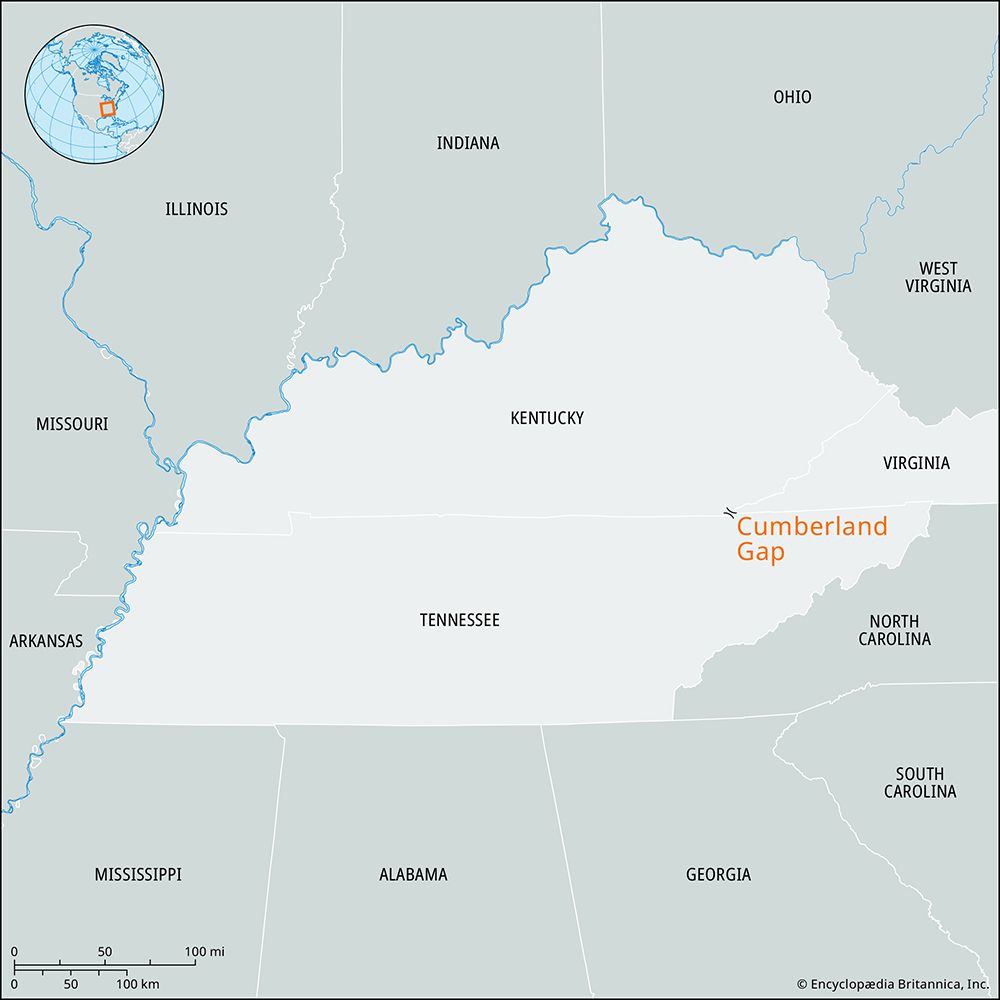
What is the Cumberland Gap and where is it located?
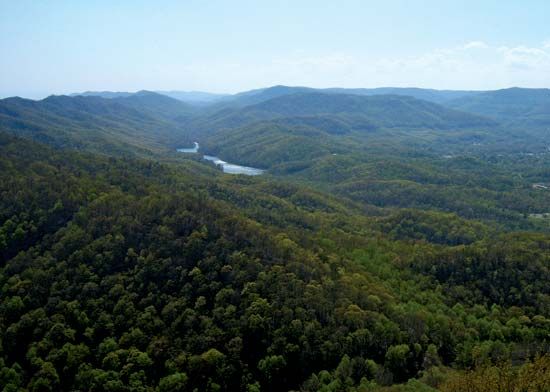
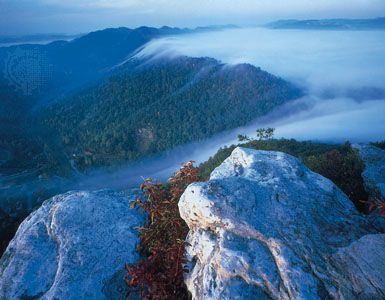
The Cumberland Gap is a natural mountain pass with an elevation of 1,640 feet (500 meters) that was carved through the Cumberland Plateau by ancient stream activity.17
It is located in the eastern United States near the junction where the borders of Kentucky, Virginia, and Tennessee meet, specifically between Middlesboro, Kentucky, and the town of Cumberland Gap, Tennessee.1
Discovered by Thomas Walker in 1750, the pass was named for the duke of Cumberland. It became a vital route for the Wilderness Road, which was blazed by Daniel Boone. This road served as the primary artery for trans-Allegheny migration, facilitating the settlement of the Northwest Territory and the expansion of the American colonies toward the Mississippi River. Today, the area is preserved within the Cumberland Gap National Historical Park.17
How does the Cumberland Gap National Historical Park contribute to education and preservation efforts?
The Cumberland Gap National Historical Park serves as a vital site for both historical preservation and public education regarding the early expansion of the United States. Established in 1940, the park protects 32 square miles (83 square km) of the Cumberland Plateau, centering on the natural mountain pass that served as the primary gateway for trans-Allegheny migration.71
By preserving the physical landscape of the gap, the park maintains the integrity of the historic Wilderness Road. This route, famously blazed by Daniel Boone, was the essential artery that allowed settlers to reach the Northwest Territory and pushed the western boundary of the original colonies toward the Mississippi River. Through the protection of this terrain, the park provides a tangible connection to the era of westward expansion and the strategic military history of the site, which was contested by both Union and Confederate forces during the American Civil War.71
Sources
- Cumberland Gap — Encyclopædia Britannica
- Daniel Boone — Encyclopædia Britannica
- American frontier - Early roads — Encyclopædia Britannica
- Appalachian Mountains - Settlement and expansion — Encyclopædia Britannica
- Appalachian Mountains - Geology of the Appalachian Mountains — Encyclopædia Britannica
- Kentucky - Relief — Encyclopædia Britannica
- Cumberland Gap National Historical Park — Encyclopædia Britannica
Published on · 3 min read