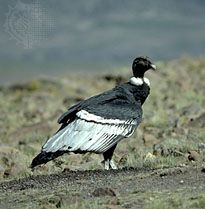
Curassow
Curassows, which belong to the family Cracidae, are primarily threatened by their status as game birds; their flesh is considered delicious, making them…
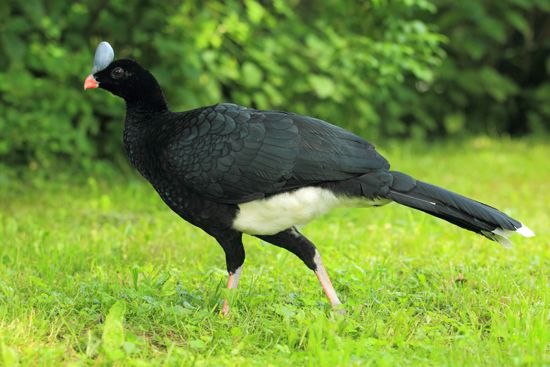
What are the main threats to curassow populations, and what conservation efforts are in place?
Curassows, which belong to the family Cracidae, are primarily threatened by their status as game birds; their flesh is considered delicious, making them frequent targets for hunting. This pressure is particularly severe for species like the razor-billed curassow (C. mitu), which is currently classified as critically endangered.1
While specific, species-targeted conservation programs for curassows are not detailed in the provided search results, broader efforts to combat the illegal taking of wildlife—known as poaching—are essential for their survival. These conservation initiatives include:
- Game Management: The implementation of programs designed to counteract threats to wildlife, often involving game wardens who patrol protected areas to deter illegal hunting.2
- International Regulation: Agreements such as the Convention on International Trade in Endangered Species (CITES) work to reduce the incentives for poaching by regulating the global commercial trade of endangered species.2
- Border Enforcement: Customs agencies play a critical role in intercepting the smuggling of wildlife and wildlife products.2
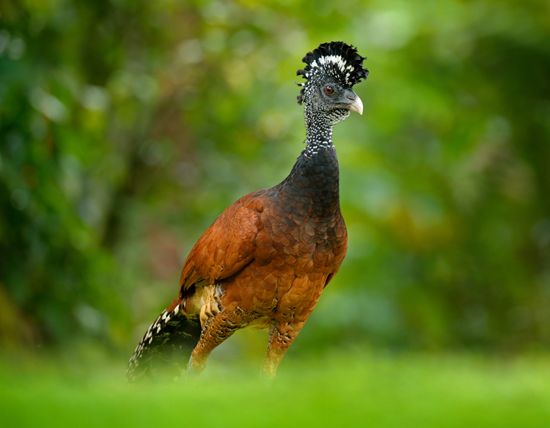
How successful have captive breeding programs been for curassow conservation?
The provided search results do not contain information regarding the success or implementation of captive breeding programs specifically for curassows. While the documents discuss the general role of zoos in species conservation and provide examples of successful captive breeding for other animals—such as the California condor and Przewalski’s horses—they do not mention curassows in this context.
Because the current knowledge base lacks data on the status of captive breeding for this specific group of birds, I cannot provide an assessment of its success.
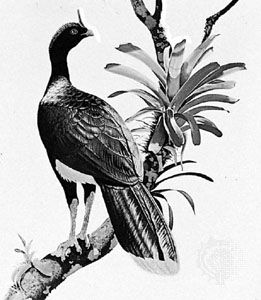
Where are curassows typically found in the wild?
Curassows are native to the tropical regions of the Americas, where they inhabit a variety of environments ranging from lowland forests to mountainous terrain. Their distribution is specific to the species:
- Great curassow (Crax rubra): This species is found across a broad range extending from Mexico through Central America and down to Ecuador.1
- Helmeted curassow (Pauxi pauxi): These birds are typically found in the mountainous regions of Venezuela and Colombia.1
- Razor-billed curassow (C. mitu): This critically endangered species is native to the Amazon basin.1
These birds belong to the family Cracidae, which also includes chachalacas and guans, both of which occupy similar tropical ranges throughout the Americas.1
How many species of curassows exist, and which are the most well-known?
There are between 7 and 12 recognized species of curassows, which are large, arboreal game birds belonging to the family Cracidae.
The most well-known species include:
- Great curassow (Crax rubra): A large bird reaching up to 100 cm (40 inches) in length, found throughout the region from Mexico to Ecuador.1
- Helmeted curassow (Pauxi pauxi): Notable for its distinct appearance, this species inhabits the mountainous regions of Venezuela and Colombia.1
- Razor-billed curassow (C. mitu): A species native to the Amazon basin that is currently classified as critically endangered.1
These birds are characterized by their sexual dimorphism: males are typically glossy black with a curled crest of feathers and a brightly colored bill ornament, while females are smaller and brownish in color.1
Sources
- Curassow — Encyclopædia Britannica
- poaching — Encyclopædia Britannica
- conservation - Protective custody — Encyclopædia Britannica
- Zoos - Pro 3: Zoos save species from extinction and other dangers. — Encyclopædia Britannica
- Crax — Merriam-Webster
- curassow — Merriam-Webster
Published on · 2 min read