Cuscus
It appears there is a common confusion between the animal "cuscus" and the food "couscous."
What is cuscus?
It appears there is a common confusion between the animal “cuscus” and the food “couscous.”
A cuscus is any of the seven species of Australasian marsupial mammals belonging to the genus Phalanger. Often referred to as “marsupial monkeys,” these animals are characterized by their dense fur, large yellow-rimmed eyes, and slow movement through trees. They are native to regions ranging from Celebes to the Solomon Islands and northern Australia, where they primarily feed on leaves and fruit, though they occasionally hunt birds and lizards.1
In contrast, couscous is a traditional North African dish made from semolina grains, which are derived from the endosperm of durum wheat. Traditionally prepared by hand-rolling the grains and steaming them in a specialized pot called a couscousière, it is typically served with a stew of meat and vegetables.2
What are other examples of marsupials found in Australia?
Australia is home to a vast array of marsupials, which represent the majority of the continent’s native mammals. Beyond the well-known kangaroos, these animals occupy diverse ecological niches, ranging from burrowing species to arboreal gliders.4
Notable examples of Australian marsupials include:
- Wombats: Sturdy, burrowing herbivores with powerful foreclaws.45
- Koalas: Bearlike, arboreal marsupials that feed primarily on leaves.45
- Wallabies: Smaller relatives of the kangaroo, adapted for terrestrial movement.45
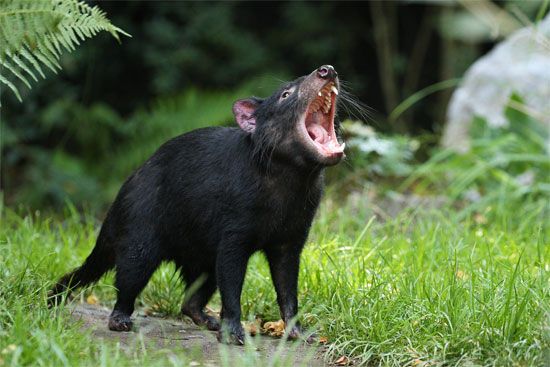
- Tasmanian devils: The largest living carnivorous marsupials.4
- Gliders: Arboreal animals, such as the greater glider or sugar glider, that use membranes to glide between trees.45
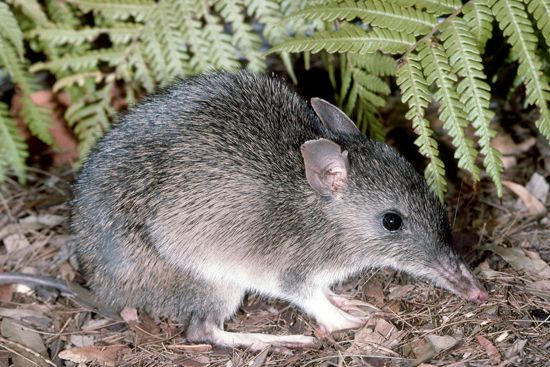
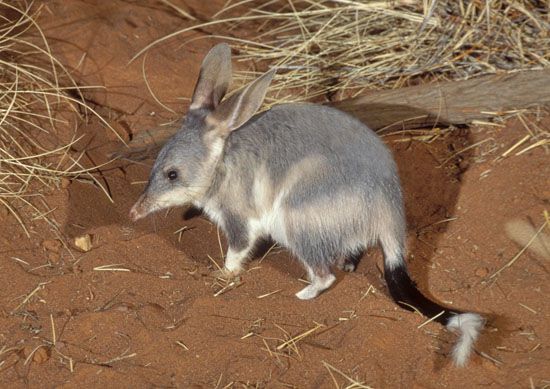
- Bandicoots and Bilbies: Small to medium-sized omnivores that often resemble rodents.45
- Numbats: Specialized termite-eating marsupials with long, wormlike tongues.45
- Marsupial moles: Rare, burrowing species found in the deserts of central and western Australia.45
- Quokkas: Small, herbivorous macropodids known for their friendly appearance.56
How do marsupials differ from placental mammals?
Marsupials and placental mammals differ primarily in their reproductive strategies, brain structure, and developmental processes.
Reproductive Differences
The most significant distinction lies in how the young develop. In placental mammals, the placenta facilitates a long period of intrauterine development, allowing the fetus to receive nourishment directly from the mother’s blood supply until it is relatively mature.489
Conversely, marsupials have a very short gestation period—ranging from about 8 to 40 days—because their uterine walls are not specialized for embryo implantation. Consequently, marsupials give birth to young in a highly vulnerable, embryonic state. These newborns must migrate to the mother’s teats, often located within a pouch called the marsupium, where they remain firmly attached to continue their development for weeks or months.48
Brain Structure and Behavior
Marsupials generally possess simpler brains compared to placental mammals. A key anatomical difference is that the marsupial brain lacks a corpus callosum, the structure that connects the two cerebral hemispheres in placental mammals. This difference in brain structure is associated with more limited vocal abilities and less complex social organization among most marsupial species.4
Evolutionary Context
While both groups diverged during the Cretaceous Period, they often exhibit convergent evolution, where unrelated species develop similar physical traits or behaviors to fill comparable ecological niches. For example, some marsupials have evolved to resemble placental moles, squirrels, or dogs, despite their distinct reproductive biology.410
What are the main differences between semolina and other types of wheat flour?
Semolina is distinct from standard wheat flour primarily in its physical form, origin, and intended use. While flour is a finely ground powder, semolina consists of the coarse, purified middlings (the inner endosperm) of hard durum wheat.111213
Key differences include:
- Texture and Processing: During the milling process, wheat is subjected to a gradual reduction. While flour is the fine product resulting from repeated grinding and sieving, semolina is the coarser, granular material separated during the initial stages of milling. Modern production prioritizes regularity in particle size for semolina to ensure consistent water absorption.131214
- Gluten Characteristics: The gluten in durum semolina is strong, which is ideal for maintaining the structure of pasta and alimentary paste products. However, it is intentionally less elastic than the gluten required for bread flour.1214
- Applications: Because of its coarse texture and specific protein quality, semolina is the preferred choice for pasta, polenta, and certain breakfast cereals, whereas finer flours are selected for baking and confectionery.121314
Sources
- cuscus — Encyclopædia Britannica
- couscous — Merriam-Webster
- couscous — Encyclopædia Britannica
- marsupial — Encyclopædia Britannica
- marsupial - Classification — Encyclopædia Britannica
- kangaroo — Encyclopædia Britannica
- kangaroo - Descriptions of selected species — Encyclopædia Britannica
- mammal - Estrus and other cycles — Encyclopædia Britannica
- Animal - Rise of vertebrates — Encyclopædia Britannica
- Animal development - Adaptations in mammals — Encyclopædia Britannica
- Durum wheat — Encyclopædia Britannica
- semolina — Encyclopædia Britannica
- Cereal processing - Milling — Encyclopædia Britannica
- Cereal processing - Semolina — Encyclopædia Britannica
Published on · 3 min read