Niche
The term "niche" carries distinct meanings depending on whether it is applied to biology or business.

What is niche?
The term “niche” carries distinct meanings depending on whether it is applied to biology or business.
Ecological Niche
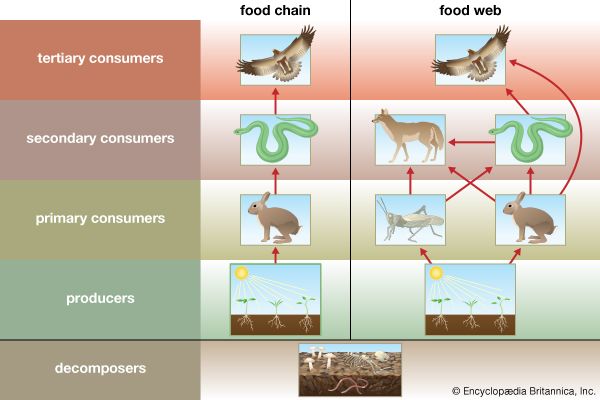
In ecology, a niche refers to the specific role or “job” a species performs within its community. This includes all interactions with other organisms, such as competition, predation, parasitism, and mutualism. Additionally, a species’ niche is shaped by abiotic factors like climate and soil type.1
Market Niche
In marketing, a niche is a small, specialized segment of a larger market defined by unique requirements or preferences. While mass marketing targets the broadest possible audience, niche marketing focuses on narrow customer groups seeking specific benefits. Smaller companies often thrive by specializing in these niches, as they can provide tailored value propositions that larger organizations might overlook.23
How does a species’ habitat differ from its ecological niche?
While the terms are sometimes used interchangeably in casual conversation, they represent distinct ecological concepts. A habitat is the physical environment or “home” where a plant or animal is naturally found, such as a forest, grassland, or stream bank. It provides the necessary surroundings for a species to live, including specific requirements for nesting and feeding.41
In contrast, an ecological niche refers to the functional role or “job” a species performs within its community. While a habitat is the “address” where an organism lives, the niche is its “profession”—how it interacts with other members of the community through competition, predation, parasitism, and mutualism.5
According to the principle of competitive exclusion, two species cannot occupy the exact same niche in the same environment indefinitely; one will eventually outcompete the other, ensuring that each species maintains a distinct ecological role.6
What happens when two species compete for the same niche?
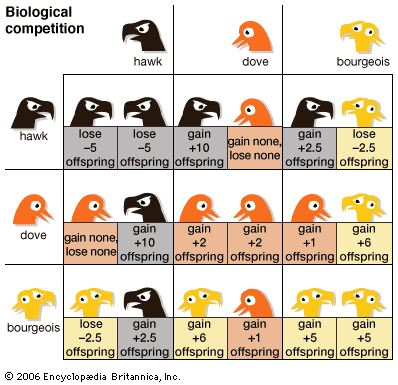
When two species compete for the same ecological niche, they are subject to the principle of competitive exclusion. This ecological generalization states that two species cannot coexist indefinitely in the same niche because they compete for limited resources; eventually, one species will either go extinct locally or be driven out by the other.47
However, the outcomes of this competition can vary over evolutionary time. The weaker competitor may:
- Go extinct locally: One species is eliminated from the area by the superior competitor.8
- Diverge in resource use: Through a process called character displacement, species may evolve physical or behavioral differences—such as changes in body size or feeding patterns—to minimize competition and occupy distinct niches.89
- Evolve increased competitive ability: Natural selection may favor individuals that are better equipped to secure necessary resources.8
Ultimately, these interactions help shape the structure of biological communities, as species evolve to fill different roles to avoid direct, unsustainable competition.810
Why do businesses choose to target a specific market niche?
Businesses often choose to target a specific market niche to gain a competitive advantage through specialization and a deep understanding of unique customer needs. While mass marketing seeks to reach the largest possible audience with a one-size-fits-all approach, niche marketing focuses on narrow subsegments of the market that have special requirements.311
Key reasons for this strategy include:
- Efficiency and Profitability: By tailoring products and marketing programs to a specific group, companies can allocate their time and money more effectively, often leading to higher growth potential and profitability.12211
- Avoiding Direct Competition: Smaller companies often use niche strategies to avoid competing directly with larger organizations that prioritize mass-market segments and may ignore the specific needs of smaller groups.311
- Stronger Relationships: Specialization allows firms to develop a deeper understanding of their customers’ motivations and behaviors, enabling more effective, pinpoint communication.3122
- Market Saturation: As major market segments become saturated, focusing on smaller, underserved niches provides a viable path for companies to remain profitable and relevant.2
Sources
- niche — Encyclopædia Britannica
- marketing - Market niches — Encyclopædia Britannica
- target marketing - Target Marketing Strategies — Encyclopædia Britannica
- principle of competitive exclusion — Encyclopædia Britannica
- habitat — Merriam-Webster
- Coraciiform - Habitat selection and ecological diversity — Encyclopædia Britannica
- competitive exclusion — Merriam-Webster
- community ecology - The effects of competition — Encyclopædia Britannica
- competition — Encyclopædia Britannica
- community ecology - Guilds and interaction webs — Encyclopædia Britannica
- target marketing - Target Marketing Approach — Encyclopædia Britannica
- target marketing - The Sales-Oriented Strategy — Encyclopædia Britannica
Published on · 3 min read