Anti-Atlas
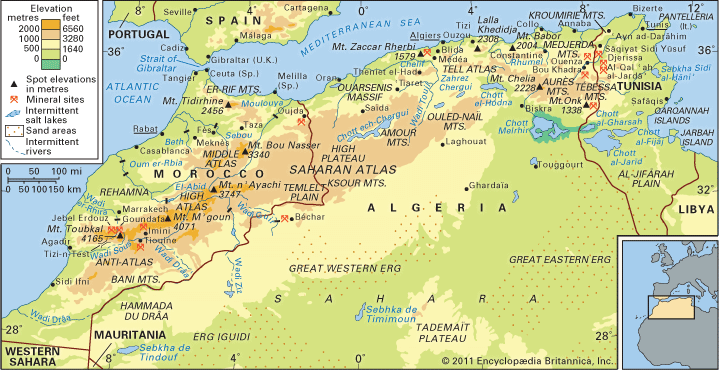
The Anti-Atlas is a rugged, arid mountain range located in Morocco, running parallel to and south of the central Atlas Mountains of North Africa.
What is Anti-Atlas?
The Anti-Atlas is a rugged, arid mountain range located in Morocco, running parallel to and south of the central Atlas Mountains of North Africa.1
The range features a mean elevation of approximately 5,000 feet (1,500 meters), with some peaks and passes rising above 6,000 feet (1,800 meters). It encloses the Sous lowland and extends westward to the Atlantic coast at Sidi Ifni. The Anti-Atlas is connected to the High Atlas by Mount Siroua, a significant volcanic peak reaching 10,840 feet (3,304 meters).1
Characterized by its dry climate, the region receives very little precipitation, with annual totals remaining below 17 inches. This aridity contrasts with the more humid conditions found in other parts of the broader Atlas system.2
How do the Atlas Mountains influence the climate of North Africa?
The Atlas Mountains serve as a critical climatic barrier in North Africa, acting as a meeting point for two distinct air masses: cold, humid polar air from the north and hot, dry tropical air from the south. By forming a high sill, the range separates the Mediterranean basin from the Sahara, effectively hindering the movement of these air masses between the two regions.24
The mountains influence local climate through several factors:
- Altitude and Temperature: Temperatures drop rapidly with increased elevation. Consequently, even coastal massifs can be quite cold, and higher peaks like the High Atlas and Mount Babor retain snow for several months of the year.2
- Precipitation Patterns: Rainfall is heavily dictated by aspect and location. Northern-facing slopes receive significantly more precipitation than southern-facing ones. Generally, rainfall is more plentiful in the Tell Atlas than in the Saharan Atlas, with the highest totals recorded in the northeast.2
- Regional Aridity: The range creates a stark contrast in moisture; while some northern areas receive up to 60 inches of rain annually, regions like the Anti-Atlas receive less than 17 inches.2
What are the primary differences between the High Atlas and the Anti-Atlas?
The High Atlas and the Anti-Atlas are two distinct chains within the Atlas Mountains of Morocco, differing significantly in their physical scale and environmental characteristics.
Key Differences
Feature
High Atlas
Anti-Atlas
Elevation
Reaches 13,665 feet (4,165 meters) at
Mount Toubkal
.65 meters) at
Mount Toubkal
.
Mean elevation of 5,000 feet (1,500 meters); peaks exceed 6,000 feet (1,800 meters).
Length
Extends 460 miles (740 km) from the Atlantic edge.
Extends southwestward from the High Atlas to the Atlantic coast.
Climate
Retains snow until the height of summer.
Arid region with annual rainfall below 17 inches.
Geography
Separated from the Anti-Atlas by the Sous River valley.
Connected to the High Atlas via the volcanic peak Mount Siroua.
While the High Atlas serves as a massive, snow-capped barrier that influences regional weather patterns, the Anti-Atlas is characterized by its rugged, arid terrain located to the south. The two ranges are geographically linked by Mount Siroua, yet they represent different geological and climatic zones within the Moroccan landscape.162
What unique plants and animals live in the arid Anti-Atlas region?
The arid Anti-Atlas region, characterized by its rugged terrain and limited annual rainfall of less than 17 inches, supports vegetation and wildlife adapted to harsh, dry conditions.71
Plant Life
In the drier mountain areas of Morocco, including the rugged highlands, the landscape is often dominated by open forests of drought-resistant species. Notable plants include:
- Argan (Argania spinoza): Found in the rugged highlands south of Essaouira, this tree is unique to southwestern Morocco and produces a prized cooking oil.2
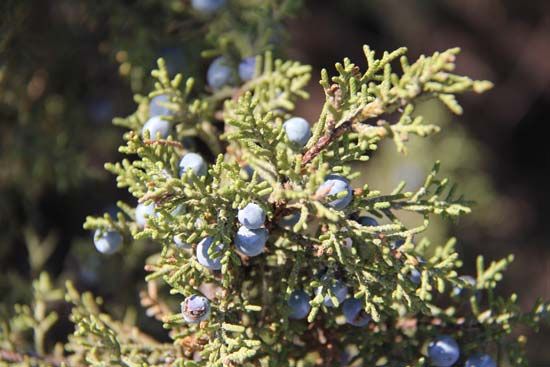
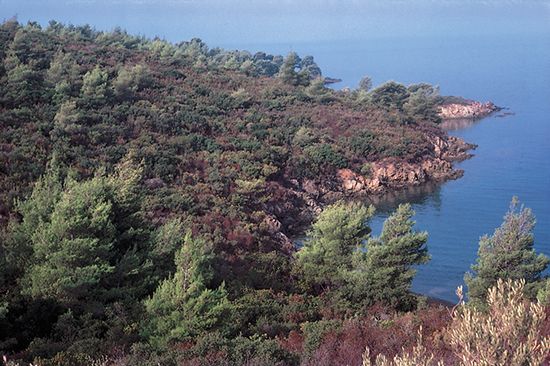
- Hardy Shrubs and Trees: The region features open forests of thuja, juniper, and various pines. In areas where soil quality is poor, vegetation may degenerate into maquis or garigue, consisting of aromatic, hard-leaved shrubs like rosemary and thyme.28
- Steppe and Desert Species: In the more arid interior plains and transitions toward the desert, one finds esparto grass, dwarf palms, and jujube trees.28
Animal Life
While large game has been significantly reduced across the region since Roman times, the arid southern areas of Morocco still host several resilient species:
Sources
- Anti-Atlas — Encyclopædia Britannica
- Atlas Mountains - Climate of the Atlas Mountains — Encyclopædia Britannica
- Africa - Tectonic movements — Encyclopædia Britannica
- Exploring 7 of Earth’s Great Mountain Ranges - Atlas Mountains — Encyclopædia Britannica
- Atlas Mountains — Encyclopædia Britannica
- Morocco - Relief of Morocco — Encyclopædia Britannica
- Atlas Mountains - Plant and animal life — Encyclopædia Britannica
- Morocco - Plant and animal life — Encyclopædia Britannica
- Africa - Mediterranean vegetation — Encyclopædia Britannica
- Algeria - Plant and animal life — Encyclopædia Britannica
Published on · 3 min read