Daffodil
The daffodil (Narcissus pseudonarcissus) is a perennial, bulb-forming plant belonging to the amaryllis family. Native to northern Europe, it is widely…
What is Daffodil?
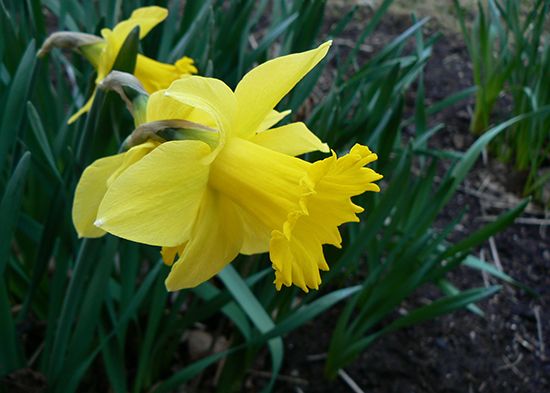
The daffodil (Narcissus pseudonarcissus) is a perennial, bulb-forming plant belonging to the amaryllis family. Native to northern Europe, it is widely cultivated in temperate climates for its showy, spring-blooming flowers.12
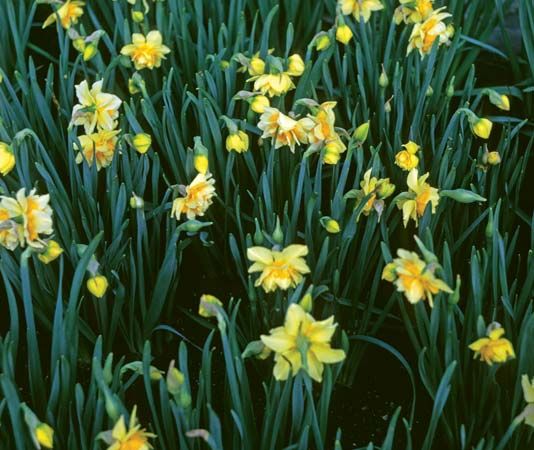
Physically, the plant reaches about 41 cm (16 inches) in height and features linear leaves growing from a bulb. Its most distinctive feature is the flower, which consists of six tepals and a central, trumpet-shaped crown known as a corona. While the classic variety is yellow, modern hybrids can display white, pink, or orange hues.13
The daffodil is part of the genus Narcissus, which includes about 40 species of bulbous plants. It is important to note that all Narcissus bulbs are poisonous and should not be ingested.3
What is the difference between a daffodil and a jonquil?
While both the daffodil and the jonquil belong to the same genus, Narcissus, and the amaryllis family, they are distinct species with specific physical differences.24
- Daffodil (Narcissus pseudonarcissus): Often referred to as the “trumpet narcissus,” the daffodil is characterized by its prominent, trumpet-shaped central crown (corona).2
- Jonquil (Narcissus jonquilla): The jonquil is a specific species native to the Mediterranean region. Unlike the trumpet-shaped daffodil, the jonquil features short-tubed flowers that typically grow in clusters. Additionally, jonquil flowers are known for being fragrant and are used to produce an oil for the perfume industry.245
While the term “daffodil” is sometimes used as a general name for many plants in the Narcissus genus, the jonquil is botanically distinct due to its clustered, short-tubed blooms and its specific scent profile.245
Why are the bulbs of Narcissus plants considered poisonous?
The bulbs of Narcissus plants are considered poisonous because they contain a specific series of alkaloids that are characteristic of the Amaryllidaceae family.26
While some other bulbous plants in the order Asparagales derive their toxicity from cardiac glycosides, the Narcissus genus is defined by its unique chemical composition of alkaloids. Historically, these toxic properties were utilized in medicine, where the bulbs were used as an emetic (to induce vomiting) and a cathartic. Due to their toxicity, it is essential to handle these plants with care and ensure they are not ingested.62
How do perennial plants like daffodils survive through the winter?
Perennial plants like daffodils survive the winter by retreating into specialized underground structures, primarily bulbs. These modified stems serve as vital food reserves, allowing the plant to remain dormant while environmental conditions are unfavorable, such as during freezing temperatures or drought.78
As autumn approaches, the aboveground portions of these herbaceous perennials typically die back, leaving the protected bulb safely beneath the soil surface. This dormancy is a strategic adaptation that allows the plant to preserve energy until favorable conditions return.987
When spring arrives, the plant utilizes these stored reserves to resume active growth and produce flowers rapidly. Many of these plants also undergo a process called vernalization, where exposure to a period of cold temperatures is required to stimulate flowering. This ensures that the plant blooms during the spring, when conditions are optimal for seed production and survival. By sensing environmental cues like temperature and day length, these plants can precisely time their development to match the progression of the seasons.7109
Sources
- daffodil — Encyclopædia Britannica
- narcissus — Encyclopædia Britannica
- daffodil — Merriam-Webster
- jonquil — Encyclopædia Britannica
- jonquil — Merriam-Webster
- Asparagales - Flavonoids — Encyclopædia Britannica
- vernalization — Encyclopædia Britannica
- Plant development - Seasonal adaptations — Encyclopædia Britannica
- Bulb — Encyclopædia Britannica
- Perennial — Encyclopædia Britannica
- gardening - Protecting plants — Encyclopædia Britannica
Published on · 3 min read