Dartmoor
Dartmoor is a wild, desolate upland region located in the county of Devon, southwestern England. Characterized by a granite plateau punctuated by weathered…
What is Dartmoor?
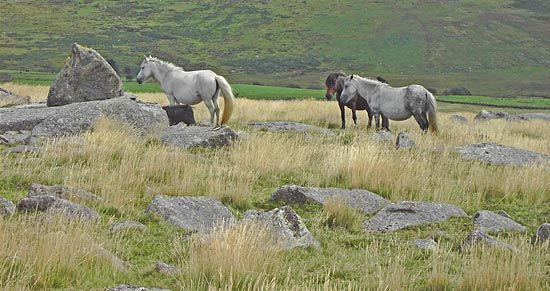
Dartmoor is a wild, desolate upland region located in the county of Devon, southwestern England. Characterized by a granite plateau punctuated by weathered rock formations known as tors, the area is covered primarily in heather.1
Designated as a national park in 1951, the 365-square-mile landscape serves as a vital watershed for the region and supports grazing for wild ponies, sheep, and cattle. Historically, the central area has been part of the duchy of Cornwall since 1337. The region is also home to the historic Dartmoor Prison, established in 1806, and has famously served as the atmospheric setting for literature, most notably Sir Arthur Conan Doyle’s The Hound of the Baskervilles.1
What are tors and how are they formed?
A tor is an exposed rock mass composed of jointed and broken blocks, typically reaching heights of no more than 15 meters (50 feet). These formations often appear as residual features at the summits of inselbergs or at the highest points of pediments.2
Tors are generally found overlying unaltered bedrock and are believed to form through two primary processes:
- Freeze–thaw weathering: The expansion of water within rock joints during freezing cycles breaks the stone apart over time.2
- Groundwater weathering: Chemical or physical weathering occurs beneath the surface before the rock is eventually exposed by erosion.2
These processes often result in the characteristic appearance of squared joint blocks that show evidence of spheroidal weathering. While they are iconic features of the Dartmoor granite plateau, they are distinct geological structures found in various landscapes.21
Why are Dartmoor ponies famous?
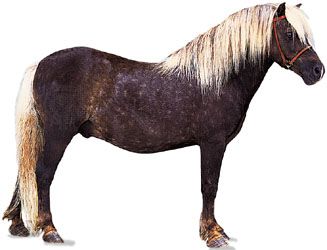
Dartmoor ponies are famous for being a hardy, semi-wild breed native to the Dartmoor region of Devon, England. Standing about 12 hands (48 inches, or 122 cm) tall, they are highly regarded for their versatility and temperament.34
Their reputation is built on several key qualities:
- Riding suitability: They are considered a superior riding pony for children, making them popular in equestrian circles.3
- Breeding value: They serve as excellent foundation stock for the development of larger pony breeds.3
- Hardiness: As an old, resilient breed developed in the rugged environment of Devonshire, they possess a natural toughness that has allowed them to thrive in their native landscape.34
While they historically varied in size and color, the establishment of the Dartmoor Pony Society helped standardize the breed, with brown, black, and bay being the preferred colors today.3
What is the history of Dartmoor Prison?
Dartmoor Prison is a historic correctional facility located in the Dartmoor region of Devon, England. It was originally established in 1806 to house captives from the Napoleonic Wars. The town of Princetown was founded specifically to serve the needs of the prison.1
Since 1850, the facility has served as England’s primary confinement center for serious offenders. Situated approximately 7 miles (11 km) east of Tavistock, the prison remains a prominent, albeit austere, landmark within the rugged landscape of the national park.15
Sources
- Dartmoor — Encyclopædia Britannica
- tor — Encyclopædia Britannica
- Dartmoor — Encyclopædia Britannica
- Dartmoor pony — Merriam-Webster
- West Devon — Encyclopædia Britannica
Published on · 2 min read