Dasyurid
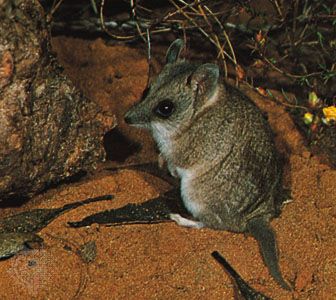
A dasyurid is any member of the family Dasyuridae, a group of marsupial mammals native to Australia, Tasmania, New Guinea, and the Aru Islands.
What is dasyurid?
A dasyurid is any member of the family Dasyuridae, a group of marsupial mammals native to Australia, Tasmania, New Guinea, and the Aru Islands.1
This family comprises approximately 60 species, including well-known animals such as the Tasmanian devil and quolls (historically referred to as “native cats”). The group also includes various smaller species, such as the antechinus and dunnarts, which were formerly known as “marsupial mice and rats”. Dasyurids are generally carnivorous and exhibit a wide range of sizes and behaviors, with some species being arboreal.123
What makes the Tasmanian Devil unique among marsupials?
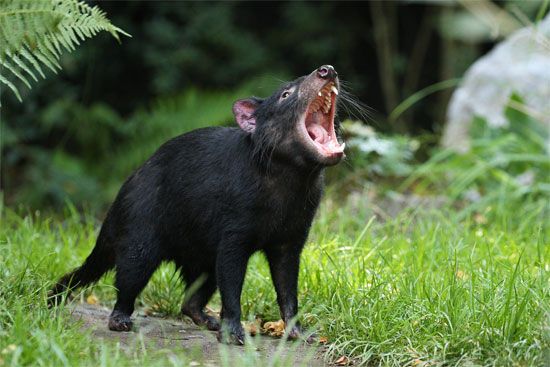
The Tasmanian devil (Sarcophilus harrisii) possesses several unique traits that distinguish it from other marsupials:
- Physical Adaptations: It features a stocky, bearlike build with heavy forequarters and a large, squarish head. Its teeth and jaws are notably developed in a manner similar to those of a hyena, allowing it to function primarily as a scavenger.5
- Pouch Structure: Unlike many other marsupials, the Tasmanian devil’s pouch has a unique mechanism; when relaxed, it opens backward, but it can contract to form a central opening.5
- Reproductive Biology: During the breeding season, the female may release 20 or more eggs, though only a small fraction typically develop. Furthermore, there is a distinct sex ratio bias, with female offspring outnumbering males approximately two to one.5
- Immune System Vulnerability: The species is uniquely susceptible to devil facial tumour disease, a contagious cancer that the animal’s immune system fails to recognize as foreign, preventing it from mounting an effective defense.5
How do marsupials differ from placental mammals?
Marsupials and placental mammals differ primarily in their reproductive strategies and brain structure.
Reproductive Differences
The most significant distinction lies in how the young develop. In placental mammals, the uterine wall is specialized for embryo implantation, and a placenta facilitates a long period of gestation, providing nourishment and removing waste through the maternal blood supply.678
Conversely, marsupials have a much shorter intrauterine development period, ranging from about 8 to 40 days. Their uterine wall is generally not specialized for implantation, and they lack the complex placental connection found in eutherians. Consequently, marsupial young are born in a highly vulnerable, embryonic state. They must migrate to the mother’s nipples—often located within a pouch called the marsupium—to attach and continue their development for weeks or months.67
Brain and Behavioral Differences
Marsupials generally possess simpler brains compared to placental mammals. Notably, the marsupial brain lacks a corpus callosum, the structure that connects the two cerebral hemispheres in placentals. This difference in brain structure and size is associated with more limited vocal abilities and less complex social organization in most marsupial species.6
What are some other examples of carnivorous marsupials?
Most carnivorous marsupials belong to the order Dasyuromorphia, which includes approximately 60 species within the family Dasyuridae. These animals occupy various ecological niches, often filling roles similar to those of placental carnivores.
Notable examples include:
- Quolls: Formerly known as “native cats,” these are predatory marsupials found in Australia and New Guinea.
- Dunnarts: Highly active, insectivorous marsupials that possess such high energy requirements they must consume their own weight in food daily.
- Kowari: A small, carnivorous dasyurid known for its distinctive appearance.
- Marsupial mice: A group of small, insect-eating species that includes the tiny planigales, some of which are among the smallest marsupials in existence.
- Numbat: A specialized marsupial that uses a long, wormlike tongue to feed on termites and ants.
- Thylacine: Also known as the Tasmanian wolf, this was the largest carnivorous marsupial of recent times before it went extinct in the 20th century.
Sources
- dasyurid — Encyclopædia Britannica
- dasyurid — Merriam-Webster
- Dasyurus — Merriam-Webster
- Dasyuridae — Merriam-Webster
- Tasmanian devil — Encyclopædia Britannica
- marsupial — Encyclopædia Britannica
- mammal - Estrus and other cycles — Encyclopædia Britannica
- Animal - Rise of vertebrates — Encyclopædia Britannica
- Animal development - Adaptations in mammals — Encyclopædia Britannica
- thylacine — Encyclopædia Britannica
- marsupial - Classification — Encyclopædia Britannica
Published on · 3 min read