Datiscaceae
Datiscaceae is a family of flowering plants belonging to the squash order (Cucurbitales). While some older classifications may have placed the family…
What is Datiscaceae?
Datiscaceae is a family of flowering plants belonging to the squash order (Cucurbitales). While some older classifications may have placed the family differently, it is currently recognized as a small family consisting of a single genus, Datisca.1
The genus includes two primary species:
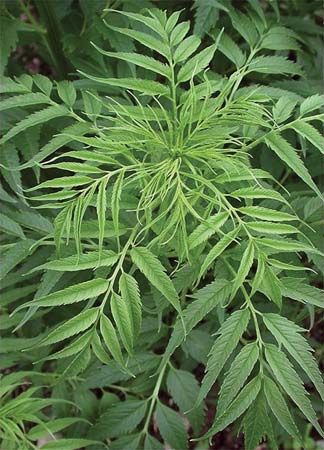
- Datisca cannabina: A hemplike plant reaching up to 2 metres (7 feet) in height, found from the Mediterranean to Central Asia. It features leaves with three to seven toothed leaflets, and its roots are used to produce a yellow dye.1
- Datisca glomerata (Durango root): Native to the coastal ranges of southwestern North America, this species grows to about 1.25 metres (4 feet) and is characterized by deeply cut leaflets and inconspicuous flowers.1
What are the defining characteristics of the order Cucurbitales?
The order Cucurbitales is a diverse group of flowering plants comprising seven families, including Begoniaceae and Cucurbitaceae. While the order encompasses a wide variety of forms, several defining characteristics are commonly observed:
- Leaf Venation: Species in this order typically exhibit leaf veins that radiate from the base of the leaf.3
- Floral Structure: The sepals and petals are often not sharply differentiated from one another. Many species possess inferior ovaries, and the styles are generally free.3
- Reproductive Habits: Male and female flowers are frequently distinct, though they are usually borne on the same plant.3
- Evolutionary Context: Cucurbitales is classified as a Rosid I order and is closely related to Fagales. The order is considered a “curious assemblage” because its member families were historically placed in various, often unrelated, groups before modern DNA studies clarified their relationships.3
How do hemiparasitic or nitrogen-fixing plants differ from other species?
Hemiparasitic and nitrogen-fixing plants differ from typical autotrophic species through specialized biological strategies for acquiring essential nutrients.
Hemiparasitic Plants
Hemiparasites are parasitic plants that retain the ability to photosynthesize but rely on a host for water and mineral nutrients. Their defining structural feature is the haustorium, a specialized organ that penetrates the host to form a vascular connection. Unlike holoparasites, which are nonphotosynthetic and entirely dependent on a host, hemiparasites possess some photosynthetic capacity, though some species remain obligate in their need for a host to complete their life cycle.5
Nitrogen-Fixing Plants
Nitrogen-fixing plants, such as legumes, differ by forming mutualistic, symbiotic relationships with nitrogen-fixing bacteria. These bacteria invade the plant’s root hairs, stimulating the formation of root nodules. Within these nodules, the bacteria convert atmospheric nitrogen into ammonia, which the host plant utilizes for development. This process provides these plants with a significant nutritional advantage, particularly in nitrogen-poor soils, and is essential to the nitrogen cycle.67
What are some other plant families that produce natural dyes?
Throughout history, various plant families have been utilized as sources of natural dyes. While many of these colorants were replaced by synthetic alternatives by the early 20th century, their historical significance remains well-documented.
Key plant families and genera known for producing natural dyes include:
- Rubiaceae (The Madder Family): This family is perhaps most famous for the common madder (Rubia tinctorum), the roots of which were historically cultivated to produce the red dye alizarin. Additionally, the roots of the crosswort (Crucianella) genus have been used as a source of red dye in traditional medicines.89
- Fabaceae (The Legume Family): This family includes the genus Indigofera, which is a primary source of the blue dye indigo. Indigo has been a globally significant vat dye for centuries, valued for its ability to produce deep blue shades on textiles.1011
- Brassicaceae (The Mustard Family): The genus Isatis, specifically the dyerswoad herb (Isatis tinctoria), served as a traditional European source of indigo.1011
- Resedaceae (The Mignonette Family): The plant Reseda luteola, commonly known as weld, was a primary source of the yellow dye luteolin.10
- Fagaceae (The Beech Family): The bark of the North American oak tree, Quercus tinctoria, contains quercetin, a yellow dye belonging to the flavonoid family.10
- Fabaceae (The Legume Family - continued): The logwood tree (Haematoxylon campechianum) is notable for being the only natural dye still in commercial use today. Its heartwood yields hematoxylin, which is used to produce shades of charcoal, gray, and black.10
Sources
- Datiscaceae — Encyclopædia Britannica
- Datiscaceae — Merriam-Webster
- Cucurbitales — Encyclopædia Britannica
- Cucurbitaceae — Encyclopædia Britannica
- Nitrogen-fixing bacteria — Encyclopædia Britannica
- parasitic plant — Encyclopædia Britannica
- Nitrogen-fixing bacteria: Top Questions — Encyclopædia Britannica
- dye - Natural dyes — Encyclopædia Britannica
- indigo — Encyclopædia Britannica
- Rubiaceae — Encyclopædia Britannica
- Gentianales - Rubiaceae — Encyclopædia Britannica
- Pigment — Encyclopædia Britannica
Published on · 3 min read