Datura
The Datura genus consists of approximately nine species of flowering plants belonging to the nightshade family (Solanaceae). These plants are typically…
What are the main characteristics and features of the datura plant?
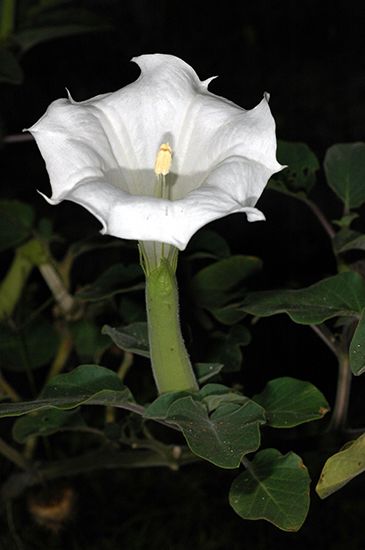
The Datura genus consists of approximately nine species of flowering plants belonging to the nightshade family (Solanaceae). These plants are typically herbaceous, sprawling annuals or short-lived perennials often found in disturbed habitats or along roadsides.1
Key features include:
- Flowers: They are known for large, fragrant, trumpet-shaped flowers that appear in white, yellow, pink, or purple.1
- Foliage: The leaves are simple, alternately arranged, and feature lobed, wavy, or entire margins.1
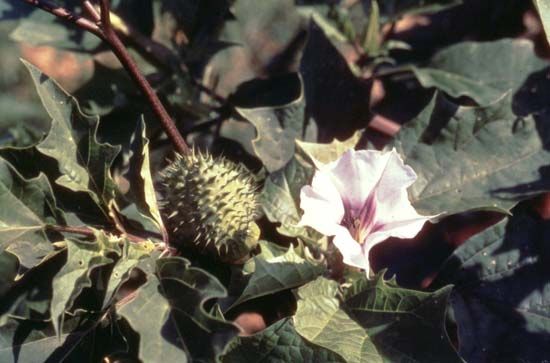
- Fruit: The plants produce a spiny capsule fruit containing numerous seeds.1
It is critical to note that all Datura species are highly poisonous. They contain potent alkaloids—specifically atropine, scopolamine, and hyoscyamine—which can be fatal if ingested. While some species have been used historically in religious ceremonies or for medicinal purposes, their narcotic and hallucinogenic properties pose severe health risks.12
What are some common names for datura in different cultures and languages?
The Datura genus is known by several common names across different cultures and languages, often reflecting its physical appearance or historical usage.
- Jimsonweed: This common name for Datura stramonium is derived from “Jamestown,” Virginia, where the plant was historically noted. It is also frequently referred to as thorn apple due to its spiny, roundish fruit.13
- Devil’s Trumpet: This name is used interchangeably with jimsonweed, likely referencing the plant’s trumpet-shaped flowers and its highly poisonous, narcotic nature.41
- Toloache: This term is commonly used for Datura innoxia, particularly in the context of its traditional use by various peoples, including Mexican Indians, in religious ceremonies.3
- Sacred Datura: This name is specifically associated with the species Datura wrightii, highlighting its historical role in ritualistic practices.3
- Etymological Origins: The name “datura” itself is derived from the Hindi word dhatūrā, which traces back to the Sanskrit dhattūraḥ.2
Because all species in this genus contain potent, potentially fatal alkaloids, it is essential to recognize that these plants are extremely dangerous if ingested.3
How can datura be distinguished from other similar-looking plants?
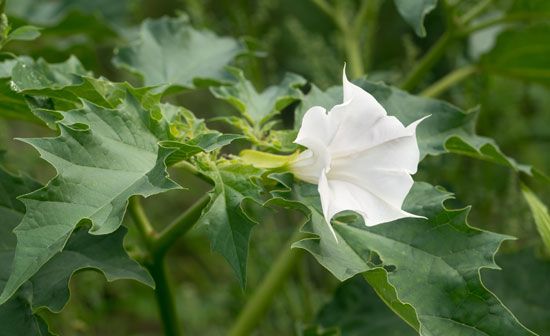
Datura is most frequently confused with members of the related genus Brugmansia, commonly known as angel’s trumpets. While both belong to the Solanaceae family and contain dangerous alkaloids, they can be distinguished by their growth habits and physical features:
- Growth Habit: Datura species are herbaceous, sprawling annuals or short-lived perennials that typically grow closer to the ground. In contrast, Brugmansia species are woody trees or shrubs that can reach up to 8 metres (26 feet) in height.
- Flower Orientation: Datura flowers generally stand upright or face outward. Brugmansia flowers are characteristically pendulous, meaning they hang downward from the branches.
- Fruit: Datura produces a distinct, spiny capsule fruit, which is why it is often called thorn apple. Brugmansia does not produce these spiny capsules.
Both plants are highly toxic and can be fatal if ingested, causing severe symptoms such as hallucinations, paralysis, and tachycardia.
What are the different species of datura, and where are they commonly found?
The genus Datura comprises approximately nine species of poisonous flowering plants within the nightshade family (Solanaceae). These plants are herbaceous, sprawling annuals or short-lived perennials characterized by large, fragrant, trumpet-shaped flowers and spiny capsule fruits.1
Major Species
While there are about nine species in the genus, three are particularly notable for their historical and cultural significance:
- Jimsonweed (D. stramonium): Also known as thorn apple, this species is possibly native to Central America and is now considered an invasive species throughout much of the Northern Hemisphere.12
- Toloache (D. innoxia): Frequently associated with traditional religious ceremonies among various peoples, including Mexican Indians.1
- Sacred Datura (D. wrightii): Another species historically utilized in ritualistic practices.1
Habitat
Datura species are widely distributed in warm regions across the globe. They are commonly found in disturbed habitats, such as along roadsides, where they often grow as weeds. Because they contain potent alkaloids, all parts of these plants are highly poisonous and can be fatal if ingested.12
Sources
- datura — Encyclopædia Britannica
- datura — Merriam-Webster
- devil's trumpet — Merriam-Webster
- jimsonweed — Merriam-Webster
- angel’s trumpet — Encyclopædia Britannica
- Solanales - Solanaceae — Encyclopædia Britannica
- jimsonweed — Encyclopædia Britannica
Published on · 3 min read