Dayflower
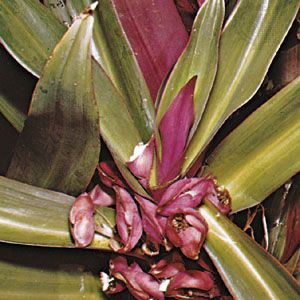
The dayflower refers to any member of the genus Commelina, a group of approximately 100 species of weak-stemmed herbs within the spiderwort family…
What is Dayflower?
The dayflower refers to any member of the genus Commelina, a group of approximately 100 species of weak-stemmed herbs within the spiderwort family (Commelinaceae).12
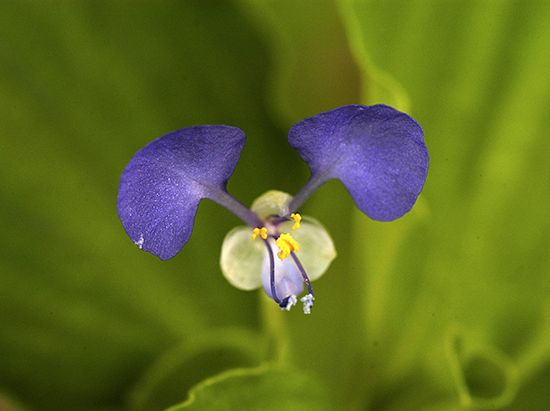
These plants are characterized by their sprawling growth habit and small, typically blue flowers, which earn their name by fading quickly after blooming. While many species are found in moist, shady environments, some, such as Commelina coelestis, C. diffusa, and C. erecta, are utilized in horticulture as ground covers.1
A notable species is Commelina communis, an Asian herb that has become naturalized as a weed in the United States; it is distinguished by having two larger petals and one smaller, white petal. Because of their prostrate stems, these plants can spread easily through seeds, cuttings, or by rooting where the stems touch the ground.21
Why do dayflower blossoms only last for one day?
The common name “dayflower” for the genus Commelina is derived from the fact that its blossoms are ephemeral, meaning they fade quickly after blooming, typically lasting for only a single day.1
In botanical terms, an ephemeral plant or flower is one that exists or blooms for a very short duration. While the provided search results confirm that these flowers are short-lived, they do not specify the precise physiological or evolutionary mechanisms—such as specific pollination strategies or metabolic constraints—that trigger this rapid senescence.34
What is the spiderwort family?
The spiderwort family, scientifically known as Commelinaceae, is the largest family within the order Commelinales. It comprises more than 650 species of widely distributed, mostly tropical and subtropical herbaceous plants.76
Characteristics
Members of this family are typically terrestrial herbs or climbers, though some are epiphytes. They are often characterized by:
- Growth Habit: Many exhibit rhizomatous growth and have leaves that are either spirally arranged or distichous (arranged in two rows).6
- Floral Structure: They possess perfect flowers with a distinct calyx and corolla. The flowers can be bisexual or unisexual and vary from actinomorphic (radially symmetric) to zygomorphic (bilaterally symmetric).76
- Botanical Features: They are distinguished by stomatal complexes with subsidiary cells, ultraviolet-fluorescent compounds in their cell walls, and starchy endosperm.6
Notable Genera
The family includes several popular ornamental plants:
- Tradescantia: The spiderwort genus, which includes common indoor plants like the inch plant and common spiderwort.65
- Commelina: The dayflower genus, known for its blue flowers.6
- Callisia: Often grown as fragrant, white-flowered hanging-basket plants.6
How do invasive plant species like Commelina communis spread?
Commelina species, including Commelina communis, are highly effective at spreading due to their versatile growth habits and reproductive strategies. These weak-stemmed herbs expand their range through three primary methods:
- Vegetative Propagation: They spread easily through the rooting of their prostrate stems, which can take root wherever they touch the soil.1
- Cuttings: The plants can propagate from stem cuttings, allowing them to colonize new areas if segments are moved or disturbed.1
- Seed Dispersal: They produce seeds that facilitate the establishment of new populations.1
While some plants rely on specialized mechanisms like water buoyancy or animal consumption for dispersal, Commelina species are particularly noted for their ability to thrive in moist, shady environments by utilizing these combined vegetative and seed-based strategies.1910
Sources
- dayflower — Encyclopædia Britannica
- dayflower — Merriam-Webster
- Ephemeral — Encyclopædia Britannica
- ephemeral — Merriam-Webster
- Commelinales — Encyclopædia Britannica
- Commelinaceae — Merriam-Webster
- spiderwort family — Merriam-Webster
- spiderwort — Encyclopædia Britannica
- Seed - Dispersal by water — Encyclopædia Britannica
- mistletoe: Top Questions — Encyclopædia Britannica
Published on · 2 min read