Death Valley
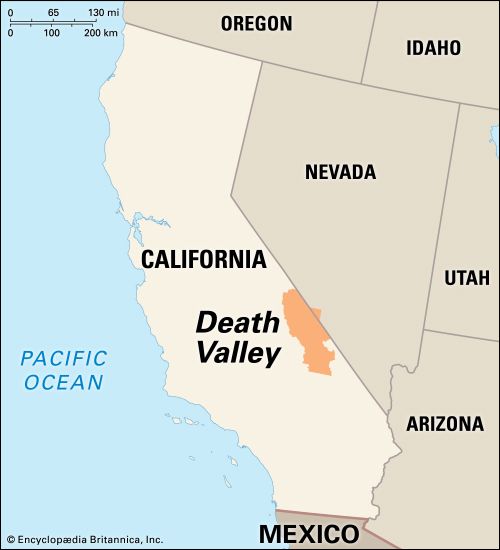
Death Valley is a structural depression located primarily in Inyo County, southeastern California, with a small portion extending into Nevada. It sits near…
Where is Death Valley located, and what are its main geographical features?
Death Valley is a structural depression located primarily in Inyo County, southeastern California, with a small portion extending into Nevada. It sits near the border of the Great Basin and the Mojave Desert.12
Geologically, the valley is a graben formed by block faulting, characterized by extreme heat and aridity. Its notable features include:3
- Lowest Elevation: It contains the lowest point in North America at Badwater Basin, which lies 282 feet (86 metres) below sea level.1
- Mountain Ranges: The valley is bounded by the Panamint Range to the west and the Amargosa Range to the east.1
- Unique Landforms: The landscape features extensive salt pans, volcanic craters like Ubehebe Crater, and the shifting rocks of Racetrack Playa.42
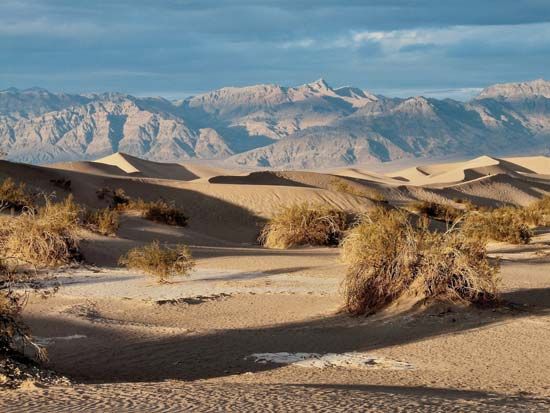
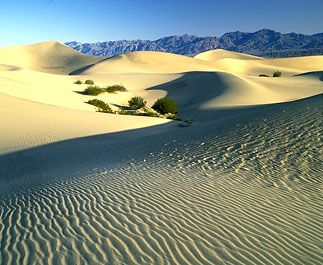
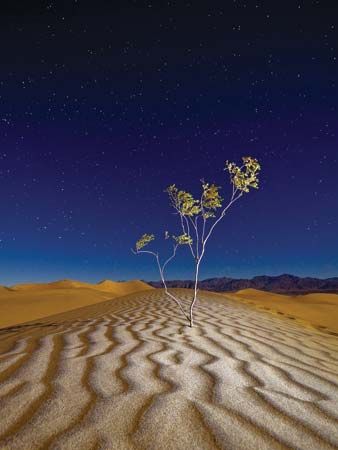
- Dunes: It hosts five dune areas, including the Eureka Sand Dunes, the tallest in California.42
What geological processes have shaped Death Valley’s landscape over time?
The geological history of Death Valley is complex, shaped by a combination of crustal movement, sedimentation, and volcanic activity.3
Tectonic Formation
Death Valley is a graben, or rift valley, created by block faulting that began approximately 30 million years ago. This process involves predominantly vertical movement along faults, where crustal blocks sank to form the valley floor while adjacent blocks were uplifted to create the surrounding mountain ranges, such as the Panamint Range and the Amargosa Range3.2
Sedimentation and Volcanism
As the valley floor continued to sink and tilt, it became a basin for sediments eroded from the nearby hills. In the central region, this bedrock floor is now buried under as much as 9,000 feet (2,745 metres) of sediment. Additionally, the landscape has been shaped by volcanism, evidenced by features like the Ubehebe Crater.34
Hydrological Influence
Past climate shifts also played a significant role. During the Pleistocene Epoch, specifically the Wisconsin Glacial Stage, the valley was filled by Lake Manly. More recently, a shallow lake occupied the floor, and its subsequent evaporation left behind the extensive salt pans seen today.3
How did Death Valley get its name, and what is its historical significance?
Death Valley received its ominous name in 1849 from a group of pioneer emigrants who endured intense suffering while attempting to cross the region. Before this, the area was primarily known to the Shoshone people.35
The valley’s historical significance is defined by its role as a challenging obstacle for settlers and its later importance as a center for mineral exploitation. Key historical developments include:
- Mining Booms: Following the discovery of gold and silver in the surrounding mountains during the 1870s, and borax deposits in the 1880s, the area saw a surge in activity.3
- Borax Industry: The Harmony Borax Works (1883–88) became famous for the 20-mule team wagons used to haul borax to Mojave, California.3
- Ghost Towns: The late 19th and early 20th centuries saw the rise and rapid abandonment of several boomtowns, such as Rhyolite, which once boasted a stock exchange and opera house before being deserted by 1916.3
Today, the valley is recognized for its extreme environment, which serves as a significant site for scientific study and tourism.5
What unique flora and fauna can be found in Death Valley’s harsh environment?
Despite its harsh conditions, Death Valley supports a diverse array of life adapted to extreme heat and limited water.
Flora
Plant life varies significantly by elevation and salinity:
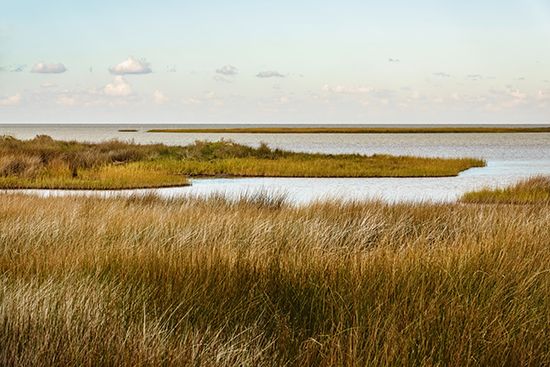
- Valley Floor: The salt pans are largely barren, but salt-tolerant species like pickleweed, salt grass, and rushes thrive near springs and marshes. Creosote bush dominates gravel fans, while desert holly is found at the lowest elevations.
- Higher Elevations: Mesquite grows where water is less saline, and juniper and piñon pine are found in the mountains. Cacti are abundant on northern fans, and spring rains trigger blooms of various desert wildflowers.
Fauna
Many animals are nocturnal to avoid the daytime heat:
- Mammals: The desert bighorn is the largest native mammal, typically residing in the surrounding mountains. Other residents include coyotes, kit foxes, bobcats, rabbits, and rodents like kangaroo rats.
- Birds and Reptiles: Over 200 bird species have been recorded, including the roadrunner. Lizards, snakes (such as sidewinders), and scorpions are common.
- Aquatic Life: Remarkably, several species of pupfish inhabit permanent water sources like Salt Creek, including the highly endangered Devils Hole pupfish.
Sources
- Death Valley — Encyclopædia Britannica
- Death Valley - Death Valley National Park — Encyclopædia Britannica
- Death Valley - Physical environment — Encyclopædia Britannica
- Death Valley National Park — Encyclopædia Britannica
- Death Valley — Merriam-Webster
- Death Valley - Plant and animal life — Encyclopædia Britannica
- Death Valley: Top Questions — Encyclopædia Britannica
- bighorn sheep — Encyclopædia Britannica
- North American Desert - Plant life — Encyclopædia Britannica
Published on · 3 min read