Deer
Deer are classified within the animal kingdom as members of the order Artiodactyla, which consists of even-toed, hoofed ruminants. Within this order, they…
How are deer classified within the animal kingdom, and what families do they belong to?
Deer are classified within the animal kingdom as members of the order Artiodactyla, which consists of even-toed, hoofed ruminants. Within this order, they belong to the family Cervidae.123
The family Cervidae is further organized into four subfamilies, which distinguish various groups based on their evolutionary traits and physical characteristics:3
- Moschinae: Includes the musk deer, which are unique among deer for possessing a gallbladder and lacking antlers.34
- Muntiacinae: Includes muntjacs and tufted deer, which are characterized by small antlers and prominent, curved upper canines.3
- Odocoileinae: A group that includes moose, reindeer, roe deer, and most deer native to the Americas.3
- Cervinae: Includes species such as red deer, fallow deer, and sika, which are distinguished by specific skeletal features and antler branching patterns.3
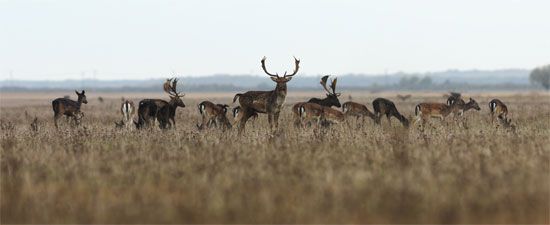
What are some of the most common species of deer found around the world?
There are 43 recognized species of deer within the family Cervidae, which are native to every continent except Australia and Antarctica. These hoofed ruminants have adapted to a wide variety of environments, from tropical forests to cold temperate zones.5678910
Some of the most common and widely recognized species include:
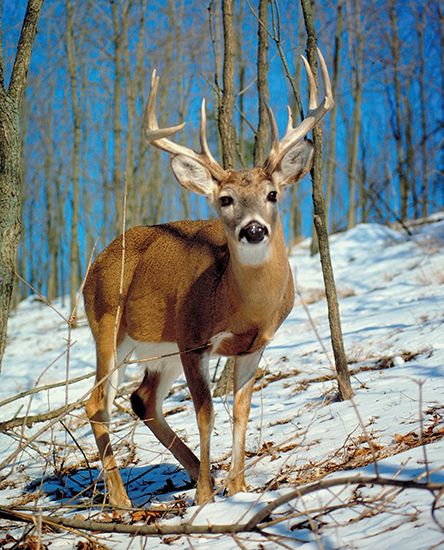
- White-tailed deer: A highly adaptable species native to the Americas, known for its ability to thrive in human-disturbed landscapes.810
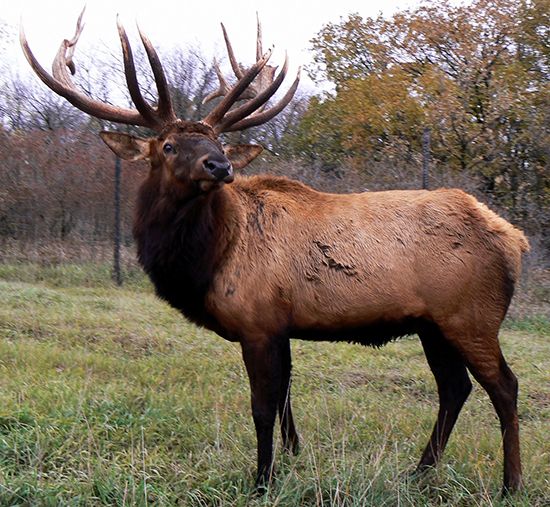
- Red deer: A widespread species found across Europe, Asia, North America, and northwestern Africa. The elk (or wapiti) is the largest subspecies of red deer.19
- Moose: The largest of all deer species, well-adapted to cold climates in the Northern Hemisphere.10
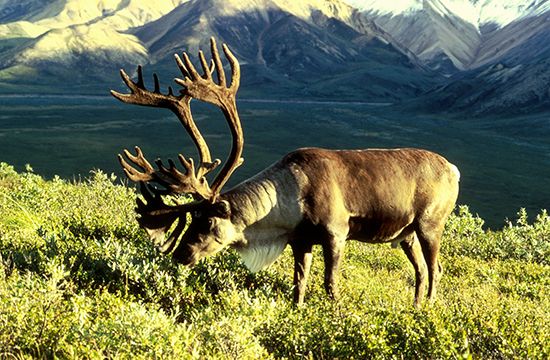
- Reindeer (or Caribou): A cold-adapted species known for its migratory behavior and the fact that it has been domesticated.510
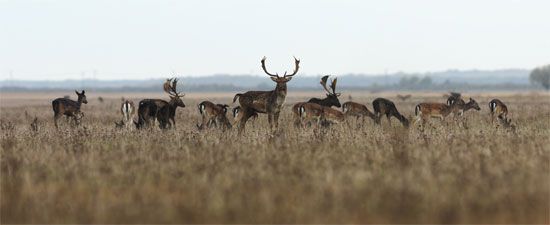
- Fallow deer: A temperate-zone species native to Asia Minor that has been introduced to many other parts of the world.9
- Muntjacs: Small, primitive deer native to tropical Asia.9
What is the typical lifespan of a deer in the wild versus in captivity?
The lifespan of deer varies significantly depending on the species and whether they live in the wild or in protected environments. While data for every species is not universally standardized, information regarding the reindeer serves as a clear example: these animals typically live about 15 years in the wild, whereas their lifespan can extend to approximately 20 years when kept in captivity.5
In the wild, mortality rates for many deer species are influenced by a complex interplay of factors, including predation, food availability, disease, and environmental conditions such as severe winter weather. Conversely, individuals in captivity are generally shielded from these environmental pressures and predation, which often allows them to reach a greater age.125
What are the main differences between antlers and horns?
While the terms are often used interchangeably in casual conversation, antlers and horns are biologically distinct structures with different compositions and growth patterns.
Antlers
Characteristic of the deer family, antlers are branched structures composed entirely of solid bone. They are typically grown and shed annually. During their growth phase, they are covered in a highly vascularized, nerve-filled skin known as “velvet.” Once the antler is fully developed, this velvet dies and is rubbed off by the animal. In most species, only males carry antlers, though both sexes of reindeer possess them.15164
Horns
True horns are permanent, unbranched structures found in ruminants such as cattle, sheep, goats, and antelopes. They consist of a bony core that is an extension of the skull, covered by a sheath of keratin—the same protein found in hair and fingernails. Unlike antlers, true horns are never shed. While they serve similar purposes as weapons for defense or combat, their structural composition and permanence distinguish them from the bony, seasonal growth of antlers.1516
Sources
- deer — Encyclopædia Britannica
- artiodactyl - Annotated classification — Encyclopædia Britannica
- artiodactyl — Encyclopædia Britannica
- deer - Morphology and behaviour — Encyclopædia Britannica
- white-tailed deer — Encyclopædia Britannica
- red deer — Encyclopædia Britannica
- 9 of the World’s Deadliest Mammals - Deer (Order Artiodactyla) — Encyclopædia Britannica
- deer - Old World deer — Encyclopædia Britannica
- deer - New World deer — Encyclopædia Britannica
- List of deer — Encyclopædia Britannica
- Cervidae — Merriam-Webster
- artiodactyl - Areas of distribution — Encyclopædia Britannica
- reindeer: Top Questions — Encyclopædia Britannica
- Why do deer shed their antlers? — Encyclopædia Britannica
- horn — Encyclopædia Britannica
- Integument - Horns and antlers — Encyclopædia Britannica
Published on · 3 min read