Degu
A degu is a ratlike rodent belonging to the genus Octodon and the family Octodontidae. These small, social mammals are characterized by their large heads…
What is a degu and where is it native to?
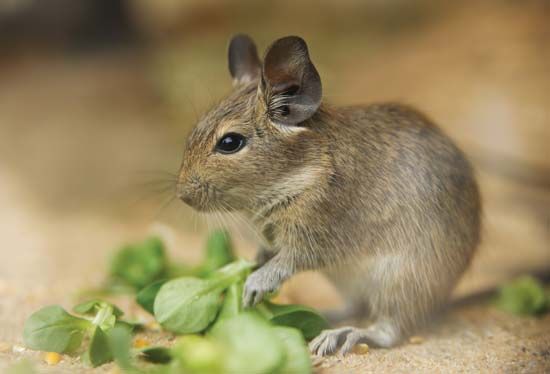
A degu is a ratlike rodent belonging to the genus Octodon and the family Octodontidae. These small, social mammals are characterized by their large heads, large eyes, and soft, yellowish-brown fur.12
Degus are native to western South America, specifically found along the lower western slopes of the Andes Mountains. They are most common in central Chile, where they inhabit open grassy areas near shrubs and rocks at elevations up to 1,200 meters. While the common degu is widespread in central Chile, other species have more restricted ranges; for example, the Mocha Island degu is found only on an island off the coast of central Chile, and Bridges’s degu dwells in forests from southern Argentina to central Chile.12
These animals are colonial, living in extended family groups and excavating elaborate burrow systems. They are diurnal, active throughout the year, and forage for a variety of plant materials, including bark, seeds, and leaves.1
What are the unique physical characteristics of degus?
Degus possess several distinct physical characteristics that set them apart as ratlike rodents. Their primary features include:
- Body and Size: They have a large head, large eyes, and moderate-sized, nearly hairless ears. Adults typically weigh between 170 and 300 grams (6 to 10.6 ounces) and measure 25 to 31 cm (9.8 to 12.2 inches) in body length, with a shorter, black-tipped tail measuring 8 to 13 cm.1
- Fur and Markings: Their upperparts are covered in soft, thick, yellowish-brown fur. A notable feature is the presence of a pale yellow spot located both above and below each eye. Their underparts are creamy yellow, and some individuals may display a pale neck band.1
- Specialized Feet: A unique anatomical trait is the presence of long, comblike bristles that project over the claws on their hind feet.13
- Dentition: The genus name Octodon refers to their dental structure, as these animals are octodonts, a term meaning they have eight teeth.4
What is the typical diet of a degu in the wild and in captivity?
In the wild, the degu is a versatile forager that travels considerable distances from its burrow to secure sustenance. They are known to forage both on the ground and by climbing into the branches of shrubs and small trees. Their natural diet consists of a variety of plant materials, including:
To survive throughout the year without hibernating, degus actively store food within their burrow systems for the winter months.1
Regarding their diet in captivity, the provided search results do not contain specific information. It is important to note that captive care often requires specialized nutritional considerations to prevent health issues common in domestic rodents.
How have degus been used in scientific research, and what have we learned from them?
Sorry, the Britannica knowledge base does not contain information regarding the use of degus in scientific research or the specific findings derived from such studies.
Sources
- degu — Encyclopædia Britannica
- degu — Merriam-Webster
- octodon — Merriam-Webster
- octodont — Merriam-Webster
Published on · 2 min read