Dhaulagiri
Dhaulagiri is a prominent mountain massif located in west-central Nepal. It is situated on the western side of the deep Kali Gandak River gorge, positioned…
Where is Dhaulagiri located in Nepal, and what is its significance in the Himalayan mountain range?
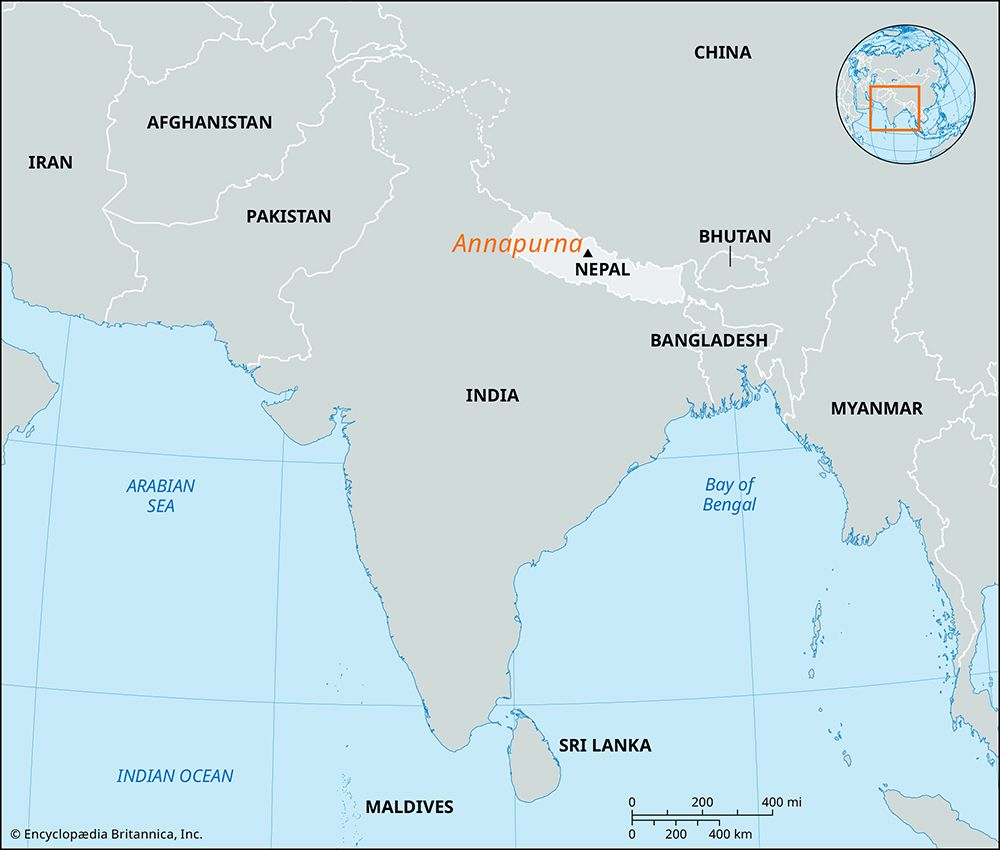
Dhaulagiri is a prominent mountain massif located in west-central Nepal. It is situated on the western side of the deep Kali Gandak River gorge, positioned approximately 40 miles (65 km) northwest of Annapurna.1
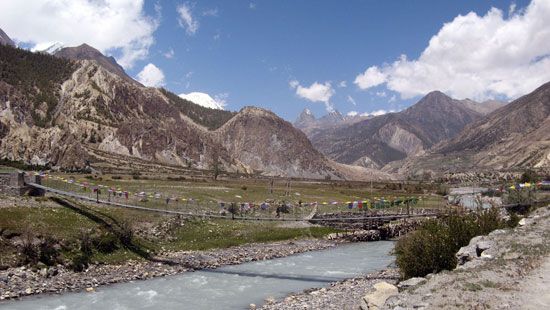
The massif holds significant status within the Himalayas due to its extreme elevation and challenging topography. Several of its snow- and glacier-covered peaks exceed 25,000 feet (7,620 meters). Notably, its highest point, Dhaulagiri I, reaches 26,795 feet (8,167 meters), making it the seventh-highest mountain in the world. The mountain is characterized by its formidable south wall, which rises vertically for about 15,000 feet (4,600 meters). Its name, derived from Sanskrit, translates to “white mountain,” reflecting its icy, imposing nature, which successfully repelled climbers until the first successful ascent in 1960.1
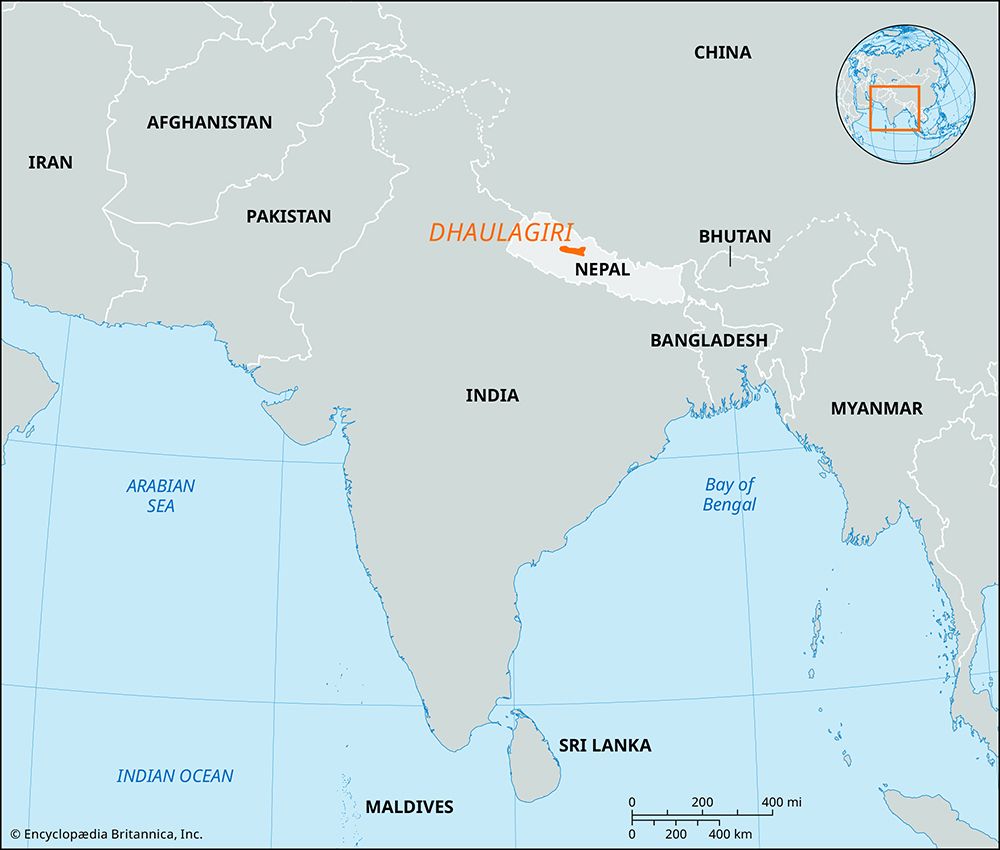
What is the height of Dhaulagiri, and how does it compare to other major peaks in Nepal?
Dhaulagiri I reaches an elevation of 26,795 feet (8,167 meters). It is recognized as the seventh-highest mountain in the world and stands as one of the most prominent peaks within the Great Himalayas.123
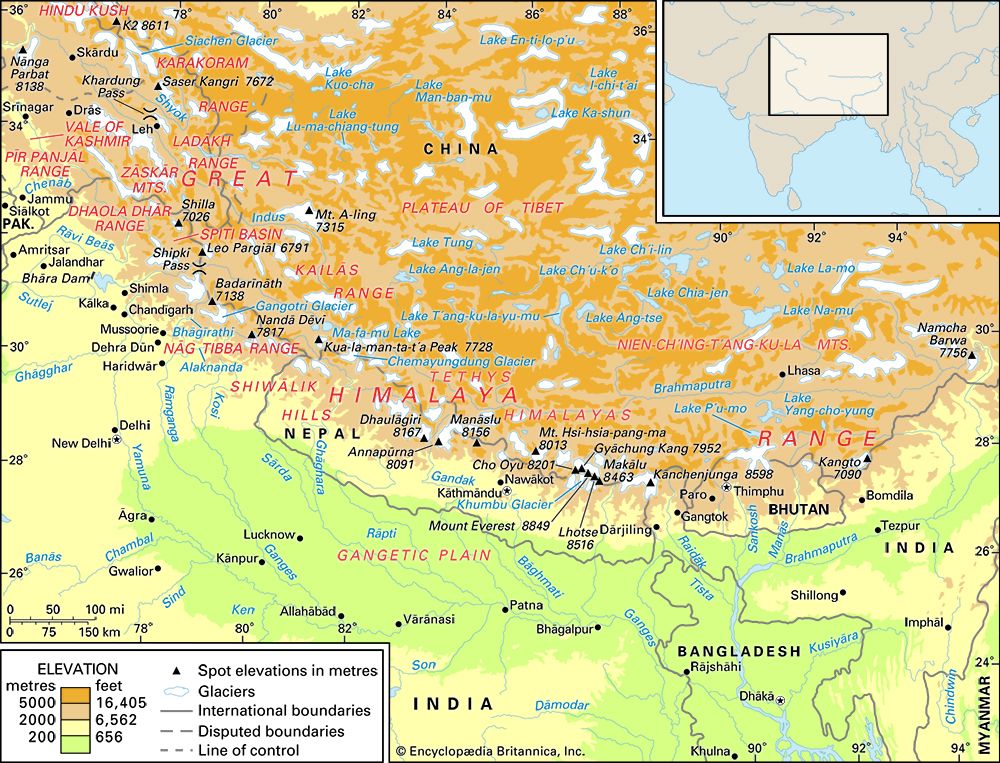
In the context of Nepal’s major peaks, Dhaulagiri I is part of an elite group of mountains in the region that exceed 26,400 feet (8,047 meters). Its height places it among the world’s highest summits, alongside other notable peaks in the Nepal Himalayas:3
- Mount Everest: 29,035 feet (8,850 meters)2
- Kanchenjunga: 28,169 feet (8,586 meters)2
- Makalu: 27,766 feet (8,463 meters)2
- Dhaulagiri I: 26,795 feet (8,167 meters)12
- Manaslu I: 26,781 feet (8,163 meters)2
- Annapurna I: 26,545 feet (8,091 meters)2
While Dhaulagiri I is slightly lower than giants like Everest and Kanchenjunga, it remains a formidable feature of the landscape, distinguished by its vertical south wall and its role as a significant climatic barrier within the range.12
How does the name ‘Dhaulagiri’ translate, and what does it signify?
The name “Dhaulagiri” is derived from two Sanskrit words that translate to “white mountain.” This name signifies the peak’s imposing, icy appearance, characterized by its extensive snow and glacier coverage. The mountain’s name is highly appropriate given its extreme elevation and the harsh, frigid climate that defines the massif, which kept the summit inaccessible to climbers until 1960.1
What is the significance of the Kali Gandaki River gorge?
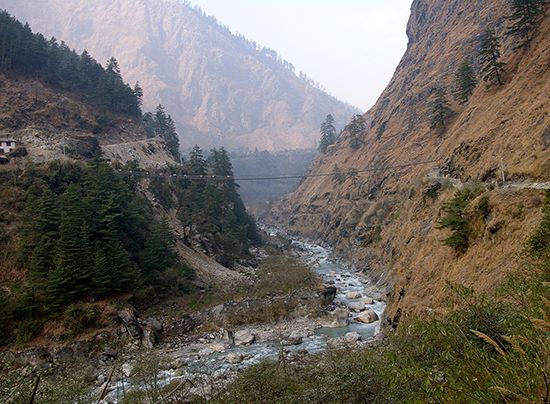
The Kali Gandaki River gorge is significant primarily for being arguably the deepest subaerial valley in the world. Situated in Nepal between the massive 8,000-meter peaks of Dhaulagiri and Annapurna, the valley features a total relief of approximately four miles (six kilometers).15
Geologically, the gorge serves as a prime illustration of the relationship between tectonic uplift and erosion. Because the Himalayas are among the most tectonically active regions on Earth, the rapid uplift of the mountains creates steep gradients for the river. These steep slopes increase the stream’s power, allowing it to cut through the landscape at a rate that keeps pace with the rising terrain. This process demonstrates the principle that the most rapid relief reduction often occurs in areas experiencing the most rapid relief production.5
Sources
- Dhaulagiri — Encyclopædia Britannica
- Nepal - Relief — Encyclopædia Britannica
- Nepal Himalayas — Encyclopædia Britannica
- Dhaulagiri, Mount — Merriam-Webster
- valley — Encyclopædia Britannica
Published on · 2 min read