Dicentra
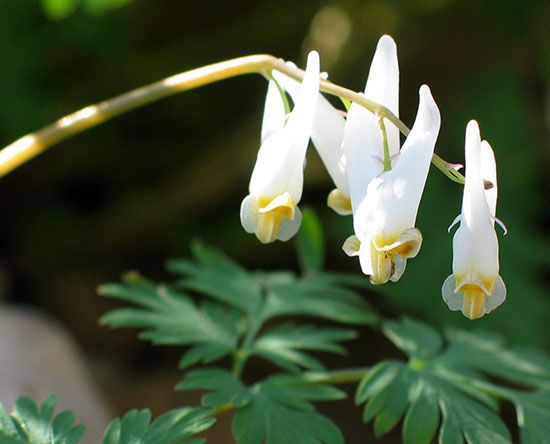
Dicentra is a genus comprising eight species of flowering plants within the poppy family (Papaveraceae). These annual or perennial herbaceous plants are…
What is Dicentra?
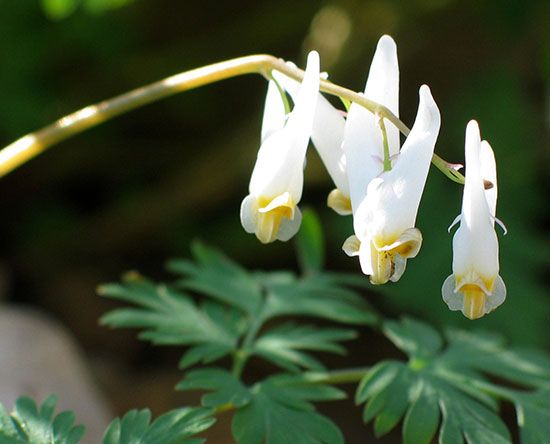
Dicentra is a genus comprising eight species of flowering plants within the poppy family (Papaveraceae). These annual or perennial herbaceous plants are native to temperate woodlands and are popular as shade-garden ornamentals.12
Key characteristics include:
- Appearance: They feature finely divided leaves arranged in a basal rosette and unique, bilaterally symmetrical flowers with swollen or spur-shaped outer petals.1
- Species: Notable members include Dutchman’s breeches, squirrel corn, and various species of bleeding heart. Note that the common Asian bleeding heart (Lamprocapnos spectabilis) was formerly classified in this genus but has since been reclassified.12
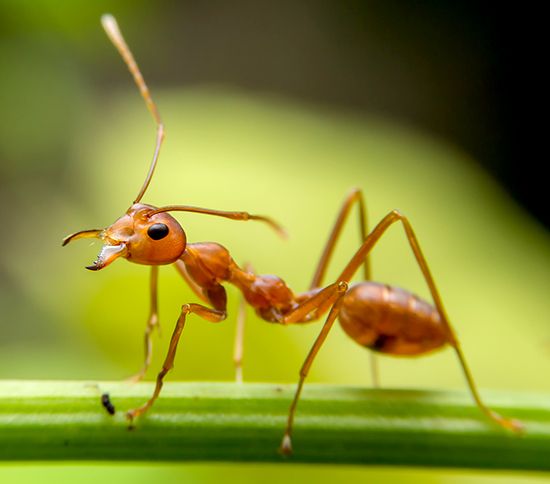
- Ecology: The seeds possess fleshy structures called elaiosomes that attract ants for dispersal.1
It is important to note that all parts of these plants are considered poisonous if ingested.2
What are elaiosomes and how do they help plants?
Elaiosomes are specialized, fleshy, and edible appendages attached to the seeds of certain plants, often referred to as myrmecochorous plants. These structures serve as a primary attractant for ants, facilitating a unique form of seed dispersal known as myrmecochory.34
These appendages help plants by incentivizing ants to transport the seeds to their nests. Once the ants reach their destination, they consume only the nutrient-rich elaiosome—which may contain oils or volatile fatty acids—while leaving the seed itself intact. By carrying the seeds away from the parent plant and depositing them in or near their nests, the ants effectively disperse the seeds, often providing them with a protected environment for germination.345
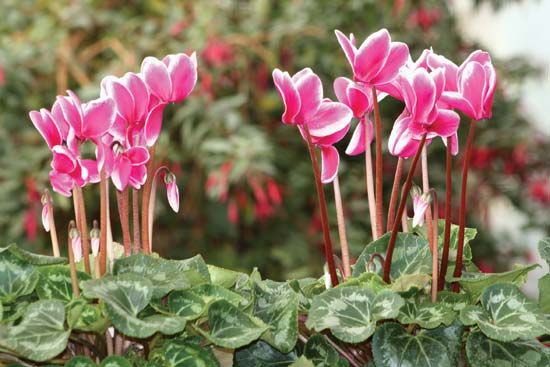
This relationship is highly specialized; while some harvester ants are destructive and consume seeds entirely, the ants involved in this process, such as Lasius, Myrmica, and Formica species, act as beneficial agents of dispersal. Some plants have evolved additional adaptations to ensure this process succeeds, such as the cyclamen, which coils its flower stalk to bring seeds within easier reach of foraging ants.34
What other plants belong to the poppy family?
The Papaveraceae family, commonly known as the poppy family, consists of 48 genera and approximately 2,220 species of flowering plants. While the genus Papaver is the most well-known, the family includes a diverse array of ornamental and herbaceous plants.678
Notable genera and species within the family include:
- Ornamental Genera: Corydalis, Dicentra (including Dutchman’s breeches and squirrel corn), and Meconopsis.67
- Poppy Varieties: The California poppy (Eschscholzia californica), Mexican tulip poppy, tree poppy, prickly poppy, horned poppy, and Matilija poppy.678
- Other Notable Plants: Bloodroot, celandine, creamcups, fumitory, and the snow poppy.678
Many of these plants are valued for their attractive flowers and foliage, while others, such as the opium poppy, are significant for their pharmaceutical properties.68
Why are some bleeding heart plants considered poisonous?
Bleeding heart plants, which belong to the poppy family, are considered poisonous because all parts of the plant contain toxic compounds that can be harmful if ingested.2
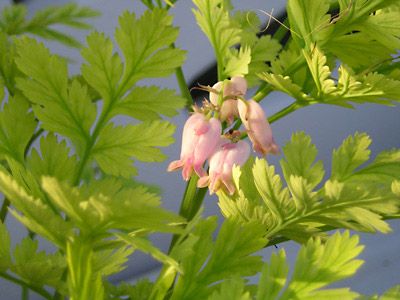
While these plants—including the popular Asian bleeding heart (Lamprocapnos spectabilis) and various Dicentra species like Dutchman’s breeches—are widely cultivated as beautiful shade-garden ornamentals, their chemical makeup serves as a defense mechanism against herbivores. Because they are toxic, it is important to handle them with care and ensure they are kept away from pets and children who might accidentally consume them.2
Sources
- Dicentra — Encyclopædia Britannica
- bleeding heart — Encyclopædia Britannica
- seed - Dispersal by ants — Encyclopædia Britannica
- Asparagales - Fruits and seeds — Encyclopædia Britannica
- seed dispersal - Ants — Encyclopædia Britannica
- Papaveraceae — Encyclopædia Britannica
- list of plants in the family Papaveraceae — Encyclopædia Britannica
- poppy — Encyclopædia Britannica
Published on · 2 min read