Dilleniaceae
The flowers and fruits of the Dilleniaceae family exhibit distinct structural characteristics:
How are the flowers and fruits of Dilleniaceae plants typically structured?
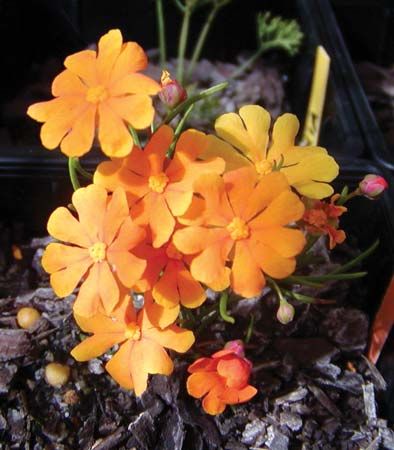
The flowers and fruits of the Dilleniaceae family exhibit distinct structural characteristics:
Flower Structure
- Symmetry and Sex: Flowers are typically radially symmetric and bisexual.1
- Perianth: They usually feature three to many (most commonly five) overlapping sepals and five overlapping petals, which are notably crumpled while in the bud stage.1
- Reproductive Organs: The flowers contain numerous stamens and several separate carpels (ovule-bearing structures).1
- Nectaries: These flowers generally lack nectaries and are typically visited by generalist pollinators.1
Fruit Structure
- Development: Each carpel develops into a shiny follicle containing one or more seeds.1
- Seeds: The seeds are covered by a fleshy aril, which aids in dispersal, likely by birds.1
- Variations: In some Dillenia species, the fruits are entirely enclosed by the sepals, which enlarge significantly after the flowering period; for example, D. indica produces large, cannonball-sized fruits.1
Where are Dilleniaceae plants primarily found, and in what types of habitats do they thrive?
Plants in the Dilleniaceae family are primarily found throughout the tropics and subtropics. Their geographic distribution is widespread, with various genera spanning from Madagascar to Fiji, including significant representation in Australia and the Neotropics.12
Regarding their habitats, these plants are quite diverse in their growth forms—ranging from trees and shrubs to woody vines—and they thrive in a variety of environments. While many species occupy tropical and subtropical regions, some, particularly within the genus Hibbertia, are adapted to dry and open habitats. These specific plants have evolved unique survival strategies, such as developing reduced leaves and flattened stems that function as the primary photosynthetic organs.12
What are the main characteristics of plants in the Dilleniaceae family?
The Dilleniaceae family consists of approximately 300 species of flowering plants, primarily comprising trees, shrubs, and woody vines found in tropical and subtropical regions.
Key Characteristics
- Leaf Morphology: Plants are often recognizable by their rough leaf blades and strong, parallel secondary veins that extend directly into the leaf teeth. Fine, ladderlike venation is also common. In some species, such as those in the genus Hibbertia, leaves may be reduced, with flattened stems serving as the primary photosynthetic organs.
- Flower Structure: Flowers are typically bisexual and radially symmetric. They generally feature five overlapping sepals and five overlapping petals that appear crumpled in the bud. They contain numerous stamens and separate carpels. Notably, they lack nectaries and are usually pollinated by generalist pollinators.
- Fruit and Seeds: Each carpel develops into a follicle containing seeds covered by a fleshy aril, which facilitates dispersal by birds. Some Dillenia species produce large fruits that may be dispersed by larger animals.
What are some of the most well-known or economically important species in the Dilleniaceae family?
While the Dilleniaceae family is not widely known for major global agricultural crops, several species hold economic and ornamental value.
Ornamental Species
The genus Hibbertia is the most significant in terms of ornamental use. Specifically, H. scandens is a well-known woody vine valued for its yellow flowers. It is frequently cultivated in warm climates or within greenhouses for its aesthetic appeal, despite its flowers having a distinct, unpleasant scent.1
Economically Important Species
Species within the genus Dillenia are the primary contributors to the family’s economic utility:
- Dillenia indica: This tree, native to Southeast Asia, is perhaps the most notable species. It is prized for its fragrant flowers and large, lemon-flavored fruits, which are commonly used in the preparation of jellies and curries. Its fruits are exceptionally large—often described as the size of cannonballs—and are believed to be dispersed by elephants in their natural habitat.1
- Timber and Tannin: Beyond culinary uses, several species of Dillenia are harvested for their timber. Additionally, certain members of the genus serve as a source of tannin, a chemical compound used in various industrial processes.1
Sources
- Dilleniaceae — Encyclopædia Britannica
- Dilleniaceae — Merriam-Webster
Published on · 3 min read