Dimetrodon
Scientific understanding of Dimetrodon has evolved significantly since its description by Edward Drinker Cope in 1878. While often misidentified in popular…
How has our understanding of Dimetrodon changed over time with new scientific discoveries?
Scientific understanding of Dimetrodon has evolved significantly since its description by Edward Drinker Cope in 1878. While often misidentified in popular culture, it is now firmly established that Dimetrodon was not a dinosaur or even a reptile.12
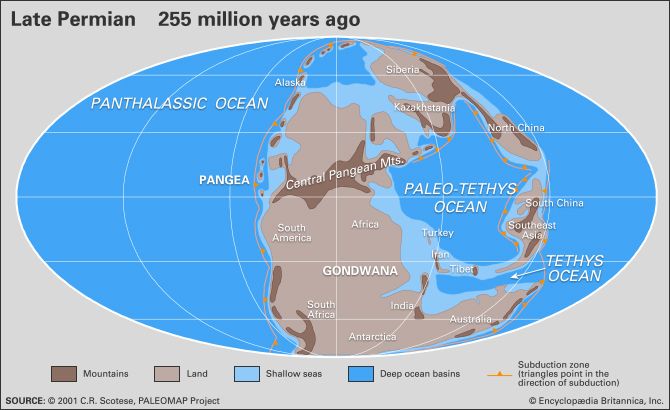
Modern paleontology classifies Dimetrodon as a primitive synapsid, a group more closely related to mammals than to modern reptiles. Research has clarified that these creatures lived during the Permian Period, roughly 35 million years before the first dinosaurs appeared.231
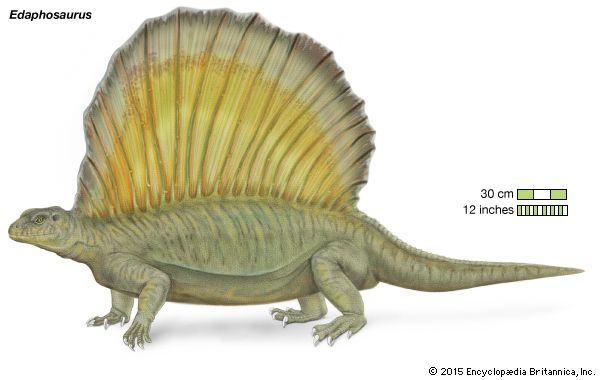
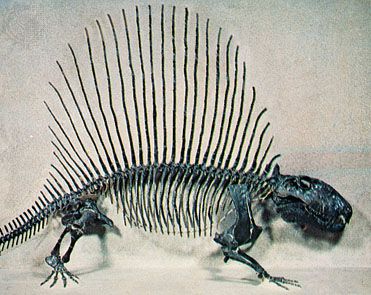
Regarding its iconic “sail,” scientists have moved beyond simple descriptions to analyze its potential biological functions. While once thought to be purely for thermoregulation, researchers now consider that such structures may have served multiple purposes, including display or defense, as seen in related pelycosaurs like Edaphosaurus. Furthermore, the evolutionary significance of Dimetrodon is now recognized in its role as a precursor to therapsids, the lineage that eventually gave rise to all mammals.23
How is Dimetrodon related to modern mammals, and why is it often mistakenly classified as a dinosaur?
Dimetrodon is frequently mistaken for a dinosaur due to its large size, prehistoric appearance, and the iconic sail on its back, which is a feature often associated with extinct reptiles in popular culture. However, this classification is incorrect; Dimetrodon lived and went extinct during the Permian Period, vanishing more than 35 million years before the first dinosaurs appeared on Earth.14
In reality, Dimetrodon was a synapsid, a group of animals that are more closely related to mammals than to true reptiles. Specifically, Dimetrodon belonged to a group known as pelycosaurs, which are believed to be the ancestors of therapsids. Therapsids, often called “mammal-like reptiles,” represent a critical evolutionary lineage that eventually gave rise to true mammals during the Triassic Period. The fossil record shows a remarkably complete transition in skeletal features from these early synapsids into mammals over a span of approximately 80 million years.125
How did Dimetrodon’s iconic sail on its back function, and what were its potential uses?
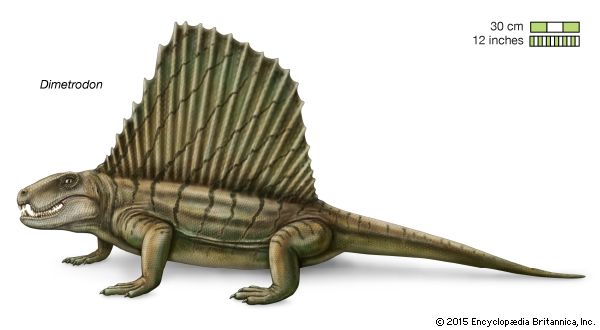
The iconic sail of Dimetrodon was formed by elongated vertebral spines connected by a membrane rich in blood vessels. While its exact purpose remains a subject of scientific study, researchers have proposed several potential functions for this structure:1
- Thermoregulation: The most widely cited theory is that the sail functioned in temperature regulation. By orienting the sail toward or away from the sun, the animal could have efficiently absorbed or dissipated heat to manage its body temperature.13
- Display and Defense: Similar to structures seen in the related herbivore Edaphosaurus, the sail may have served as a visual display to attract mates or intimidate rivals. Additionally, it could have provided a defensive advantage by making the animal appear larger and more imposing to potential predators.3
- Physiological Storage: Some hypotheses regarding pelycosaur sails suggest they may have acted as a reservoir for essential minerals, such as phosphates, which could be mobilized from the bony supports when needed.3
Because not all members of the Pelycosauria group possessed these sails, their evolutionary necessity remains a topic of ongoing investigation.1
What role did Dimetrodon play in the evolution of thermoregulation in early tetrapods?
Dimetrodon is a significant figure in the study of thermoregulation because its iconic sail provides a primary example of how early synapsids may have managed their body temperature. As a large carnivore from the Permian Period, Dimetrodon possessed a sail formed by elongated vertebral spines and a membrane rich in blood vessels, which likely allowed the animal to absorb or dissipate heat by orienting itself toward or away from the sun.1
While modern mammals are endothermic (warm-blooded) and maintain a constant internal temperature through active physiological processes, Dimetrodon and other pelycosaurs relied on behavioral mechanisms to regulate their body heat. This reliance on external environmental factors is characteristic of ectotherms. The evolutionary transition from these early, behaviorally dependent synapsids to the endothermic condition of mammals involved a complex, gradual development of interrelated systems, including specialized dentition, improved locomotion, and advanced cardiovascular structures.146
Although Dimetrodon itself was not a mammal, it represents an ancestral lineage that eventually gave rise to therapsids, the group from which mammals emerged during the Triassic Period.16
Sources
- Dimetrodon — Encyclopædia Britannica
- dimetrodon — Merriam-Webster
- Edaphosaurus — Encyclopædia Britannica
- mammal - The evolution of the mammalian condition — Encyclopædia Britannica
- Permian Period - Emergence of important reptiles — Encyclopædia Britannica
- Thermoreception - Behaviour and thermoregulation — Encyclopædia Britannica
- Permian extinction - Temperature crises — Encyclopædia Britannica
- Permian Period - Temperature crises — Encyclopædia Britannica
- dinosaur - Clues to dinosaurian metabolism — Encyclopædia Britannica
Published on · 3 min read