Edaphosaurus
Edaphosaurus is significant in the fossil record as a primitive, herbivorous relative of mammals that lived during the Late Carboniferous to Early Permian…
What is the significance of Edaphosaurus in the fossil record of early tetrapods?
Edaphosaurus is significant in the fossil record as a primitive, herbivorous relative of mammals that lived during the Late Carboniferous to Early Permian periods. As a member of the pelycosaurs, it represents a lineage that was neither dinosaur nor reptile, but rather part of the group that may have given rise to therapsids, the ancestors of mammals.1
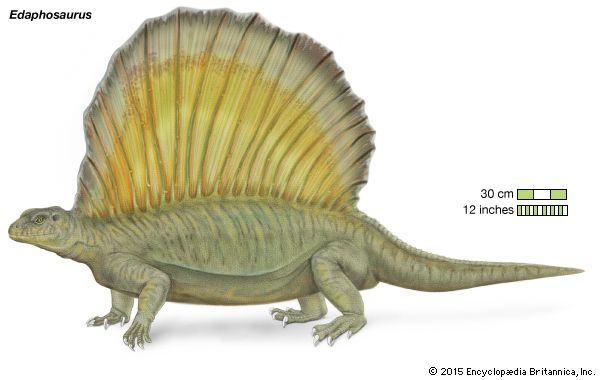
The genus is most notable for the large sail on its back, formed by elongated vertebral arches. Scientists hypothesize this structure served several potential functions:1
- Thermoregulation: Helping the animal manage its body temperature.1
- Physiological Storage: Acting as a reservoir for phosphates that could be mobilized when needed.1
- Defense: Making the animal appear larger and more imposing to predators.1
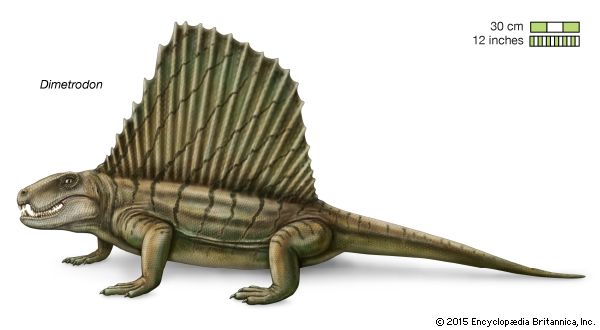
While Edaphosaurus shared this sail feature with the predator Dimetrodon, the trait evolved independently in both groups.1
When and where did Edaphosaurus live, and what was its habitat like?
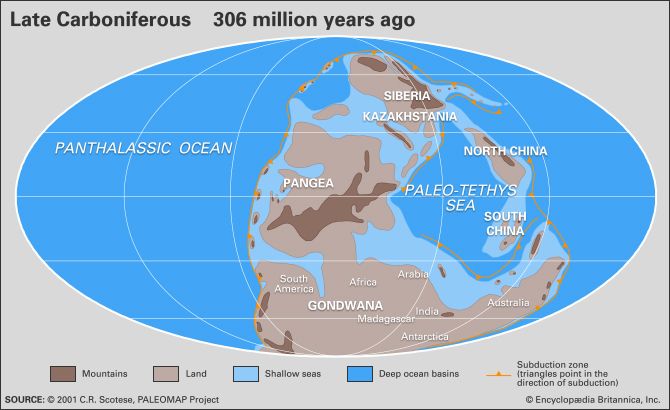
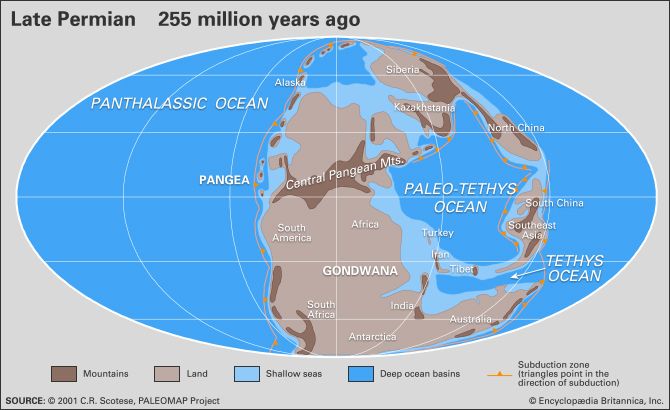
Edaphosaurus lived during the Late Carboniferous to the Early Permian periods, a timeframe spanning approximately 318 million to 271 million years ago.1
While the provided records confirm that Edaphosaurus was a heavy-bodied, herbivorous pelycosaur found in fossil deposits from this era, they do not contain specific details regarding the precise geographic locations of these fossils or the specific environmental characteristics of its habitat.12
How has our understanding of Edaphosaurus changed over time with new fossil discoveries and research methods?
The provided search results do not contain information regarding how our specific understanding of Edaphosaurus has changed over time due to new research methods or fossil discoveries. While the sources describe the physical characteristics of Edaphosaurus—such as its barrel-like body, small head, and distinctive sail—they do not provide a historical account of how scientific interpretation of this genus has evolved.12
Modern paleontological studies generally utilize methods like cladistics and biomechanical analysis to better understand the evolutionary relationships and functional anatomy of extinct animals, but the provided text does not detail the application of these specific techniques to Edaphosaurus.3
What role did Edaphosaurus play in its ecosystem during the Permian period?
During the Early Permian period, Edaphosaurus functioned as a primary consumer within its terrestrial ecosystem. As a large, heavy-bodied herbivore, it relied on the diverse plants of the time—such as ferns, seed ferns, and lycophytes—as its primary food source. Its blunt, conical teeth were well-suited for processing this vegetation.15
Beyond its role in the food web, Edaphosaurus possessed a distinctive dorsal sail that likely served several ecological and physiological purposes:
- Thermoregulation: The sail may have helped the animal regulate its body temperature by absorbing or dissipating heat.1
- Metabolic Storage: It may have functioned as a reservoir for phosphates, which could be mobilized from the bony projections of the sail when needed.1
- Defense: The sail increased the animal’s visual profile, potentially making it appear more imposing to predators like the related, but carnivorous, Dimetrodon.1
As a pelycosaur, Edaphosaurus represents an important lineage in the evolutionary history leading toward mammals.16
Sources
- Edaphosaurus — Encyclopædia Britannica
- Edaphosaurus — Merriam-Webster
- Dimetrodon — Encyclopædia Britannica
- dinosaur - Modern studies — Encyclopædia Britannica
- Permian Period - Marine and terrestrial life — Encyclopædia Britannica
- A Journey Through Time Since the Precambrian - Permian Period: 298.9 million to 252.2 million years ago — Encyclopædia Britannica
Published on · 2 min read