Dingo
Dingoes are highly mobile carnivores that hunt either alone or in small family groups consisting of 2 to 12 individuals. Their hunting behavior is similar to…
How do dingoes hunt and what is their typical diet?
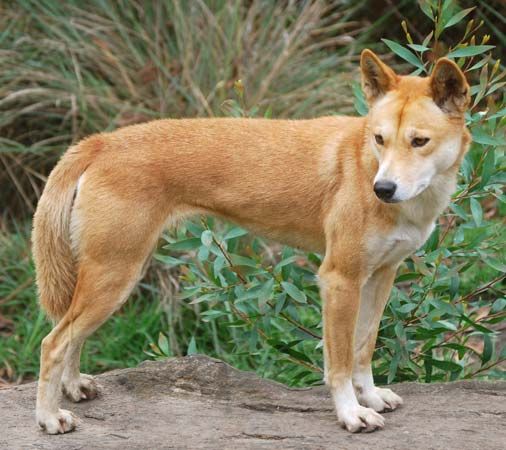
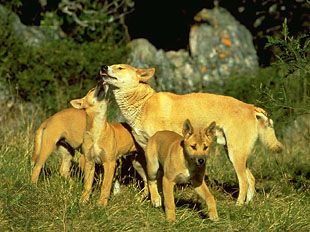
Dingoes are highly mobile carnivores that hunt either alone or in small family groups consisting of 2 to 12 individuals. Their hunting behavior is similar to that of other canines, such as wolves, and they maintain their territories through scent marking and howling.1
Regarding their diet, dingoes have adapted over time:
- Historical Diet: They primarily preyed on kangaroos and wallabies.1
- Current Diet: Following the introduction of the European rabbit in the mid-19th century, their diet shifted to consist mostly of rabbits and small rodents.1
- Other Sources: Dingoes may occasionally prey on livestock, such as calves, sheep, and poultry, which has led to them being managed as pests in some regions.1
What conservation efforts are in place to protect dingoes in Australia?
The International Union for Conservation of Nature currently classifies the dingo as a vulnerable species. Despite this status, conservation efforts are complicated by the dingo’s dual identity as both a native predator and a perceived agricultural pest.1
The primary threat to the species is hybridization with domestic dogs, a problem that intensifies as human settlement expands into their habitats. While there are no widespread, unified government programs specifically dedicated to the “protection” of dingoes in the same manner as endangered marsupials, the species is often managed through regional policies that balance their ecological role—such as controlling invasive red fox populations—against the protection of livestock.1
Historically, management has focused on exclusion rather than conservation; for example, the government erected a massive dingo fence spanning over 5,600 km to protect sheep and cattle from predation. Consequently, dingoes have been largely eliminated from most settled areas of Australia.1
How does the dingo differ from domesticated dogs?
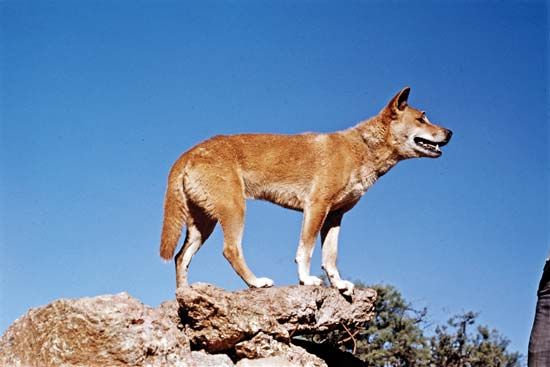
While dingoes and domestic dogs share a similar structure and general appearance, they can be distinguished by several specific physical traits. Dingoes possess a longer muzzle, larger ears, more-massive molars, and longer, more-slender canine teeth compared to domestic dogs of a similar size.1
Behaviorally, the two also differ significantly. Dingoes are wild animals that rarely bark; instead, they communicate through a varied repertoire of howls, earning them the nickname “singing dogs”. While they can be tamed, they remain distinct from the domesticated dog (Canis lupus familiaris), which has been selectively bred over generations for human companionship and specific tasks.13
Furthermore, dingoes are highly mobile, independent predators that maintain strict territories through scent marking and howling, whereas domestic dogs have been shaped by human intervention and are generally dependent on human care. Although some dog breeds, such as the Australian Cattle Dog, were developed by crossing domestic dogs with dingoes to inherit traits like resilience and herding instincts, the dingo remains a wild species closely related to the wolf.13
What role do dingoes play in the Australian ecosystem?
Dingoes serve as significant carnivores within the Australian ecosystem, where they act as the only native terrestrial member of the order Carnivora. Their role in the environment is multifaceted and includes the following impacts:12
- Predatory Control: Historically, dingoes preyed primarily on kangaroos and wallabies. Following the introduction of the European rabbit in the 19th century, their diet shifted to include these invasive rodents, helping to regulate their numbers.14
- Competitive Exclusion: Dingoes compete aggressively with the red fox, an invasive species in Australia. By occupying the same ecological niche, dingoes help to control red fox populations in areas where their ranges overlap.1
- Historical Influence: Through competition for resources, dingoes are believed to have contributed to the historical extermination of the thylacine (Tasmanian wolf) and the Tasmanian devil on the Australian mainland.14
While they are ecologically important, their occasional predation on livestock has led to their classification as pests in many regions, resulting in their exclusion from settled areas.1
Sources
- dingo — Encyclopædia Britannica
- Did you know? — Merriam-Webster
- What Dog Breed Is Closest to a Dingo? — Encyclopædia Britannica
- carnivore - Distribution and abundance — Encyclopædia Britannica
Published on · 3 min read