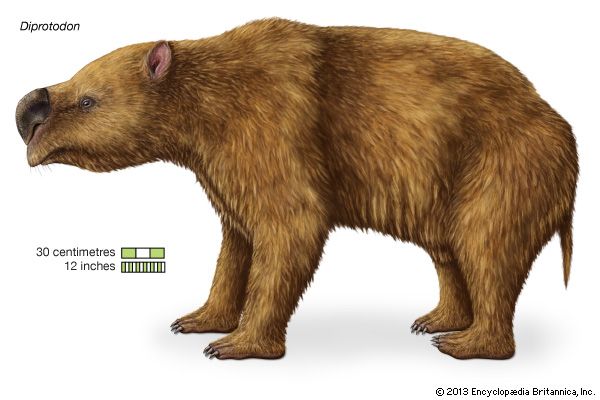
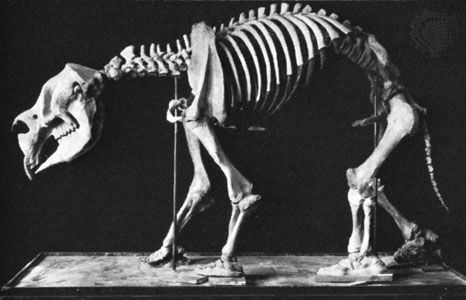
Diprotodon
The Diprotodon was an extinct genus of marsupial and the largest known group of marsupial mammals. Living in Australia during the Pleistocene Epoch, this…
What was the Diprotodon and when did it live?
The Diprotodon was an extinct genus of marsupial and the largest known group of marsupial mammals. Living in Australia during the Pleistocene Epoch, this megaherbivore existed from approximately 2 million years ago until its extinction about 46,000 years ago.1
Standing about 1.8 meters (6 feet) tall at the shoulder and measuring up to 4 meters (12 feet) long, the Diprotodon was a close relative of modern wombats and koalas. Its name, which means “two forward teeth” in Latin, refers to the two long, forward-projecting lower incisors it used for browsing plant material. Researchers believe the species likely succumbed to hunting pressure following the expansion of Australia’s human population, contributing to a broader extinction event of large Australian mammals during the late Pleistocene.1
What other megafauna existed alongside Diprotodon in ancient Australia?
Ancient Australia was home to a diverse array of megafauna that coexisted with the Diprotodon during the Pleistocene Epoch. These large animals, which were significantly different from the fauna present at the time of European settlement, included several notable species:1
- Giant wombats: Large relatives of the modern wombat.3
- Giant short-faced kangaroos: Including the genera Sthenurus and Procoptodon.1
- Marsupial lion: Known as Thylacoleo, this was a formidable predator.1
- Mihirungs: Also known as Genyornis, these were giant flightless birds.1
These species, along with the Diprotodon, are believed to have become extinct between 27,000 and 12,000 years ago, though some estimates suggest they may have persisted as late as 6,000 years ago. The exact cause of their disappearance remains a subject of scientific debate, with researchers considering factors such as Aboriginal hunting, environmental changes caused by fire-stick farming, and climatic fluctuations during the end of the Pleistocene.1
How large was the Diprotodon compared to modern-day animals?
The Diprotodon was a massive marsupial that stood about 1.8 meters (6 feet) tall at the shoulder and reached lengths of up to 4 meters (12 feet). In terms of mass, the largest specimens are estimated to have weighed over 2,700 kg (about 3 tons).1
To put its size into perspective, the Diprotodon is often compared to modern megaherbivores such as rhinoceroses, hippopotamuses, and elephants1. While it was a close relative of modern wombats and koalas, it was significantly larger than any living marsupial. For comparison, the largest living marsupial, the red kangaroo, reaches a height of about 2 meters (6.6 feet) but weighs only up to 90 kg (about 200 pounds).14
How did the Diprotodon become extinct, and what theories exist about its disappearance?
The extinction of the Diprotodon was not a sudden event but part of a broader decline of Australian megafauna that occurred between 72,000 and 44,000 years ago, with the final disappearance of the genus estimated to be approximately 46,000 years ago. While there is no scientific consensus on a single cause, several primary theories exist regarding their disappearance:1
- Human Impact: Many researchers suggest that the expansion of the human population in Australia led to significant hunting pressure on large mammals. Additionally, it has been argued that environmental changes resulting from Aboriginal fire-stick farming practices may have altered habitats, contributing to the decline of these species.13
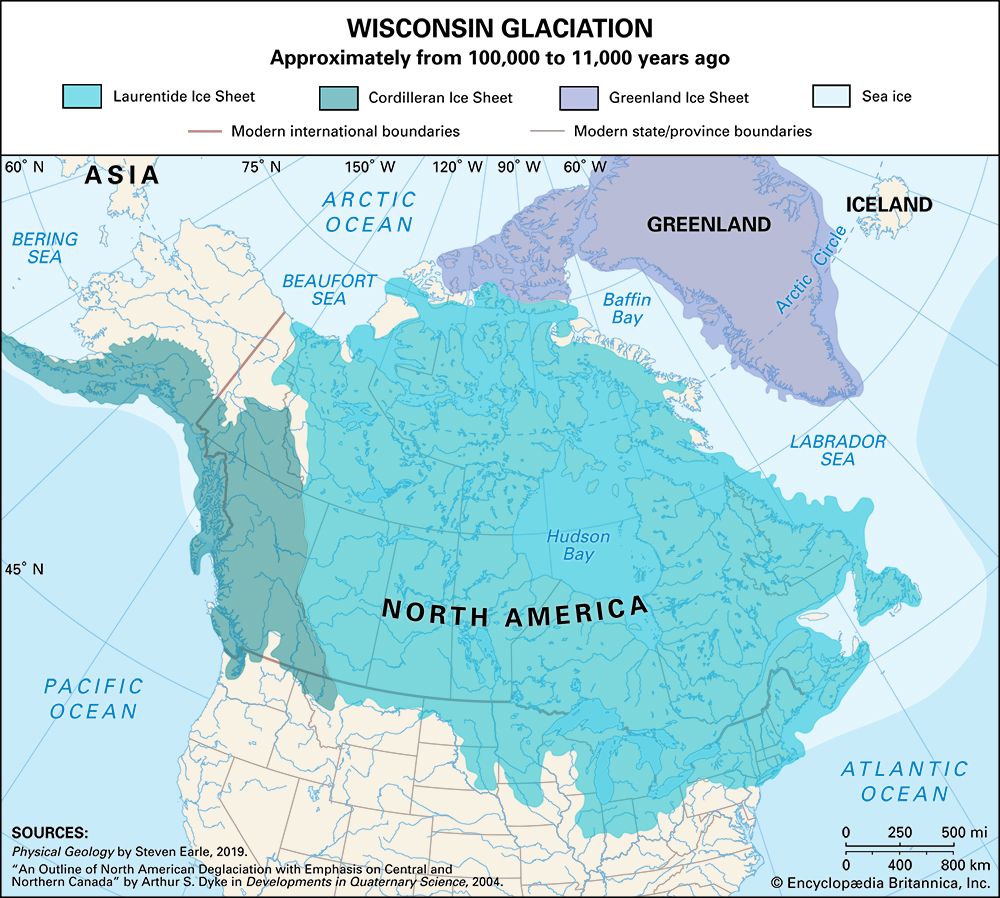
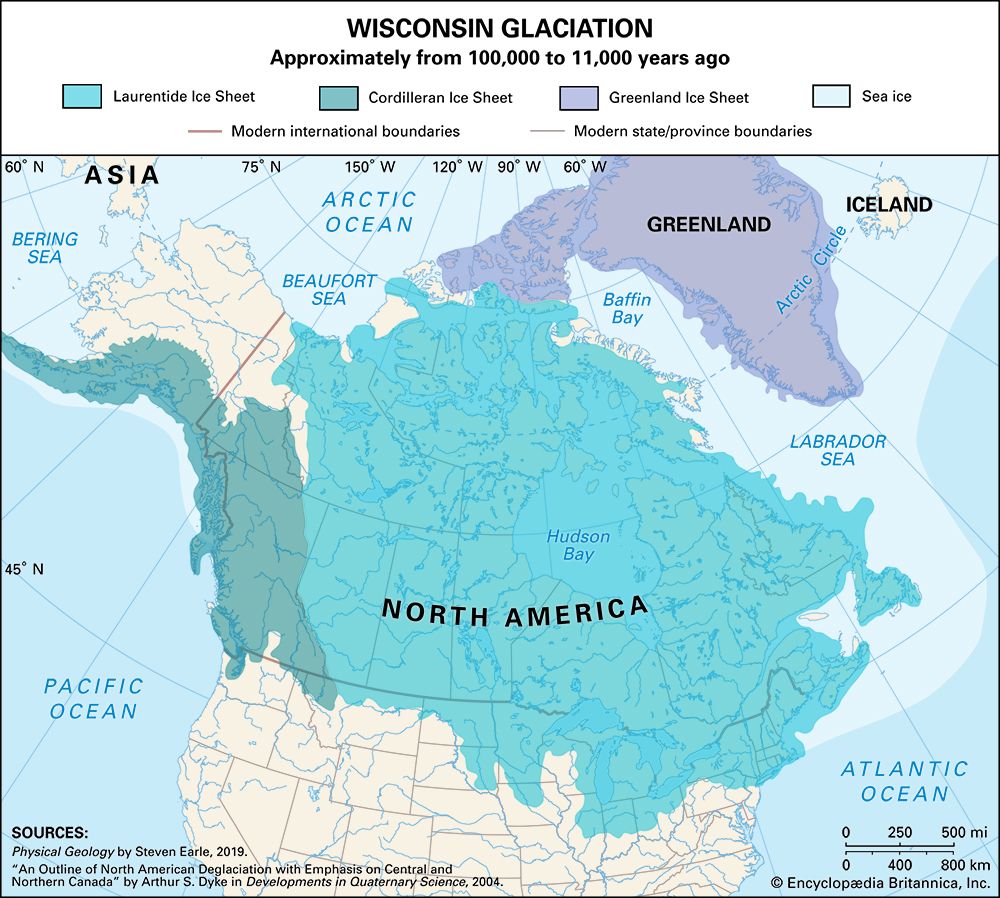
- Climatic Fluctuations: Other theories point to the harsh environmental conditions at the end of the Pleistocene Epoch. The last glacial maximum (roughly 22,000 to 18,000 years ago) created cold, windy, and highly arid conditions, causing deserts to expand and placing significant physiological stress on the fauna.3
- Combined Factors: Given that there is no evidence of a sudden mass extinction and that humans had coexisted with megafauna for thousands of years prior to their disappearance, many scientists believe that a combination of hunting, habitat modification, and climatic stress likely played a role in their eventual extinction.3
Sources
- Diprotodon — Encyclopædia Britannica
- diprotodont — Merriam-Webster
- Australia - Animal life — Encyclopædia Britannica
- marsupial — Encyclopædia Britannica
- Quaternary - Fauna and flora — Encyclopædia Britannica
- Diprotodon — Merriam-Webster
Published on · 3 min read