Deltatheridium
Deltatheridium is a genus of extinct mammals that lived during the Upper Cretaceous Period, approximately 100 to 65.5 million years ago. Fossils of this…
What is Deltatheridium?
Deltatheridium is a genus of extinct mammals that lived during the Upper Cretaceous Period, approximately 100 to 65.5 million years ago. Fossils of this small, rat-sized insectivore have been discovered in Asia, with some questionable evidence of its presence in North America1.1
Taxonomically, Deltatheridium is classified as a metatherian, placing it within the lineage of mammals related to marsupials. It remains a significant subject in the study of mammalian evolution because it possesses certain anatomical characteristics that resemble those of early placental mammals.1
What are the main differences between marsupials and placental mammals?
The primary differences between marsupials and placental mammals (eutherians) center on their reproductive strategies, brain structure, and developmental processes.
Reproductive Strategies
- Marsupials: These mammals are characterized by a short period of intrauterine development, typically ranging from 8 to 40 days. The uterine wall is generally not specialized for embryo implantation, and most marsupials lack a complex placenta. Young are born in a highly vulnerable, embryonic state and must migrate to the mother’s nipples—often located within a pouch, or marsupium—to complete their development2.23
- Placental Mammals: These mammals utilize a placenta to provide nourishment and oxygen to the fetus throughout a longer gestation period. The placenta facilitates a close connection between maternal and embryonic blood supplies, allowing for more advanced development before birth.43
Brain Structure and Behavior
- Brain Anatomy: Marsupials generally possess smaller brains relative to their body size compared to placental mammals. A notable structural difference is that the marsupial brain lacks a corpus callosum, the bundle of nerve fibers that connects the two cerebral hemispheres in placental mammals.2
- Behavior: These anatomical differences contribute to variations in behavior. Marsupials often exhibit more limited vocal abilities and less complex social organizations than many placental species.2
What other animals lived during the Cretaceous Period?
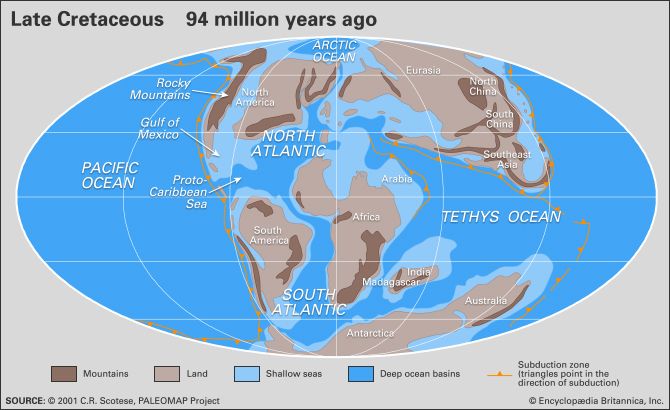
The Cretaceous Period (145 million to 66 million years ago) hosted a diverse array of life, ranging from dominant dinosaurs to the ancestors of modern animals.
Terrestrial Life
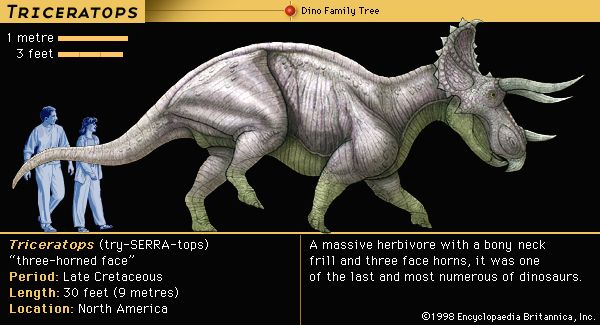
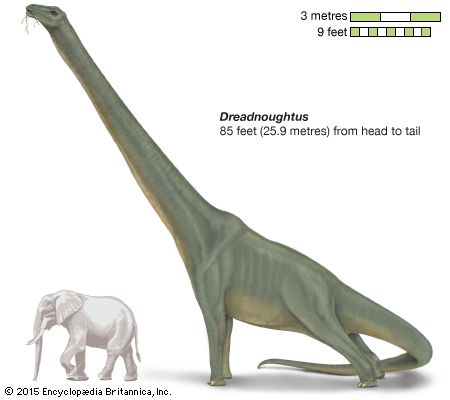
- Dinosaurs: These were the dominant land animals. Notable groups included “duck-billed” hadrosaurs like Shantungosaurus, horned dinosaurs like Triceratops, and massive sauropods known as titanosaurs, such as Argentinosaurus and Dreadnoughtus.67
- Mammals: Both placental mammals and marsupials evolved during the Cretaceous, though they remained relatively small.78
- Other Vertebrates: Pterosaurs dominated the skies, including the massive Quetzalcoatlus. Early birds also existed, such as the flightless, fish-eating Hesperornis. Additionally, snakes, lizards, frogs, toads, and salamanders were present.978
Marine Life
- Marine Reptiles: The seas were inhabited by mosasaurs, long-necked plesiosaurs, and fishlike ichthyosaurs.610
- Invertebrates: Ammonites were highly diverse, including unusual “heteromorph” forms. Rudists—large, vase-shaped bivalves—served as primary reef builders.109
- Fish: Sharks, rays, and teleost (ray-finned) fishes were common, including the large Xiphactinus.10
How do scientists determine if a fossil is a metatherian?
Scientists determine if a fossil belongs to the metatherian group—the lineage that includes modern marsupials—primarily through the analysis of skeletal and dental morphology, as these are the only criteria available for extinct forms.1
Because the transition from reptilian ancestors to mammals involved a “mosaic” of evolving traits, paleontologists often rely on specific osteological markers to classify specimens. For example, the definition of a true mammal is often based on the articulation of the jaw between the dentary and squamosal bones, along with the movement of accessory jawbones to the middle ear.11
When identifying metatherians specifically, researchers examine:
- Dental Patterns: The arrangement and structure of teeth are critical for classification. Features such as cusp patterns and the presence of specific dental gaps are used to distinguish between different mammalian lineages.121
- Skull and Skeletal Construction: Scientists analyze the overall morphology of the skull and limbs to identify evolutionary relationships. For instance, the genus Deltatheridium is recognized as a metatherian based on its specific anatomical features, even though it shares some characteristics with early placental mammals.113
Sources
- Deltatheridium — Encyclopædia Britannica
- marsupial — Encyclopædia Britannica
- Animal development - Adaptations in mammals — Encyclopædia Britannica
- mammal - Estrus and other cycles — Encyclopædia Britannica
- Animal - Rise of vertebrates — Encyclopædia Britannica
- A Journey Through Time Since the Precambrian - Cretaceous Period: 145 million to 66 million years ago — Encyclopædia Britannica
- Cretaceous Period - Marine life — Encyclopædia Britannica
- Mesozoic Era - Mesozoic life — Encyclopædia Britannica
- Cretaceous Period - Terrestrial life — Encyclopædia Britannica
- Cretaceous Period - Cretaceous life — Encyclopædia Britannica
- amphibian - Evolution and classification — Encyclopædia Britannica
- mammal - The evolution of the mammalian condition — Encyclopædia Britannica
- tritylodont — Encyclopædia Britannica
- mammal - Teeth — Encyclopædia Britannica
- perissodactyl - Distinguishing taxonomic features — Encyclopædia Britannica
Published on · 3 min read