Discoglossidae
Discoglossidae is a family of frogs (order Anura) native to the Old World, specifically found in western Europe and northern Africa. The family is…
What is Discoglossidae?
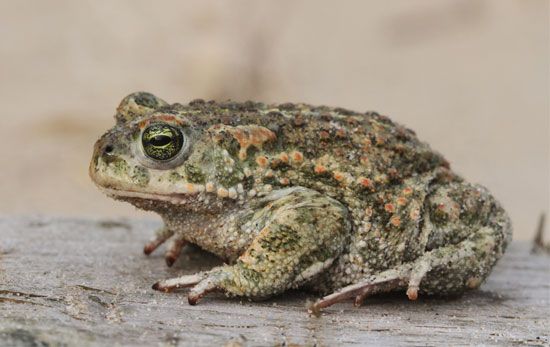
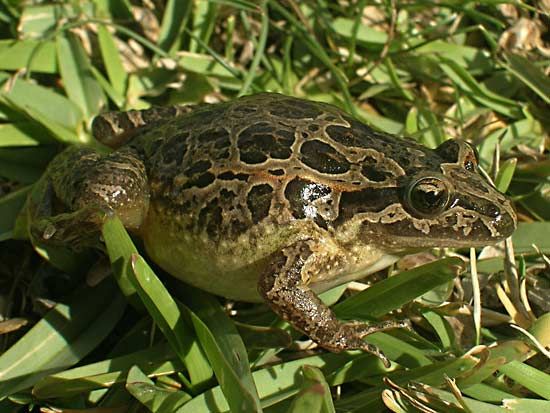
Discoglossidae is a family of frogs (order Anura) native to the Old World, specifically found in western Europe and northern Africa. The family is characterized by a fixed, disklike tongue and includes two primary genera: the midwife toad (Alytes) and the painted frog (Discoglossus).12
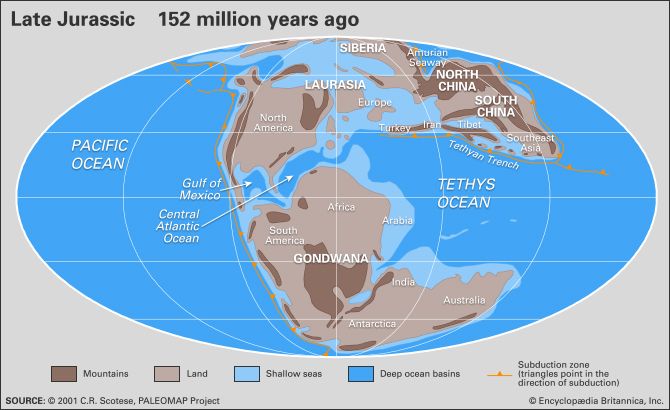
These amphibians are notable for representing some of the oldest known frog fossils, with specimens discovered in Jurassic deposits. Modern members of the family exhibit a unique blend of primitive and specialized traits. For instance, midwife toads are recognized for their distinct reproductive behaviour, in which the male carries the eggs to protect them. In contrast, painted frogs deposit hundreds of eggs in water, where they undergo rapid development and metamorphosis.1
How do midwife toads care for their eggs?
Midwife toads (Alytes) exhibit a unique form of parental care where the male takes responsibility for the eggs after fertilization. During mating on land, the female produces eggs in two rosary-like strands of gelatinous capsules. Once the male fertilizes these eggs, he winds the egg strings around his legs and waist.45
The male carries the eggs with him in his terrestrial habitat for approximately three weeks. To ensure their survival, he keeps them moist, occasionally visiting water sources to prevent dehydration if the weather is particularly dry. When the embryos are ready to hatch, the male enters a pond or stream. The larvae emerge from the egg envelopes, which the male continues to carry until all the young have been liberated into the water to complete their development. This behavior represents a significant adaptation, as these eggs lack the protective shells and membranes required for true terrestrial independence, necessitating constant care from the parent to maintain physiological balance.45
What are some other ancient frog families?
Beyond the family Discoglossidae, there are other ancient frog families that represent early lineages within the order Anura. Two notable examples are the Ascaphidae and Leiopelmatidae families.
- Ascaphidae (Tailed Frogs): Native to northwestern North America, this family consists of a single genus, Ascaphus. They are considered part of an ancient lineage that likely diverged from other frogs during the Jurassic Period. They are adapted to stream environments and possess unique “tail-wagging” muscles.16
- Leiopelmatidae: This family is represented by the genus Leiopelma, which are the only frogs indigenous to New Zealand. Like the Ascaphidae, they are survivors of an ancient lineage. They exhibit direct development, meaning they bypass the free-swimming tadpole stage, and males are known to stand guard over the eggs.16
These families are distinct because they are not grouped with other anuran families and retain primitive anatomical features, such as specific muscles and vertebral structures, that reflect their long evolutionary history.1
How does metamorphosis work in amphibians?
Metamorphosis in amphibians is a complex biological process that transforms a larva into an adult, often facilitating a shift from an aquatic to a terrestrial lifestyle. This transformation involves abrupt changes in physiology, biochemistry, and behavior, all of which are coordinated by hormones11.111213
In anurans (frogs and toads), the process is particularly dramatic. The thyroid gland is activated by the hypophysis to release thyroxine, which circulates in the blood and triggers specific tissue responses. Key changes include:1113
- Structural Modifications: Limbs develop, with forelimbs emerging through the opercular wall. The tail is resorbed by the body, with cells being destroyed and devoured by phagocytic cells.111314
- Respiratory and Circulatory Shifts: Gills and their associated blood circulation disappear as lungs and pulmonary ventilation develop.1114
- Digestive and Sensory Changes: The long, coiled larval intestine shortens to the adult form. Mouthparts are replaced, jaws and true teeth develop, and eyelids appear.1114
- Systemic Adjustments: The urogenital system is modified, with the kidney transitioning to produce concentrated urea rather than dilute ammonia.11
While salamanders and caecilians also undergo metamorphosis, their structural changes are generally less dramatic than those seen in anurans.11
Sources
- Discoglossidae — Encyclopædia Britannica
- Discoglossidae — Merriam-Webster
- discoglossid — Merriam-Webster
- midwife toad — Encyclopædia Britannica
- frog and toad - Egg laying on land — Encyclopædia Britannica
- frog and toad - Annotated classification — Encyclopædia Britannica
- amphibian - Reproduction — Encyclopædia Britannica
- Leiopelma — Encyclopædia Britannica
- frog and toad - Size range and diversity of structure — Encyclopædia Britannica
- amphibian — Encyclopædia Britannica
- amphibian - Metamorphosis — Encyclopædia Britannica
- Animal development - Metamorphosis — Encyclopædia Britannica
- frog and toad - From tadpole to adult — Encyclopædia Britannica
- Metamorphosis — Encyclopædia Britannica
Published on · 3 min read