Leiopelma
Leiopelma is a genus of small frogs native to New Zealand and the only frogs indigenous to the country. Belonging to the family Leiopelmatidae, these frogs…
What is Leiopelma?
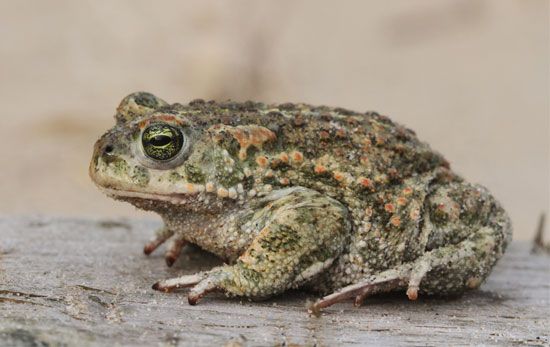
Leiopelma is a genus of small frogs native to New Zealand and the only frogs indigenous to the country. Belonging to the family Leiopelmatidae, these frogs represent an ancient lineage that diverged from other species during the Jurassic Period.1
Key characteristics include:
- Size: They are small, measuring between 30 and 40 mm (1.2 to 1.6 inches) in length.1
- Behavior: They lack vocal sacs but produce soft calls to attract mates. Males are known to guard eggs deposited in wet areas.1
- Development: Depending on the species, they either hatch into nonfeeding, immobile tadpoles or more typical tadpoles before undergoing metamorphosis.1
- Conservation: These frogs are currently threatened and are found only in limited areas of native forest.1
They share a common ancestry with the tailed frogs of North America, known as Ascaphus.1
How do Leiopelma frogs differ from typical frogs?
Leiopelma frogs, the only frogs indigenous to New Zealand, differ significantly from typical frogs due to their ancient lineage and unique anatomical features.1
Key differences include:
- Anatomy: Unlike most frogs, Leiopelma possess nine presacral vertebrae (anterior to the pelvic girdle) rather than the typical five to eight. They also retain primitive “tail-wagging” muscles (caudaliopuboischiotibialis) and parahyoid muscles, which are absent in many other modern frog families.2
- Vocalization: They lack vocal sacs, which are standard in most frog species for amplifying sound; instead, they produce only soft calls.1
- Development: While most frogs have an aquatic larval stage, Leiopelma exhibit direct development or specialized larval stages. In some species, eggs hatch into large, nonfeeding, immobile tadpoles that quickly undergo metamorphosis, while others hatch as froglets that still possess a tail which is soon absorbed.13
- Evolutionary Status: They are considered “living fossils,” representing an ancient lineage that diverged during the Jurassic Period, making them distinct from the more recently evolved families of Anura.1
What makes the Jurassic Period significant for animal evolution?
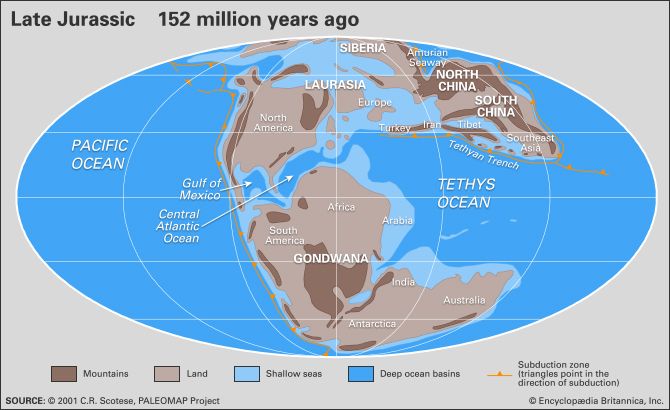
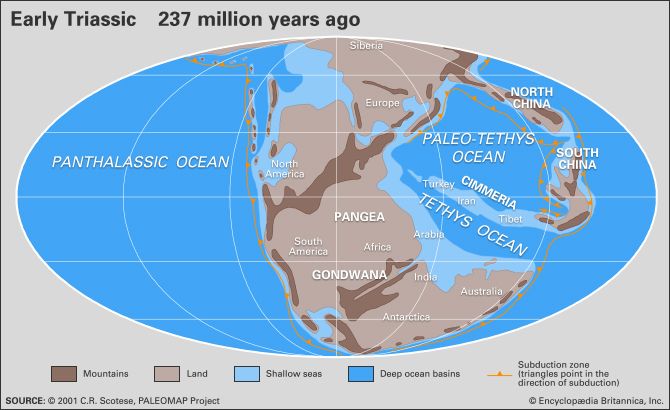
The Jurassic Period (201.3 to 145 million years ago) was a pivotal era for animal evolution, marked by the recovery from a massive extinction event at the end of the Triassic Period and the emergence of many groups essential to the modern world.456
Key evolutionary developments include:
- Dominance of Archosaurs: Terrestrial ecosystems shifted from being dominated by synapsids to being ruled by archosaurs, including dinosaurs and pterosaurs.75
- Rise of Dinosaurs: Saurischians (such as the massive, long-necked sauropods and carnivorous theropods) and ornithischians (armored or bipedal herbivores) diversified significantly.7
- Appearance of Birds: Birds evolved from small theropod dinosaurs during this period, with fossils like Archaeopteryx providing evidence of this transition.75
- Modernization of Fauna: Many modern biological groups made their first appearance, including modern forms of lizards and the earliest frogs with modern skeletal characteristics.75
- Marine Diversity: The oceans saw the rise of complex reef ecosystems, diverse mollusks, and large swimming predators.45
While early mammals were present, they remained small and relatively insignificant compared to the dominant reptiles of the time.46
Why are these frogs considered living fossils?
Leiopelma frogs are considered “living fossils” because they represent the sole survivors of an ancient lineage that diverged from other frogs during the Jurassic Period (approximately 200 million to 146 million years ago).1
The term “living fossil” refers to an organism that has remained essentially unchanged from earlier geologic times and whose close relatives are typically extinct. In the case of Leiopelma, they retain primitive anatomical features that are absent in most modern frog families, such as:2
- Vertebral structure: They possess nine presacral vertebrae, whereas most modern frogs have five to eight.9
- Musculature: They retain primitive “tail-wagging” (caudaliopuboischiotibialis) and parahyoid muscles.9
Because these frogs have persisted with these ancestral traits while other lineages evolved significantly, they serve as a biological link to the distant past.19
Sources
- Leiopelma — Encyclopædia Britannica
- frog and toad - Annotated classification — Encyclopædia Britannica
- frog and toad - Direct development from egg to froglet — Encyclopædia Britannica
- A Journey Through Time Since the Precambrian - Jurassic Period: 201.3 million to 145 million years ago — Encyclopædia Britannica
- Jurassic Period - Vertebrates — Encyclopædia Britannica
- Jurassic Period - Jurassic life — Encyclopædia Britannica
- Jurassic Period — Encyclopædia Britannica
- Jurassic Period - Paleoclimate — Encyclopædia Britannica
- living fossil — Merriam-Webster
- amphibian - Evolution and classification — Encyclopædia Britannica
- amphibian — Encyclopædia Britannica
- pelican spider: Top Questions — Encyclopædia Britannica
Published on · 3 min read