Dispersion
In biology, dispersion refers to the scattering of organisms across an area. Populations typically exhibit one of three spatial patterns based on their…
Can you provide examples of animals or plants that exhibit different types of dispersion?
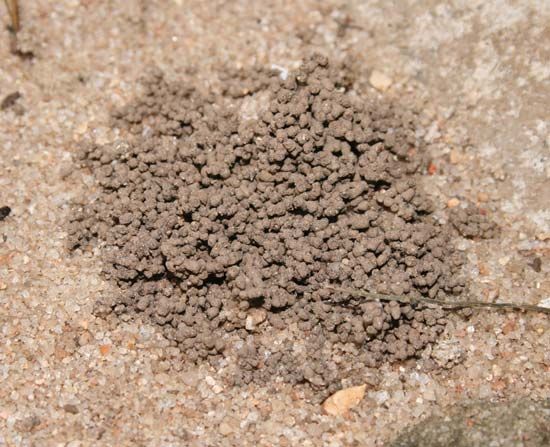
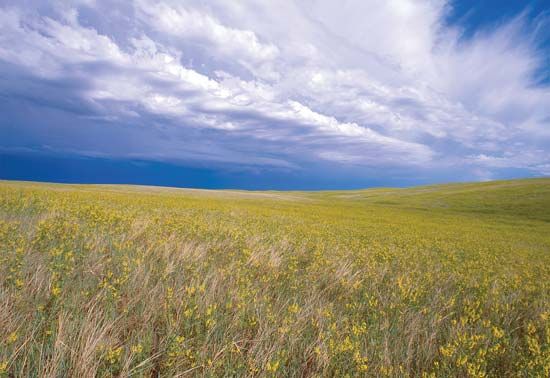
In biology, dispersion refers to the scattering of organisms across an area. Populations typically exhibit one of three spatial patterns based on their social structures and environmental relationships:
- Aggregated (Clumped): Organisms gather in groups. Social animals, such as chimpanzees, often display this pattern.1
- Uniform: Individuals maintain roughly equal spacing. This is common among territorial animals, such as many bird species.1
- Random: Individuals are distributed without a predictable pattern, often influenced by environmental factors.1
Dispersal—the movement of individuals from their birthplace—is often driven by reproduction or the need for resources. For example, East African locusts exhibit phase polymorphism, where they transform from solitary, sluggish individuals into highly mobile, swarming forms to maximize their dispersion when resources become scarce.1
Passive dispersal also plays a significant role. Plants like milkweed have evolved morphological adaptations to spread seeds via wind, while others rely on animals for transport through hooks or ingestion. Additionally, some parasites, such as the myxoma virus, utilize other creatures like mosquitoes to travel long distances.1
What are some adaptations that organisms have developed to optimize their dispersion?
Organisms have evolved a variety of specialized adaptations to optimize their dispersion, ensuring the survival and expansion of their populations. These adaptations vary significantly between plants and animals:
Plant Adaptations
Plants utilize diverse strategies to spread their seeds and spores, often relying on environmental agents:
- Wind Dispersal: Many plants, such as milkweed, have evolved morphological features like wings or plumules that allow seeds to be easily carried by the wind.1
- Animal-Assisted Dispersal: Some plants produce fleshy fruits that animals consume, allowing seeds to pass through digestive tracts unharmed. Others develop hooks, barbs, or sticky substances that attach to animal fur or skin, enabling “hitchhiking” dispersal.12
- Active Projection: Certain plants, such as witch hazels and jewelweed, possess mechanisms to physically project their seeds through the air away from the parent plant.1
Animal Adaptations
Animals often employ behavioral and physiological changes to manage their distribution:
- Phase Polymorphism: Some insects, such as East African locusts, undergo developmental changes that transform them from solitary, sluggish individuals into highly mobile, swarming forms when resources become scarce, maximizing their range.3
- Bipartite Life Cycles: Many marine organisms, including lobsters and various reef fish, spend their larval phase in plankton. This stage allows them to be widely dispersed by ocean currents, often over long distances.4
- Physiological Preparation: Migratory animals, particularly birds, undergo metabolic shifts—such as the accumulation of body fat—governed by the pituitary gland to prepare for long-distance travel.5
- Vector Utilization: Parasites often rely on other species to facilitate their spread. For example, the myxoma virus is carried by mosquitoes, which act as vectors to transport the pathogen to new hosts.3
What is dispersion in biology and how does it differ from dispersal?
In biology, the terms dispersion and dispersal refer to distinct concepts regarding the spatial arrangement and movement of organisms:
- Dispersion refers to the pattern of distribution or the scattering of organisms within a given area at a specific time. Populations typically exhibit one of three spatial patterns: random, aggregated (clumped), or uniform (roughly equal spacing). These patterns are often influenced by social structures, territoriality, and environmental factors.1
- Dispersal refers to the movement of individual organisms away from their birthplace to other locations, typically for the purpose of breeding or finding resources. This process is a primary driver of population expansion and can occur through active movement or passive means, such as wind, water, or transport by other creatures.1
While dispersion describes the resulting spatial structure of a population, dispersal is the active or passive mechanism of movement that contributes to that distribution. Both processes are fundamental to understanding systematics and evolution, as they dictate how species occupy habitats and respond to environmental changes over time.1
What factors influence the dispersion patterns of organisms in an environment?
The dispersion patterns of organisms are influenced by a complex interplay of social, environmental, and biological factors. These patterns—whether random, aggregated, or uniform—are shaped by the following primary drivers:
- Social and Behavioral Dynamics: The nature of relationships within a population significantly dictates spacing. Social animals often form clumps to improve competitive success or survival, while territorial species tend to maintain uniform spacing to secure resources.18
- Environmental Constraints: An organism’s ability to tolerate local conditions, such as temperature, water availability, and atmospheric pressure, sets the fundamental limits of its distribution. Extreme environmental variables often force organisms to adopt specific behavioral or physiological strategies to maintain homeostasis or avoid unfavorable conditions.9
- Resource Availability and Competition: The distribution of nutrients and food sources often determines the boundaries of a species’ territory. Competition between species for the same food types can lead to the exclusion of one species from a particular area.1
- Dispersal Mechanisms: The movement of individuals, often triggered by reproduction or overcrowding, is governed by vectorial forces (wind, water, or other environmental motion) or stochastic (random) events like seasonal changes.1
- Geographic and Geologic Barriers: Physical obstacles such as mountains, oceans, and deserts can restrict movement, though some species utilize “filter routes” to cross these barriers. Over geologic time, events like continental drift have also played a critical role in separating species and shaping their independent development.1
- Human Influence: Over the past 10,000 years, human activity has become the most significant factor affecting the global dispersal and distribution of organisms.1
Sources
- dispersion — Encyclopædia Britannica
- plant - Fruits and seeds — Encyclopædia Britannica
- seed - Dispersal by animals — Encyclopædia Britannica
- disease - Epidemiology — Encyclopædia Britannica
- Migration - Navigation and orientation — Encyclopædia Britannica
- Migration - Physiological stimulus of migration — Encyclopædia Britannica
- Marine ecosystem - Distribution and dispersal — Encyclopædia Britannica
- Animal social behavior - Social interactions involving movement — Encyclopædia Britannica
- Biosphere - Environmental conditions — Encyclopædia Britannica
Published on · 4 min read