Dogfish
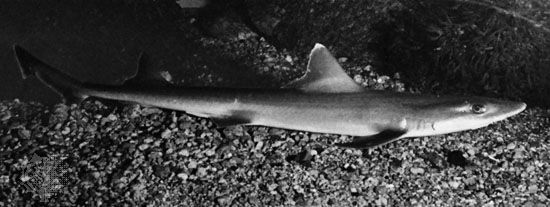
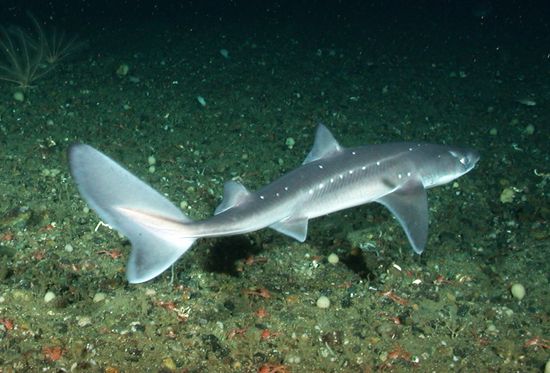
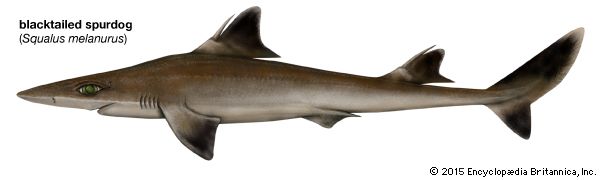
The most widely known and abundant species of dogfish is the spiny dogfish (Squalus acanthias), also referred to as the spurdog or skittle dog.
Which species of dogfish sharks are most common, and where are they typically found?
The most widely known and abundant species of dogfish is the spiny dogfish (Squalus acanthias), also referred to as the spurdog or skittle dog.1
Distribution and Habitat
The spiny dogfish is found in abundance along the northern Atlantic and Pacific coasts. A closely related, if not identical, form also inhabits the southern half of the world. These sharks are typically found in dense schools and are known for their extensive movements, which are often linked to feeding, reproduction, or seasonal environmental changes.12
Characteristics
- Appearance: They are gray with white spots and typically measure between 60 and 120 cm (2 to 4 feet) in length.1
- Distinguishing Features: As members of the family Squalidae, they possess a sharp, prominent spine in front of each of their two dorsal fins. These spines are associated with small venom glands capable of causing painful wounds.31
- Diet: They are carnivorous, preying on various fishes and invertebrates.14
While the spiny dogfish is the most prominent, the term “dogfish” encompasses a wide variety of small, often bottom-dwelling sharks across several families, such as the smooth dogfishes (Triakis and Mustelus).154
Are dogfish sharks considered dangerous to humans, and have there been any recorded attacks?
Dogfish sharks are not considered dangerous to humans. While the term “dogfish” covers a wide variety of species, the vast majority of shark species—more than 85 percent—are either too small, lack suitable teeth, are too sluggish, or inhabit depths that make them non-threatening to people.6
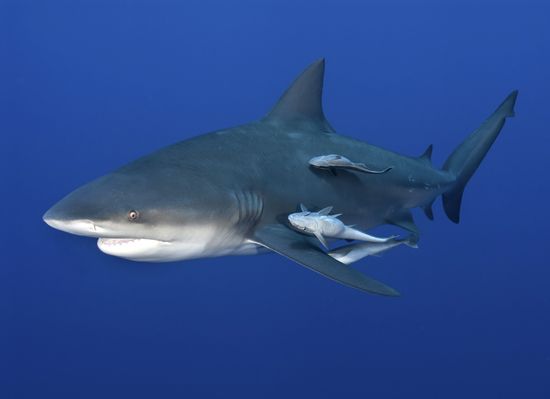
The species typically implicated in unprovoked attacks are large sharks with significant cutting teeth, such as the great white shark, tiger shark, bull shark, and various hammerhead species. While some smaller sharks may occasionally nip or bite a bather, these incidents generally result in only minor wounds and are not categorized alongside the dangerous attacks associated with larger predatory species.6
It is important to note that while dogfish are not considered a threat, some members of the family Squalidae possess sharp, venomous spines in front of their dorsal fins that can cause painful wounds if handled improperly.
What do dogfish sharks primarily feed on, and how do they hunt their prey?
Dogfish sharks are primarily carnivorous, bottom-dwelling predators that feed on a variety of small fishes, crustaceans such as crabs and lobsters, and other invertebrates. Species that specialize in eating shellfish are often characterized by having coarse, pavementlike, crushing teeth adapted for their diet.435
Like most sharks, dogfish utilize a highly integrated sensory system to locate their prey. This includes:
- Smell: A well-developed sense of smell is used by nearly all shark species to detect food from a distance.4
- Lateral Line System: A series of sensory pores along the body that allows them to detect vibrations in the water.4
- Electroreception: A network of ampullae that enables them to sense the weak electrical signals emitted by prey.4
- Vision: Their eyes are often acute enough to discriminate the size, shape, and color of their prey.4
While many sharks are solitary, dogfish often appear in schools near the shore, a behavior that can help them exploit food resources more effectively. When prey is discovered, sharks may circle it and approach from below before moving in for a strike.43
How big do dogfish sharks typically grow, and how does this compare to other shark species?
Dogfish sharks are relatively small compared to many other shark species. For example, studies on the Atlantic spiny dogfish indicate that they grow slowly, with males reaching an average growth of 47 cm (19 inches) and females 67 cm (26 inches) during the 10 years between birth and maturity.3
In contrast, other shark species exhibit a much wider range of sizes:
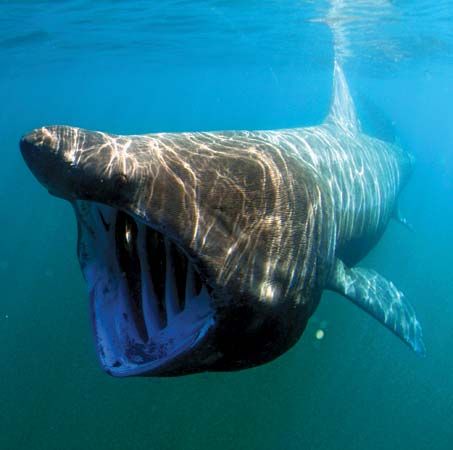
- Harmless Giants: The whale shark can reach lengths of up to 18 metres (59 feet), and the basking shark can grow to 14 metres (46 feet).7
- Large Predators: The great white shark is a voracious predator that can grow to about 6 metres (20 feet).7
- Deepwater Species: The Greenland shark can attain lengths of 6.5 metres (21 feet) or more.73
- Sand Sharks: These species typically range from 2.2 to 4.5 metres (7.2 to 14.8 feet) in length.8
While dogfish are generally smaller, they share the characteristic slow growth rate observed in many other chondrichthyan species.3
Sources
- spiny dogfish — Merriam-Webster
- dogfish — Encyclopædia Britannica
- shark - Description and habits — Encyclopædia Britannica
- chondrichthyan - Sharks — Encyclopædia Britannica
- dogfish — Merriam-Webster
- chondrichthyan - Danger to human life — Encyclopædia Britannica
- sand shark — Encyclopædia Britannica
- chondrichthyan - Growth — Encyclopædia Britannica
Published on · 4 min read